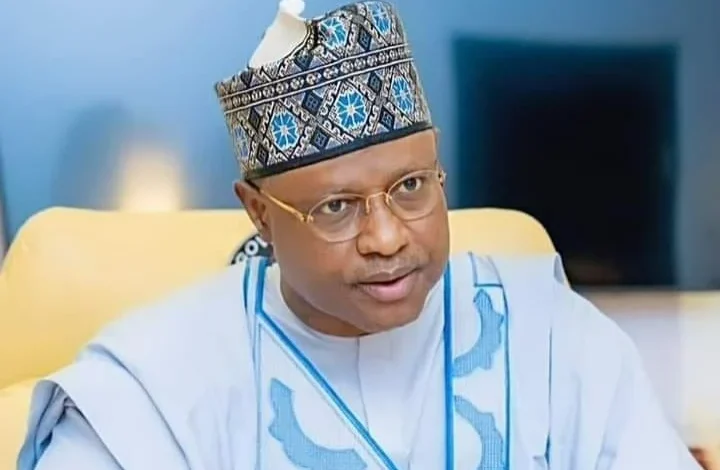
Kaduna State Governor, Uba Sani, has said the state is now significantly better than he met it in 2023, citing improvements in security, education, infrastructure, and economic development.
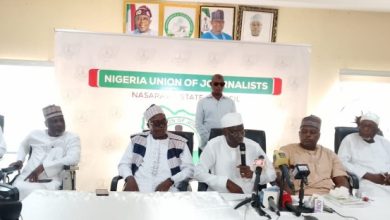
The governor spoke at a high-level workshop for senior government officials organised by the Nigerian Institute of Public Relations as part of the ongoing Nigeria Public Relations Week, Croc City 2026, held in Kaduna on Saturday.
The workshop, themed “From Policy to Public Trust: Strategic Communication for Vision Alignment and Governance Delivery for Renewed Hope,” brought together commissioners, special advisers, councillors, permanent secretaries, and other top officials.
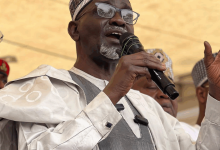
Addressing participants, Sani said the state he inherited was rich in potential but weighed down by insecurity, infrastructure deficits, and weak social indicators.
“Kaduna is not where it was. Kaduna is by far a better place today, and even more exciting is the fact that Kaduna is on the move and set to do even greater things and attain higher heights,” he said.
He noted that his administration quickly realised that incremental changes would not deliver the transformation needed, stressing that governance must be fundamentally reoriented to achieve measurable results.
According to him, his government institutionalised a performance-driven framework anchored on Key Performance Indicators for ministries, departments, and agencies to ensure accountability.
“We vowed that vision must translate into measurable impact or else it will remain an aspiration,” the governor added.
Sani explained that his administration is built around seven strategic pillars: security, infrastructure development, strengthening institutions, trade and investment, agriculture, human capital development, and citizen engagement.
“These pillars are not isolated priorities but interconnected levers designed to function as a coherent system, each reinforcing the other toward transforming Kaduna into a secure, prosperous, and inclusive society,” he said.
On security, the governor described it as the bedrock of development, noting that without safety, economic and social activities cannot thrive.
He disclosed that his administration collaborated with the Office of the National Security Adviser and military authorities to establish new military bases in high-risk areas such as Giwa, Birnin Gwari, and parts of Southern Kaduna.
“We strengthened mobility and response through the deployment of over 150 operational vehicles and 500 motorcycles to security agencies. In our urban centres, we constituted a Joint Task Force that has significantly reduced incidents of street crime and banditry,” he said.
Sani added that over 20,000 hectares of previously inaccessible farmland had been reclaimed, enabling farmers to resume cultivation in areas like Birnin Gwari, Giwa, and Kauru.
He said more than 1,000 displaced persons had been resettled, while targeted support continued for over 117,000 internally displaced persons, particularly women and children.
The governor further disclosed that Kaduna had established the first forensic laboratory in Northern Nigeria to strengthen investigative capacity, alongside the Kaduna Incident Report Centre (KAD-IR), which provides a 24-hour emergency response platform.
According to him, peace-building efforts have also been institutionalised through dialogue platforms, local peace councils, and rehabilitation programmes focused on skills acquisition.
“While the result is not perfect, security is improving, confidence is returning, and economic activity is gradually expanding in areas once considered inaccessible. This is what we now call the Kaduna Peace Model,” he said.
On education, Sani said his administration had constructed 736 classrooms and renovated over 1,200 others, while recruiting 10,000 teachers and training more than 33,000 education personnel.
He highlighted a major reduction in the number of out-of-school children, from about 550,000 to 187,720 within two years.
“This progress reflects not only investment but also coordination, data-driven interventions, and sustained community engagement,” he said.
On infrastructure, the governor disclosed that about 150 road projects covering over 1,300 kilometres had been initiated across the 23 local government areas.
“These projects are part of a deliberate strategy to connect rural production centres to urban markets, reduce travel time, and stimulate commerce,” he said.
Sani further said the state had significantly scaled up investment in agriculture, increasing the budget from ₦1.48bn in 2023 to over ₦74bn in 2025.
He said more than 900 trucks of fertiliser had been distributed to farmers, while over 100,000 smallholder farmers had been enrolled in crop insurance schemes.
“Through Special Agro-Industrial Processing Zones in Chikun and Kubau, we are moving from subsistence farming to value-added agribusiness,” he added.
In the health sector, Sani said his administration upgraded 255 primary healthcare centres to Level-2 facilities and established 23 centres of excellence across the state’s local government areas.
On investment, the governor said Kaduna had attracted 23 investments worth over $743m between 2023 and 2025, with an additional pipeline valued at $2.77bn, bringing total investment prospects to over $3.5bn.
“This is a clear indication that confidence in Kaduna is strengthening,” he said.
🚨BREAKING: Watch The Video Clip Here ➤