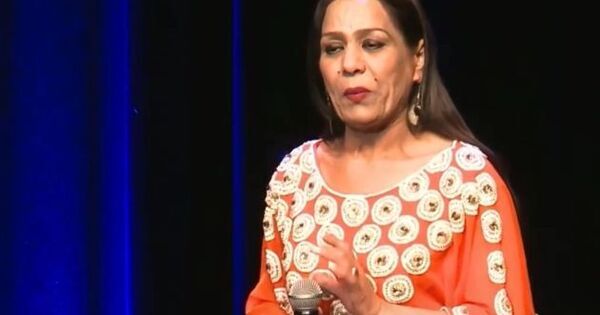
IRBIL, Iraq: Women in Iraq are mourning the legendary Iraqi singer, Sajida Obaid, who died early this month from lung cancer in the northern city of Irbil.
News of Obaid’s death was largely overlooked because of the war with Iran spreading into nearby Iraq. But for her fans, it felt deeply personal — they had lost a woman whose voice gave them a sense of freedom, even if only for a few hours.
Seven days after her death on 4 April, women gathered at her family home, dressed in black veils and abayas, many in tears. Some were relatives, others were longtime fans. They quietly passed around bitter black coffee, a traditional drink of mourning in Iraq, while music from outside filled the silence between their sobs.
Outside, men sat under a tent in the street as a band played the daf drum, with some wiping away tears. In Iraq, the seventh day after death is an important final gathering before grief slowly turns into memory.


“At her women’s parties, we danced like we had no worries,” Jaji said, her eyes red from crying. “We felt free. Truly free.”
Mina Mohammed, 40, said she had borrowed money just to attend one of Obaid’s women-only parties. “Her voice will always remind me of the best times of my life,” she said.
Obaid was born in Baghdad in 1957 to a Roma family. In Iraq, Roma people, known as Kawliya, have long been linked to music and performance but have also lived on the margins of society. She started singing at 12 to help support her family.
As a teenager, she was already well known. Her voice combined the lively rhythms of Kawliya music with the emotional Iraqi style called mawal. By the 1980s, even powerful and feared figures in Iraq knew her.
Security guards of Saddam Hussein would sometimes take her from weddings to perform elsewhere. She sang at events for his family, including weddings and birthday parties for his sons. This was part of the difficult reality of being a famous artist during a dictatorship. She also traveled widely, performing at international festivals and sometimes doing up to seven shows a week.
Still, her women-only parties were especially meaningful, said her brother and manager, Aayed Awda. Women from even very conservative families wanted these events because they could dress, move, and express themselves freely. Obaid strongly believed in giving women that space.
Some of her songs challenged social norms. One song, “Inkasarat al-Sheesha” (“the shisha broke”), tells the story of a woman who has lost her virginity and fears telling her mother — a serious issue in Iraqi society. Obaid sang it boldly, without hesitation.
In her final months, she lived quietly in Irbil with her brother’s family. She had no children and had been married and divorced twice. She rarely went out and spent her time with loved ones and playing with children at home.
About four months before she died, she was diagnosed with lung cancer. Despite this, she insisted on traveling to Canada for a concert. But when she returned for chemotherapy, her health quickly worsened.
She was hospitalized in Irbil for over two weeks, then sent home on oxygen. When her family took her back to the hospital again, she did not return.
🚨BREAKING: Watch The Video Clip Here ➤