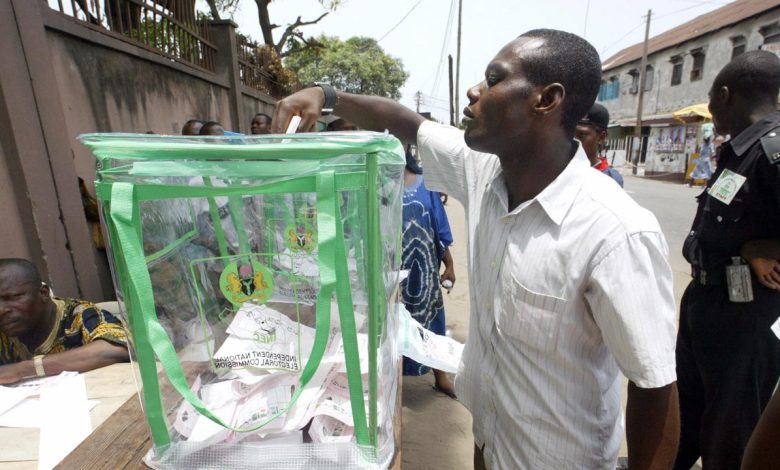
As Nigeria approaches the 2027 general elections, rising insecurity across the country is casting a shadow on preparations, with experts warning that without urgent intervention, the polls could be marred by violence, low voter turnout and loss of public confidence.
In an exclusive interview with DAILY POST, security analyst and retired military officer, Captain Abdullahi Bakoji Adamu, expressed deep concern over what he described as Nigeria’s “fragile and overstretched” security architecture.
“Nigeria is currently contending with multiple and overlapping threats of insurgency in the North-East, banditry and kidnapping in the North-West, as well as communal conflicts and separatist agitations in other regions,” he said.
“These challenges have significantly overstretched our security forces and created dangerous gaps that could easily be exploited during a politically sensitive period like elections.”


Adamu warned that election cycles in Nigeria historically coincide with spikes in violence, stressing that 2027 may not be different if proactive steps are not taken.
“Elections in Nigeria are not just political exercises; they are high-risk periods,” he said.
“You see an increase in the activities of armed groups, political thuggery, and the spread of misinformation. All of these combine to create a volatile environment.”
He added that the current security approach remains largely reactive.
“One of our biggest problems is that we respond to incidents after they occur, rather than preventing them. There is a lack of strong coordination among security agencies, and community-based intelligence is still very weak. Without fixing these, we are simply managing crises instead of preventing them.”
The retired captain stressed that the implications for the 2027 elections could be far-reaching.
“If people cannot safely travel to polling units, if electoral officials are not protected, and if materials cannot be securely deployed, then the credibility of the entire process is at risk,” he said.
“Insecurity has the potential to disenfranchise thousands, if not millions, of voters.”
Adamu also emphasised the role of political actors in either escalating or de-escalating tensions.
“Political elites must act responsibly. Inciting rhetoric, misinformation, and the use of non-state actors for political gain will only worsen the situation. Security is not just the responsibility of the military or the police, it is a collective responsibility.”
He called for early planning and a shift in strategy ahead of 2027 to avoid falling into past cycles of violence. “We need to start preparing now, not a few months to the elections. There must be improved inter-agency collaboration, better intelligence gathering, and more engagement with local communities,” he said.
“Security must go beyond force; it must include trust-building and addressing the root causes of conflict such as poverty, unemployment and marginalisation.”
Adamu further warned that failure to act decisively could erode public trust in the democratic process.
“When citizens begin to feel that their votes do not count or that participating in elections puts their lives at risk, democracy itself is weakened. That is the danger we are facing if insecurity is not addressed.”
Meanwhile, Civil society actors say these realities are already shaping public perception, particularly in northern Nigeria where attacks and kidnappings have become frequent.
A Kano based political participation activist, Zulaiha Danjuma, told DAILY POST that many Nigerians have lost faith in election and no longer see it as a tool for change.
“The Nigerian people, especially those in the North where insecurity is escalating, have lost faith in the power of voting to bring change,” she said.
“The past administration promised to rid the country of insecurity, so we voted in droves despite the risks. This administration also made similar promises, but you can see the situation we are in today; deaths, destruction and killings everywhere.”
She said growing frustration has led to widespread voter apathy that will likely affect turnout during the upcoming election. “Most people have given up on the system, and voter apathy has escalated because what is the guarantee that you won’t get attacked on your way to the polls?” she asked.
“At this point, vowing to end insecurity has become another campaign promise in a long line of unfulfilled pledges, so I don’t blame people for being weary.”
Personal experiences from past elections further highlight the risks for people that have directly felt the impact of failing security structures.
An ad hoc staff member of the Independent National Electoral Commission (INEC), who participated in the 2023 elections and requested anonymity, recounted a traumatic ordeal that has discouraged her from participating in future polls.
“I will never participate in elections again, neither as a staff nor as a voter, because the price I paid the last time is still fresh in my memory. I may be suffering from PTSD,” she said.
She narrated how armed men attacked her polling unit. “We were just about to conclude voting for the day when armed men stormed the place and abducted two of us along with the ballot box. They took us deep into the forest and altered the votes before forcing us back into their vehicle and returning to town with us.”
She added, “Till today, I thank God I made it out alive. So how can I trust the government to provide adequate security when they couldn’t protect us while we were working for them?”
According to her, worsening insecurity has only deepened her fears ahead of 2027. “This election is coming at a time when insecurity is even worse than before. Count me out. I will use election day as a break to rest,” she emphasized.
With concerns mounting about the security situation of the nation, observers warn that Nigeria’s ability to conduct a free, fair and credible election in 2027 will depend largely on how ut confronts its growing security challenges in the months ahead.
🚨BREAKING: Watch The Video Clip Here ➤