The strangest feature of the Iran war is not that both sides have leverage. It is that neither side can fully use the leverage it has.
That is the defining reality of the conflict as it moves through its uneasy post-ceasefire phase. Washington has the naval power to sustain pressure on Iran’s ports and shipping. Tehran has the geography to keep the Strait of Hormuz from returning to normal. Both instruments are real. Both hurt. Yet neither can be pushed to its logical end without creating costs that escape the control of the side using it.
The war has, therefore, entered a more dangerous stage than the familiar language of ceasefire suggests. The question is no longer simply whether Iran will reopen Hormuz or whether the United States will lift its blockade. It is whether either side can turn pressure into an outcome without being consumed by the pressure it has created.

That explains why the ceasefire has not become a settlement. It also explains why ships remain hesitant, markets remain unsettled and diplomacy keeps circling the same question: who moves first, and who loses most by doing so?
The blockade that delays the hard choice
The United States is not sustaining the blockade because it has found a clear path to victory. It is sustaining it because every alternative looks worse.
President Donald Trump has now reportedly told aides to prepare for an extended blockade of Iran after judging that renewed strikes or a clean withdrawal would carry greater risks. That calculation is understandable in narrow political terms. A renewed bombing campaign could push Iran towards wider retaliation against Gulf energy infrastructure. Walking away would make the war look like an unfinished act of force. Accepting Tehran’s proposal could allow Iran to recover its maritime position before Washington secures nuclear concessions.
So the blockade remains.
But pressure is not the same as strategy. A blockade can keep Iran under stress. It can reduce export options, complicate oil sales and force Tehran to spend political capital on relief. What it cannot do, by itself, is guarantee the political result Washington wants.
If Iran does not capitulate, the blockade becomes less a road to victory than a way of postponing the admission that victory has no clean route.
This is where Trump’s language of Iranian collapse becomes revealing. When he claimed that Tehran had told Washington it was in a “state of collapse” and wanted Hormuz reopened, he was doing more than describing pressure. He was trying to convert pressure into a narrative of imminent surrender.
READ: Report: 52 Iranian ships breach US blockade within 72 hours
Iran’s economy is indeed under extreme strain. On 29 April, open-market trackers put the dollar above 1.78 million rials — the weakest the currency has ever been — a level that would have been unimaginable a year ago and that represents a daily referendum on confidence in a society already battered by war, sanctions, shortages and uncertainty. But economic pain is not the same as political submission. States can endure hardship for longer than outside powers expect, especially when leaders believe that yielding under pressure would endanger their authority more than the hardship itself.
The cost of Washington’s waiting game is not local either. The World Bank has warned that energy prices could rise by 24 per cent in 2026 because of the Middle East war and disruption around Hormuz. It also projected a 31 per cent increase in fertiliser prices, with consequences for food supply, inflation and indebted developing economies.
Those figures expose the weakness inside Washington’s strongest instrument.
The blockade hurts Iran, but it also exports pain into energy markets, food systems and American politics. A tool designed to force Iranian concessions can become a burden on the government sustaining it.
Hormuz as a card with a clock
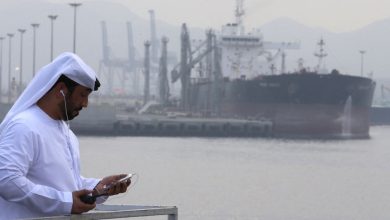
Iran faces the same paradox from the opposite direction. Hormuz gives Tehran leverage precisely because the strait is not just a waterway. It is the world’s most politically sensitive energy artery. Before the war, around 125 to 140 ships moved through it daily. During the ceasefire, traffic has fallen to a fraction of that level, with only a handful of vessels crossing on some days. The ships are not waiting for rhetoric. They are waiting for risk to change.
That is the fact behind Iran’s latest diplomatic position. Tehran does not want to reopen Hormuz first, lift its maritime pressure and then arrive at the nuclear table already stripped of its strongest card. Its proposal has sought to put the end of the war, the lifting of the blockade and the settlement of the Hormuz question ahead of any serious nuclear bargain.
This is rational. It is also risky. Hormuz is powerful for Iran because it can be threatened. It becomes dangerous for Iran when the threat hardens into prolonged global damage. The longer the disruption continues, the more Iran negotiates not only with Washington but with Gulf states, Asian importers, insurers, shipping companies and governments worried about energy and food prices. At that point, Hormuz shifts from being Iran’s argument to becoming the world’s grievance. That is why Tehran’s card also has a clock on it. If Iran gives it up too soon, it loses leverage. If it holds it too long, it helps build the coalition that will seek to reduce that leverage permanently.
The paradox of unusable power
This is the core of the present impasse. Both sides hold cards that are strongest before they are fully played.
Washington cannot lift the blockade without fearing that Iran will pocket the concession and delay the nuclear question. Iran cannot normalise Hormuz without fearing that the United States will keep military and economic pressure in reserve. Each side wants the other to release its leverage first. Each side knows that moving first could mean losing most.
The problem is not simply mistrust. Mistrust can be managed over time. The deeper problem is the absence of any credible mechanism for converting coercion into reciprocal de-escalation. Pakistan may mediate. Regional actors may transmit messages. Statements may be drafted. But there is still no trusted process through which Iran can ease Hormuz and the United States can lift the blockade without either side believing that it has been forced to spend its main card for an uncertain return. That is why the dispute over sequence is not a technical detail. It is the conflict itself. The order in which pressure is released will decide who gets to claim that the war ended on their terms.
READ: Former US official: Iran war is direct extension of ‘Greater Israel’ project
The third negotiator
The longer this continues, the less the crisis belongs to Washington and Tehran alone. The real third negotiator is the global economy. It does not sit at the table, but it sets the price of delay. It speaks through oil futures, war-risk premiums, freight rates, food prices, inflation forecasts and political pressure in importing countries.
No government can simply announce that this actor has been satisfied. Insurers will not cut premiums because a diplomat says a route is open. Shipowners will not return at scale because a communique uses the word “ceasefire”. Energy traders will not price stability into the market until the movement of vessels proves that risk has changed.
This is why the crisis is harder to unwind than it was to create. Closing a route, imposing a blockade or raising uncertainty can happen quickly. Restoring confidence takes longer. It requires repeated evidence that ships can move, ports can operate, cargoes can be insured and governments will not reverse course after the next failed negotiation.
Time, in this sense, is no longer neutral. It eats into the leverage of both sides. The longer Hormuz remains uncertain, the more investment will flow towards alternative routes, pipelines, storage arrangements and ports outside the strait. The longer the blockade persists, the more it will look less like American dominance and more like another open-ended US commitment in the Middle East.
The danger no one wants to name
Most commentary focuses on the risk that the ceasefire collapses: bombing resumes, Iran retaliates and the Gulf enters a wider war. That danger is real. But there is another possibility, less dramatic and perhaps more likely. The ceasefire may survive as a siege. The bombs may remain silent while the blockade continues. Talks may continue while Hormuz remains only partly normal. Washington may avoid the political cost of admitting failure. Tehran may avoid the humiliation of surrendering its strongest card without compensation. Both sides may preserve their narratives while the rest of the world absorbs the cost.
That outcome would not be peace. It would be war by other instruments: slower, more deniable and easier to extend precisely because it is less explosive than full escalation. The danger is not only that the ceasefire collapses. It is that it lasts long enough for Washington to avoid calling the blockade a dead end, long enough for Tehran to avoid admitting the limits of Hormuz and long enough for everyone else to pay for leverage that neither side can safely use.
OPINION: How the Iran war turned civilian lifelines into bargaining currency
The views expressed in this article belong to the author and do not necessarily reflect the editorial policy of Middle East Monitor.
🚨BREAKING: Watch The Video Clip Here ➤