Candidates to become the next head of the United Nations vowed on April 22 to revitalise the troubled organisation by pursuing reforms, while championing its core principles of peacemaking and support for development.
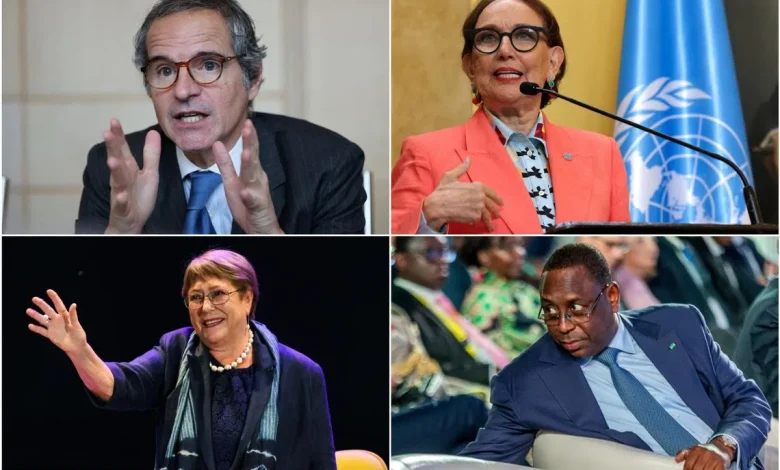
Four candidates are vying to succeed Antonio Guterres as UN secretary-general from the start of 2027, with the winner set to face the enormous task of revitalising an organization in crisis, whose stature has significantly diminished in recent years.
In marathon hearings before representatives of UN member states and civil society on April 21 and 22, the candidates all pledged to continue reforms of the 80-year-old organisation created at the end of World War II.
Even as actions by major powers have put long-held norms of the post-war international order under stress, the 193-member organisation has come under intense pressure to slash costs and prove its relevance.

On April 22, former Costa Rican vice-president Rebeca Grynspan said peacemaking would be her first priority, while warning that trust is waning in the world body and time is running out to restore it.
Ms Grynspan, an economist born to parents who fled Europe after World War II and the current head of the United Nations Conference on Trade and Development, said reform was vital.
“To defend the United Nations today is to have the courage to change it,” she said.
Mr Macky Sall, 64, who served for 12 years as Senegal’s president until 2024, said at a hearing on April 22 that he would pursue reforms with “rigorous management” to ensure better coordination between UN agencies and avoid duplication.
“Now is the time to do better with less,” he said, with the aim of creating “a revitalised organisation that is able to see that its brightest days are ahead of it”.
The candidates are bidding for a five-year term which can be extended for another five.
So far there are far fewer applicants than in 2016, when Mr Guterres was chosen from a field of 13 contenders, but others can still join in coming months.
Ms Grynspan, 70, and Chile’s former president Michelle Bachelet, 74, are aiming to become the first woman to head the UN in its 80-year history.
Tradition has dictated that the role rotate among regions, with Latin America next in line, although Mr Sall told reporters there was no reference in the UN charter to such a rotation.
In her hearing on April 21, Ms Bachelet underlined her support for women’s rights. Some conservative US lawmakers have called for Washington to veto her candidacy due to her support for abortion.
Also in contention is Argentina’s Rafael Grossi, a 65-year-old career diplomat who has headed the UN nuclear watchdog for six years.
He told his hearing that UN reform was going in the right direction but was just a start.
Precedent holds that a secretary-general should not come from among the five permanent members of the UN Security Council – Britain, China, France, Russia and the United States – to avoid excessive concentration of power, although the major powers’ backing is crucial in a lengthy and arcane selection process. REUTERS
🚨BREAKING: Watch The Video Clip Here ➤