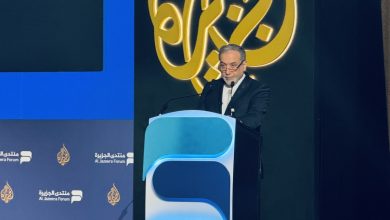
Richard Nixon was not a man given to moral clarity. But in the privacy of the Oval Office, away from the choreography of statecraft, he spoke with a bluntness that history rarely forgives and seldom forge “Let me explain something about the Jewish lobby in this country. They believe that being for Israel first does not mean that you’re putting America second. But an American president”, he insisted, “has to approach it differently. He’s always got to think first of what is best for America. An American president must make a decision that does not, in effect, give the Israelis a blank check”.
Nixon went further. “Every Jewish prime minister that I have known has enlisted American Jews to bring as much pressure as possible in the political process on American presidents”. These were not the words of a fringe voice or a conspiracy theorist. They were the words of the thirty-seventh president of the United States, speaking in the calculated, unsentimental register of realpolitik.
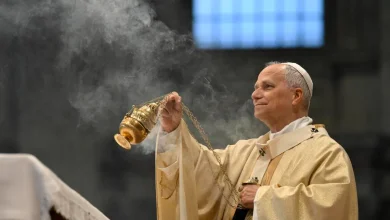
Marlon Brando, the greatest actor of his generation, arrived at similar conclusions through a different door, not the back corridors of power, but the front lots of Hollywood. When asked why he refused to accept the coveted Oscar award, he was unsparing: “Because of the increasing control of Zionists in Hollywood. They own the studios”, he said. “They shape the stories. They decide who gets heard and who doesn’t. I saw it clearly, and I couldn’t be part of that system anymore”. The actor who had made the whole world feel the weight of a man’s grief or ambition had looked behind the curtain and refused, on grounds of conscience, to keep performing.
Then there is Paul Findley, a Republican congressman from Illinois who served twenty-two years in the House of Representatives and, upon losing his seat, did the thing that defeated politicians rarely do: he told the truth about why. In his landmark 1985 book, They Dare to Speak Out: People and Institutions Confront Israel’s Lobby, Findley documented with meticulous and damning precision how the American Israel Public Affairs Committee — AIPAC — had become the dominant force shaping Washington’s posture toward the Middle East. The lobby, Findley wrote, had developed a near-perfect system for punishing those who deviated and rewarding those who complied. His conclusion was stark: what passed for American policy toward Israel and the Palestinians was not policy at all. It was capitulation, dressed in the language of alliance.
Starving the militias: Washington’s smartest move against Iran’s proxies
A president. A superstar. A congressman. Three men from entirely different worlds, operating across five decades, arriving at the same uncomfortable coordinate on the map of American power.
For nearly eighty years, that coordinate remained a forbidden zone in mainstream political discourse. The machinery that enforced the silence was formidable: campaign finance, editorial gatekeeping, and the constant threat of the career-ending accusation of anti-semitism.
Legacy media were not merely complicit in the silence; they were, in many ways, its architecture. What Nixon, Brando, and Findley observed about concentrated influence in studios, newsrooms, and legislative chambers was not paranoia. It was a structural description of how certain narratives achieved dominance, and others were quietly buried.
And then came Gaza. And then came the cell phone
No editorial board approved the footage. No network anchor contextualized it before broadcast. No studio executive decided what the audience was ready to see. The images came directly from the rubble of Jabalia, from the corridors of Al-Shifa, from the faces of mothers carrying children in plastic bags. Small children were buried alive under the rubble. Older people are torn limb from limb. Hospitals destroyed. Starvation renders human beings mere bones and skin. The International Criminal Court issued two arrest warrants for Israeli Prime Minister Netanyahu and his Defense Minister Yoav Gallant, who had threatened to cut off food, electricity, and water to an entire civilian population.
READ: The inevitable decline and fall of Zionism
The military has a phrase for what happened next: “quantity has a quality all of its own”. The sheer, relentless, unmediated volume of images from Gaza did something that decades of scholarship, congressional testimony, and presidential recordings had failed to do. It broke the monopoly of narrative. The tsunami of images horrified the world and compelled people, especially across Europe and in a growing segment of the American public, to say what had long been considered unsayable: enough. Not in our names. No more arms. No more blank cheques. No more diplomatic cover at the United Nations and in every international forum where Israeli impunity had been shielded from consequence.
The journalist and war correspondent Sebastian Junger once observed that war is always a story told by survivors about the dead. For decades, in the American telling of the Israel-Palestine story, the dead were abstractions, statistics, footnotes, and regrettable collateral. The cell phone abolished that abstraction. It put a face, a name, a cry on every casualty. It made the dead impossible to manage.
We aren’t just seeing a shift in opinion; we’re seeing a shift in the architecture of permission. It’s a rewrite of who can speak, in which spaces, without risking their entire career. The young are leading it. The streets of London, Paris, and Chicago are leading it.
Even within the American political class, there is a whispered consensus that Findley described. We’re hearing the literal break in the silence. The unspoken rule that you must censor yourself before you speak is falling apart.
Nixon feared giving Israel a blank check. Brando feared a culture in which certain stories could not be told. Findley documented the machinery by which both fears were, for decades, well-founded. What they could not have foreseen was the device in every pocket that would, finally, make the silencing incomplete.
The cell phone did not create the suffering in Gaza. But it denied the world the comfort of not knowing.
That denial, it turns out, was what justice needed most.
The views expressed in this article belong to the author and do not necessarily reflect the editorial policy of Middle East Monitor.
🚨BREAKING: Watch The Video Clip Here ➤