$100bn Remittances: African Immigrants In US Quietly Funding African Economy, Ndukwu Reveals

The African diaspora in the Washington D.C., Maryland and Virginia (DMV) region has become one of the most influential immigrant economic clusters in the United States, with more than one million African-born residents driving businesses, healthcare systems, and tech services.
According to the World Bank, remittances to Sub-Saharan Africa have exceeded $50 billion annually in recent years, making them larger than official development aid in many countries and in some cases, comparable to foreign direct investment inflows.
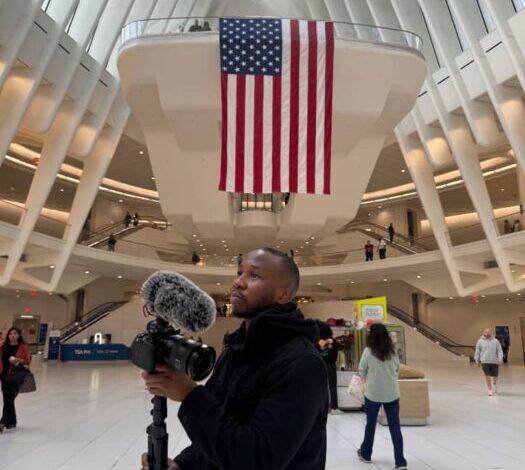
Steven Ndukwu, a Nigerian filmmaker and content creator with over 100 million views across his travel documentaries, recently captured this world in a widely acclaimed episode that has amassed over half a million views and sparked more than 5,000 comments.
In the documentary, Ndukwu spent 30 days embedded in the DMV community, visiting the homes and businesses of Africa’s wealthiest immigrants in America, entrepreneurs building multi-million-dollar companies, employing hundreds, and transforming lives back on the continent. The film resonated deeply with African audiences worldwide, showing that America is not the effortless paradise often portrayed, and inspiring a generation of viewers with an honest, grounded portrait of migrant ambition and sacrifice.
The real impact of this community, Ndukwu argued, was not only in America, but in how it is reshaping economies across Africa through remittances, investment, and skills transfer.
Nigeria alone received about $20 billion to $21 billion annually, while Kenya and other economies also rank among top recipients. In smaller nations such as The Gambia, diaspora inflows account for as much as a third of GDP, underscoring how critical these flows have become for household income and survival.
Yet behind these numbers lies a harder reality of long working hours, high pressure, and financial sacrifice.
”The American dream does not just happen when you arrive,” said Nigerian-born healthcare entrepreneur Ifeoma Cleopatra Onyia, founder of Cleopatra Winery and Vineyard in the U.S. “Nursing jobs pay well, yes, but people don’t talk about the 12-hour shifts, the stress, and the exhaustion. Nothing here is easy, you have to work for everything.”
She urged migrants not to misrepresent life abroad. “When you go home, tell the truth. Don’t make it look like money grows overnight in America.”
For many migrants, the journey is also marked by identity struggles. Nadine Djuiko, a Cameroonian entrepreneur who now runs a large hair-braiding business in Maryland employing hundreds of stylists, said her early years in the US were defined by financial pressure and secrecy.
”At some point, I told my friends I was in medical school,” she said. “People don’t always understand the struggle. Many are working hard but suffering quietly.”
Beyond personal remittances, diaspora businesses are increasingly reshaping supply chains. Djuiko sources raw materials from countries such as Senegal and builds a constant import loop between African producers and US consumers, creating indirect export demand for small suppliers on the continent.
Ndukwu said this reflects a broader shift in global perception of African migration.
”The diaspora is no longer just surviving abroad,” he said. “They are building structured businesses that connect Africa to global markets in a very direct way.”
Experts describe this shift as moving from “brain drain” to “brain gain,” as professionals invest in startups, mentorship networks, and venture capital flows into African tech hubs like Lagos, Nairobi, and Cape Town.
While challenges remain, the DMV diaspora is increasingly seen as a financial and intellectual bridge, linking African economies not just through money sent home, but through systems, skills, and global business integration.