0
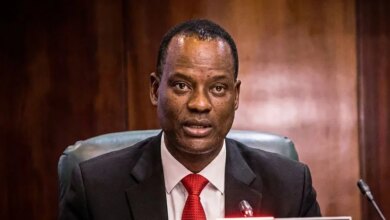
President of the Port Management Association of West and Central Africa (PMAWCA), Dr. Abubakar Dantsoho, has stressed that African countries must urgently modernise their port infrastructure to remain competitive in global trade and unlock sustainable economic growth.
Dantsoho, who is also the Managing Director of the Nigerian Ports Authority (NPA), stated this at the close of the PMAWCA meetings held in Lagos, where maritime stakeholders across the region discussed strategies for improving port operations and regional competitiveness.
According to him, outdated port infrastructure can no longer support the growing demands of international trade, especially as global shipping continues to evolve with larger vessels, automation and technology-driven systems.

“Africa cannot afford to be left behind in the global maritime race,” Dantsoho said. “No nation can achieve meaningful economic growth with obsolete port infrastructure. Ports remain the backbone of trade and economic expansion, and without modern facilities, we cannot compete effectively.”
He noted that countries in West and Central Africa are already taking steps to reposition their maritime sectors through major infrastructure upgrades and deep sea port projects.
“This is an industry that requires huge investment in infrastructure,” he said. “You cannot continue to rely on facilities built decades ago and expect to receive modern vessels. The reality is that global shipping is changing rapidly, and our ports must also evolve.”
Drawing an analogy with the hospitality industry, Dantsoho added, “You cannot have a hotel built 50 years ago and expect modern customers to continue coming without refurbishment. It is the same thing with ports.”
He disclosed that Nigeria is currently rehabilitating the Apapa and Tin Can Island ports as part of medium-term measures aimed at improving efficiency and cargo handling capacity.
According to him, while the rehabilitation projects are important, Africa must begin to focus more aggressively on developing modern deep-sea ports capable of handling future trade volumes and larger vessels.
“The Lekki Deep Sea Port is a significant step forward for Nigeria, but Africa must think beyond that,” he stated. “If you look at countries like Singapore, they are building ports with hundreds of berths. Guinea is also developing a multi-billion-dollar deep-sea port project. These are the kinds of investments African countries must begin to pursue if we truly want to compete globally.”
Dantsoho further emphasised the growing importance of technology, automation, artificial intelligence and robotics in modern maritime administration, insisting that efficient port management can no longer be separated from digital innovation.
“Technology is now at the centre of global port operations,” he said. “Automation improves efficiency, reduces delays and increases transparency. At the Nigerian Ports Authority, we have achieved nearly 90 per cent automation in our operations.”
He explained that electronic payment systems and automated cargo processing platforms introduced by the NPA have significantly enhanced operational efficiency and reduced human bottlenecks.
Highlighting the impact of the electronic call-up system introduced at Apapa Port, Dantsoho said the initiative has drastically reduced the notorious traffic congestion that previously crippled activities around the port corridor.
“Today, you can go into Apapa and leave within minutes,” he said. “Before now, people spent several hours and sometimes slept on the bridge because of the gridlock. Technology has helped us address that challenge to a large extent.”
The PMAWCA President also pointed to Nigeria’s strategic importance within the West and Central African maritime corridor, revealing that the country accounts for more than 70 per cent of cargo traffic within the sub-region.
According to him, Nigeria’s large population, expanding consumer market and strategic geographical position make it a major gateway for neighbouring landlocked countries including Niger, Chad, Mali and Burkina Faso.
“Our market extends beyond Nigeria because several neighbouring countries depend on Nigerian ports,” he explained. “That places a major responsibility on us to provide deeper waters, stronger quays and modern infrastructure that can accommodate larger ships and increased trade volumes.”
Dantsoho added that Africa’s maritime growth will depend heavily on regional cooperation among port authorities, particularly through peer review mechanisms and knowledge sharing under PMAWCA.
“We are increasingly collaborating as African port authorities by sharing experiences, benchmarking performance and exchanging ideas on best practices,” he said. “Regional integration and cooperation are critical if Africa wants to strengthen its position in global maritime trade.”
He maintained that the future of Africa’s economy is closely tied to the ability of its maritime sector to adapt to changing global realities through infrastructure renewal, technological advancement and strategic investments.
“Our future growth depends on how quickly we modernise,” Dantsoho said. “Africa has enormous potential, but we must invest boldly in ports, technology and logistics if we want to fully maximise the opportunities before us.”