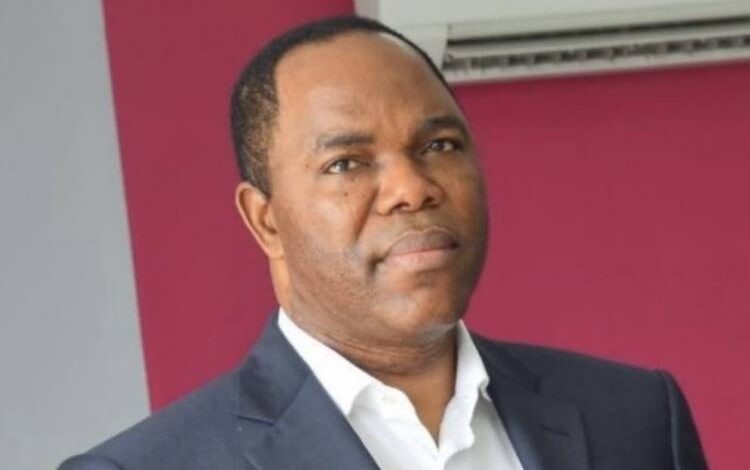
A Federal Capital Territory High Court sitting in Apo, Abuja, has granted bail to former chairman of the defunct Skye Bank Plc, Tunde Ayeni, over an alleged N15.7 billion fraud case.
Justice Jude Onwuzuruike, who delivered the ruling on Monday, fixed the bail at N200 million and ordered the defendant to provide two sureties in the same amount.
The court stated that the sureties must be federal civil servants and must submit valid national identity cards alongside letters confirming their employment.
Justice Onwuzuruike further ruled that the sureties must possess landed properties worth at least N500 million. In addition, one of the sureties is required to present an undertaking for a bank guarantee valued at N15 billion.
Ayeni, who has been in custody since May 4, was ordered to remain in prison custody until the bail conditions are fully met.


The court, however, directed correctional authorities to allow the former bank chairman access to his legal representatives while in custody.
Justice Onwuzuruike dismissed the objection raised by the Economic and Financial Crimes Commission against the bail request, stressing that bail is meant to ensure a defendant appears for trial while still enjoying the constitutional presumption of innocence.
Ayeni had earlier pleaded not guilty after being arraigned on a 17-count charge bordering on alleged criminal breach of trust, misappropriation, and conversion of investors’ funds totaling N15,665,085,429.
The court also recalled that Ayeni had previously faced a similar charge in 2019 alongside Timothy Oguntayo before the Federal High Court in Abuja.
During the earlier proceedings, Ayeni’s counsel, Chief Wole Olanipekun (SAN), argued that the transactions under investigation by the EFCC were purely commercial dealings carried out with the approval of the management of the defunct Skye Bank and the Central Bank of Nigeria.
The defence maintained that the matter stemmed from business transactions that later turned problematic and could be resolved amicably.
Both parties later agreed to settle the dispute out of court, an arrangement that was approved and adopted as judgment by Justice Ijeoma Ojukwu.