David Mark, Lamido, Others Listed As Signatories To Annulment Of June 12 (Full List)

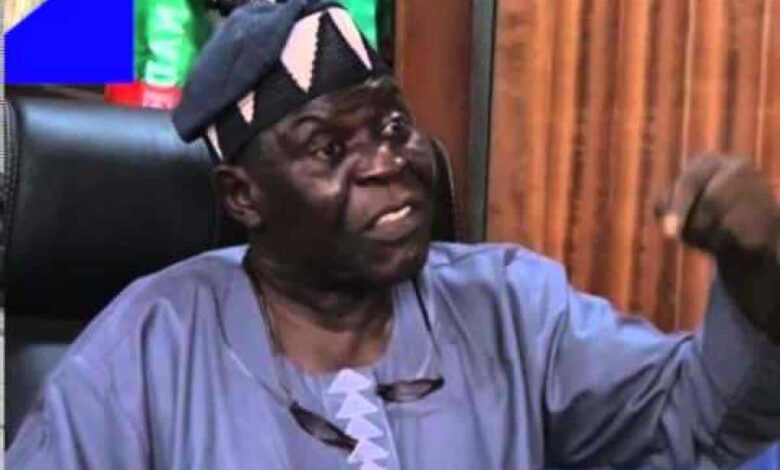
The General Secretary of the National Democratic Coalition (NADECO), Ayo Opadokun, has named prominent political, military and technocratic figures he alleged signed a document that paved the way for the nullification of the June 12, 1993, presidential election won by Chief MKO Abiola.
Naijaonpoint reports that the allegation is contained in Opadokun’s newly launched 509-page book, ‘The NADECO Story’, unveiled last week in Lagos.
In Chapter 27 of the book, Opadokun accused several leading figures in Nigeria’s political establishment of endorsing the Interim National Government arrangement following the military regime of Gen. Ibrahim Babangida’s annulment of the June 12 election.
Among those listed as signatories to the controversial document were former Chief of General Staff, Augustus Aikhomu; former Head of the Interim National Government, Ernest Shonekan; former Senate President, David Mark; former foreign affairs minister, Tom Ikimi; former old Anambra State governor, Jim Nwobodo; and former Chief of Staff, Supreme Headquarters, Musa Yar’Adua.
Others named included former Social Democratic Party (SDP) chairman, Tony Anenih; Adamu Ciroma; former Jigawa State governor, Sule Lamido; Gen. Aliyu Gusau; Patrick Dele-Cole; Dapo Sarumi; Abubakar Rimi; Olusola Saraki; and Joe Nwodo.
Opadokun wrote, “The big Nigerian ‘Patriots,’ who also signed the remarkable document that nailed the coffin of June 12, include people of note, who for whatever reason sold their integrity and dignity to subsume the popular mandate of MKO.”
According to the book, the agreement followed the setting up of a tripartite committee comprising representatives of the military government, the SDP and the National Republican Convention.
The committee reportedly agreed to establish an Interim National Government headed by Shonekan as the June 12 crisis worsened.
“The Guardian recalls that in 1993, as the June 12 election crisis degenerated with no end in sight, a tripartite committee comprising members of the then military regime and the two political parties, SDP and NRC, buckled under the weight of pressure. They compromised and then agreed to form an Interim National Government,” the book stated.
Opadokun identified Aikhomu as the first signatory to the document.
“Specifically, the first signatory to the evil document was Admiral Augustus Aikhomu, who was then Vice President under the then military presidency of Babangida,” he wrote.
He said Shonekan signed second, while Abdulrahman Okene signed as the third actor in the arrangement.
The author also criticised some leaders of the SDP, including Anenih, who chaired the party that won the June 12 election.
“Chief Tony Anenih was chairman of SDP at the time of the June 12 annulment. It was the victory of the party he led that was negotiated away,” the book stated.
On Joe Nwodo, Opadokun said he was the only political actor who signed the document “with reservations.”
“He did not explain in the document the significance of his remark, ‘with reservations,’” the author added.
Opadokun also named others he accused of aiding the annulment and legitimising military rule, describing them as belonging to a “Hall of Shame.”
He accused former Katsina State governor, Saidu Barda, of threatening violence on behalf of NRC governors over any attempt to revisit June 12.
According to him, “NRC Governor Saidu Barda of Katsina State, on behalf of the 14 NRC governors, declared that any attempt to revisit June 12 would result in ‘chaos and bloodshed on an unprecedented scale.’”
He also accused former senator, Jonathan Zwingina, who served as Director-General of Abiola’s campaign organisation, of collaborating with forces that undermined the mandate.
The book further blamed the late Senator Arthur Nzeribe and his Association for Better Nigeria for legal moves that halted the announcement of election results.
“Nzeribe secured an extra-judicial ex parte order halting further announcement of the election results. General Babangida, in a national broadcast, cancelled the entire election and dissolved the electoral body, NEC,” Opadokun wrote.
He also accused former Attorney-General and Minister of Justice, Chief Clement Akpamgbo, SAN, of drafting decrees that allegedly legitimised the transition arrangements and protected military interests.
According to Opadokun, Akpamgbo “crafted various anti-democratic decrees to fit all dubious steps taken by General Babangida to sabotage his own transition agenda.”
The author added that Akpamgbo warned Nigerians under the Interim National Government that “any further mention of June 12 was an act of high treason.”