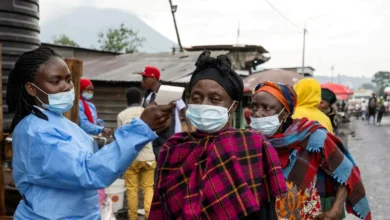
The rare Bundibugyo strain of Ebola has prompted the WHO to declare a public health emergency of international concern.
Most of the cases have occurred in the DR Congo, and the outbreak has spread to Uganda, where the strain was first identified in 2007-08.
Bundibugyo kills 30 percent to 40 percent of infected people, making it less lethal than the more common Zaire strain, which causes death in up to 90 percent, according to a global study published in 2024.


Bundibugyo is one of the four species of the ebolavirus genus that cause life-threatening illness in humans. All Ebola viruses are transmitted through direct contact with the bodily fluids of infected animals or humans or objects contaminated with such fluids.
Body fluid transmission is a particular risk for hospital workers. A US doctor working in the DRC has been infected in the current outbreak.
There are no approved vaccines or drugs for Bundibugyo ebolavirus. Emergency use authorisation would be necessary for the deployment of any experimental treatments or existing treatments that have been effective against other strains.
Potential candidates that have helped to control Bundibugyo in trials in non-human primates include Merck’s Ervebo, Mapp Biopharmaceutical’s MBP 134, and Auro Vaccines’ VesiculoVax.