
The Nigeria Centre for Disease Control and Prevention has placed Lagos, the Federal Capital Territory and eight other states on high Ebola alert following the outbreak of the Bundibugyo strain of the Ebola Virus Disease in parts of East and Central Africa.
In a public health advisory issued to state commissioners for health, the agency warned that Nigeria faces a high risk of importing the virus due to increasing regional transmission, international travel, porous borders and population movement.
States classified as high-risk include Rivers State, Kano State, Enugu State, Borno State, Akwa Ibom State, Cross River State, Taraba State and Adamawa State because of their airports, seaports, border routes and high human traffic.
The NCDC said Nigeria had not recorded any confirmed Ebola case but warned that a recent risk assessment showed the danger of importation remains high.


According to the agency, Uganda and the Democratic Republic of the Congo have recorded 1,077 suspected cases and 247 deaths linked to the outbreak, with a fatality rate of 24.6 per cent.
The agency explained that the Bundibugyo strain differs from the Zaire Ebola strain because there are currently no approved vaccines or specific treatments for it.
It also warned that symptoms may initially resemble malaria or Lassa Fever, making early detection more difficult.
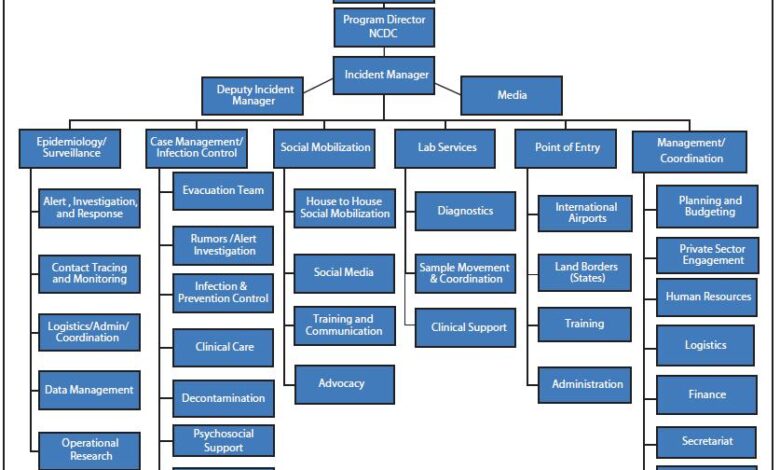
As part of emergency response measures, the NCDC said its National Emergency Operations Centre had been activated in alert mode while state governments were directed to strengthen surveillance, identify isolation centres, equip health workers and intensify public awareness campaigns.
Meanwhile, the Lagos State Ministry of Health assured residents that no confirmed or suspected Ebola case had been detected in the state.
The Commissioner for Health, Akin Abayomi, said Lagos remained on high alert and had activated its biosecurity architecture to detect and contain any possible outbreak.
He noted that the state’s preparedness system, first tested during the 2014 Ebola outbreak and later strengthened during the COVID-19 pandemic, remains active in responding to infectious disease threats.
Nigeria’s renewed alert has revived memories of the country’s successful containment of Ebola in 2014 after infected traveller Patrick Sawyer arrived in Lagos.
Health authorities have urged Nigerians to remain calm, maintain proper hygiene, avoid misinformation and promptly report suspected symptoms as surveillance efforts intensify nationwide.