For centuries, the idea of Turkic unity largely existed in history books, intellectual circles and cultural memory — tied together by shared language, traditions and the legacy of a civilisation that once stretched across Eurasia.
Many leaders spoke of solidarity among Turkic nations, but few succeeded in turning that idea into a broader geopolitical vision capable of reshaping the region’s future.
Today, that vision is beginning to take a more concrete form.
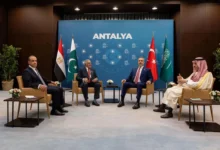
President Recep Tayyip Erdogan’s recent visit to Kazakhstan may ultimately be remembered as more than a routine diplomatic meeting between two closely linked nations.
It could come to symbolise a broader shift taking place across the Turkic world — one in which Central Asia is becoming more connected to global markets, strategic trade routes and international transport corridors through expanding political and economic cooperation.
Just as importantly, the Turkic world is increasingly being viewed as more than a loose collection of post-Soviet states.
These countries are beginning to project a clearer geopolitical identity of their own, shaped by shared interests, economic integration and growing regional coordination.
International perceptions of Central Asia are also changing.
For years, the region was often seen primarily through the influence of larger powers such as Russia and China.
But that framework is gradually shifting as Turkic states become more economically interconnected, diplomatically coordinated and strategically significant across Eurasia.
This transformation helps explain the growing prominence of the Organization of Turkic States in recent years, as member states seek to deepen cooperation in trade, infrastructure, energy, defence and regional connectivity.
What many observers once dismissed as a largely symbolic or cultural project is gradually evolving into something far more consequential: a geopolitical framework with growing international influence.
The Organization of Turkic States is no longer defined only by shared language, history or cultural identity. Increasingly, it is becoming tied to trade routes, transport corridors, energy cooperation, diplomatic coordination and regional strategic influence.
Türkiye has been central to that transformation.
Türkiye’s expanding reach
Under President Erdogan, Ankara is no longer viewed as a passive regional actor that can be overlooked in global affairs.
From NATO negotiations to Middle East diplomacy, the Russia-Ukraine war, energy politics and defence cooperation, Türkiye has positioned itself as a country of growing strategic importance.
That shift has also elevated the profile of the Organization of Turkic States. When a regional organisation is anchored by a country with Türkiye’s geopolitical weight, it inevitably gains greater visibility, credibility and international relevance.
The broader Turkic world also possesses significant collective capabilities — from military and diplomatic influence to strategic geography — giving it the potential to play a larger role in global affairs.
This transformation may be especially important for Central Asia. For centuries, geography constrained the region’s economic and strategic potential.
Despite vast natural resources, industrial capacity, agricultural output, and a young population, many Central Asian states struggled to integrate fully into global markets because of their landlocked status and dependence on external transit systems.
Now, however, a different regional vision is emerging. Through initiatives such as the Middle Corridor, Ankara aims to connect Central Asia more directly to Europe and the wider Turkic world via routes that cross the Caspian Sea, the Caucasus, and Türkiye.
At the same time, new transport and maritime links are being developed to strengthen regional connectivity.
The significance of the Middle Corridor extends beyond transportation alone. Supporters see it as part of a broader effort to reshape Eurasian trade routes and reduce dependence on older geopolitical and logistical frameworks.