“I Never Thought I’d Move Back Home Again” — 10 Nigerian 9-to-5ers Share How Their Lives Have Changed Since 2023

Three years ago, many Nigerian workers weren’t exactly living large, but they could still afford the basics. Rent was manageable, transport didn’t eat up a huge chunk of their salaries, and some people could even save a little at the end of the month.
Today, many 9-to-5 workers say that’s no longer the case.
As President Tinubu marks three years in office, we asked Nigerian workers how their lives have changed since 2023. Their responses reveal a pattern of shrinking purchasing power, rising living costs, side hustles, layoffs, and everyday compromises that have quietly reshaped what it means to earn a salary in Nigeria.
As of 2021, my ₦250k salary was enough to sustain me comfortably because I lived alone in a self-con and had very few responsibilities. But now, everything is more expensive.


My rent increased from ₦400,000 per year to ₦850,000. I could no longer afford to live on my own. I eventually had to move back in with my parents just to survive. I never imagined I would have to take that step again.
Before 2023, my salary wasn’t much, but my wife and I could manage the basics and keep the house in order. It wasn’t easy, but it worked. These days, things are much harder, so I became a part-time Korope driver to make ends meet.
My job closes around 4:30 p.m., and from there, I go straight to driving. Even though I do it to add a little to what I earn from my job, it still doesn’t solve the problem because I have to share the money with the vehicle owner at the end of the day.
When I joined this company a few years ago, I had about eight people on my team. Over the past two years, many of my colleagues have been laid off because the company says it can’t afford everyone’s salaries. Now there are only four of us left.
Every few months, somebody else leaves, and the workload keeps increasing for the rest of us. These days, I come to work with the fear that it could be my turn too one day.
I started teaching at this private primary school in 2021, and back then, most classes had about 20 to 25 students. Over the last two years, I’ve watched those numbers drop drastically, mostly because many parents can no longer afford the school fees.
Now, some classes are nowhere near as full as they used to be, and it’s starting to affect how often we get paid. Honestly, I’m this close to quitting.
Back in 2022, whenever I closed late and couldn’t find a bus going home, one of my co-workers would offer to take me home with him. It became a routine, and whenever I tried to contribute to fuel, he always told me not to bother.
Recently, he asked me to start paying for fuel. I’m not complaining because I know fuel is expensive and he’s doing me a favour. I just miss when things were easier for everybody.
I worked in my previous field for about three years before deciding to switch careers. The year I got a new job was the same year Tinubu came into power, and job hunting since then has been exhausting.
Most of the openings I see now offer between ₦150,000 and ₦200,000. It honestly feels discouraging, considering my experience level and how expensive everything has become. Sometimes I look at these salaries and genuinely wonder how people are expected to survive on them.
I’ve been working at the same company for years, and before 2023, our end-of-year hampers were always full. Because of my position, I would get things like a 25kg bag of rice, power banks, biscuits, chocolates, and other gifts. But ever since December 2024, it has just kept reducing.
Last December, there was no rice and no gadgets. We were only given a small box of biscuits and chocolates. I was genuinely shocked.
Before 2023, my transport to and from work was ₦500. The day after the fuel subsidy removal announcement, my transport to work alone became ₦500.
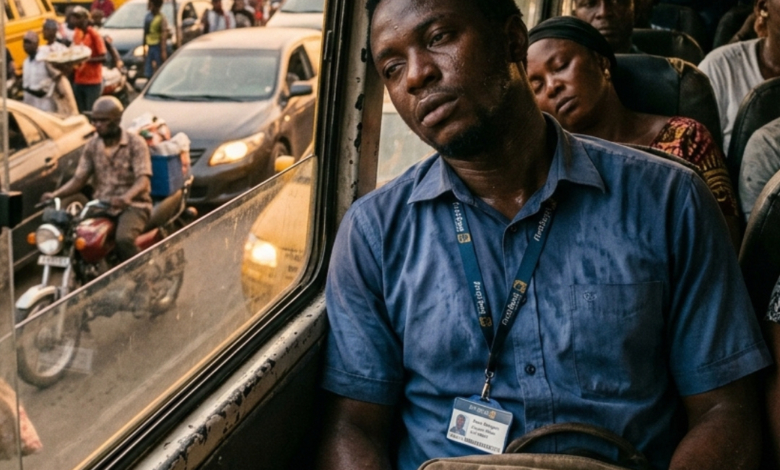
Today, I spend about ₦2,000 just getting to work, and that’s not even counting the journey back home. It still doesn’t make sense to me.
After Tinubu came into power, my transport fare increased from ₦400 to ₦1,400. To help workers cope, my company switched to a hybrid schedule. I honestly thought it would help me save money. Instead, electricity became more expensive. Data became more expensive, too. I’ve spent so much money trying to keep my home workspace running that sometimes it feels like whether I stay at home or go to the office, I’m still spending money I can’t afford to lose.
My husband and I used to go to work together every day because our offices were close to each other. He would drop me off in the morning and pick me up after work. It worked well for years.
But recently, things became too expensive, especially the cost of maintaining the car. We eventually had to sell it so we could focus on caring for our children and keeping the family afloat. Now we spend almost twice as much on transport every day.
See what people are saying about this article on Instagram here.
What do you think about this?
Drop your opinion in the comment section.
FOLLOW US & Share this with someone who needs to see this.