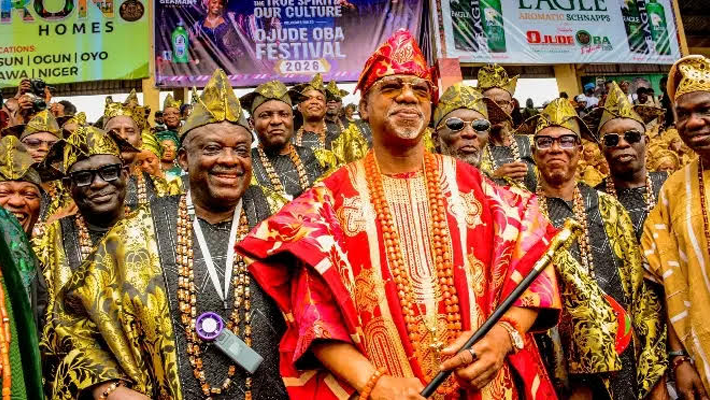
The 2026 Ojude Oba festival brought colour, fashion, culture and commerce to Ijebu-Ode on Friday as dignitaries, tourists, families and age-grade groups gathered for one of Nigeria’s biggest traditional celebrations.
The annual festival, held at the Awujale Palace pavilion, again turned Ijebu-Ode into a major centre of Yoruba culture. Guests arrived in colourful traditional outfits, while age-grade groups, horse riders, families and visitors gave the event its usual glamour.

Top dignitaries at the festival included Ogun State Governor Dapo Abiodun; the Minister of Art, Culture, Tourism and the Creative Economy, Hannatu Musawa; former Ogun State Governor Otunba Gbenga Daniel; and Seyi Tinubu, among others.

Ojude Oba, which means “the king’s forecourt”, is usually celebrated by the Ijebu people after Eid-el-Kabir. It brings together different age-grade groups, known as regberegbe, as well as prominent families, traditional title holders, horse riders and visitors from within and outside Nigeria.

Read related news:
100 million people expected at 2025 Ojude Oba festival
What you need know about Ojude Oba festival as millions attend
Awujale of Ijebuland Oba Adetona dies at 91, Abiodun, Tinubu mourn
This year’s edition came about 10 months after the death of the Awujale of Ijebuland, Oba Sikiru Kayode Adetona, who died on Sunday, July 13, 2025, at the age of 91.
The late monarch, who reigned for more than six decades, played a major role in promoting Ijebu culture and strengthening the global profile of Ojude Oba. His absence gave this year’s celebration a different mood, but the large turnout showed that the festival remains one of the strongest cultural events in the South-West.
The process of installing a new Awujale has not been completed. The Ogun State Government earlier suspended the selection process following petitions and security concerns. The government said the move was aimed at maintaining peace and ensuring that the process followed proper procedure.

Despite the vacant throne, sons and daughters of Ijebuland came out in large numbers to celebrate their heritage. Many attendees said the festival remains a symbol of unity, identity and pride for the Ijebu people.
Fashion was one of the biggest attractions of the day. Men appeared in agbada, fila and richly designed fabrics, while women wore colourful aso-ebi, gele, beads and jewellery. The palace pavilion became a runway of Yoruba elegance, with families and age groups using their outfits to show class, history and cultural pride.
Horse riders from prominent Ijebu families also added colour to the celebration. Their decorated horses, royal movements and traditional display drew attention from spectators and photographers.
Beyond the beauty and pageantry, Ojude Oba also brought major economic activity to Ijebu-Ode. Hotels, restaurants, transport workers, traders, fashion designers, makeup artists, photographers, decorators and event planners benefited from the large number of visitors who came into the town for the festival.
The festival also helps the Ogun State Government through tourism promotion, tax revenue, business activity and wider publicity for the state. It attracts sponsors, brands, investors and visitors, helping to market Ijebu-Ode as both a cultural and economic destination.
For many small business owners, Ojude Oba is one of the busiest periods of the year. Food sellers, clothing vendors, commercial drivers and hospitality operators often record higher sales during the festival period.

Governor Abiodun used the period to reflect on his 66th birthday and seven years in office. He thanked the people of Ogun State for their support and said his administration remained committed to building a stronger, peaceful and more prosperous state.
He also expressed gratitude to President Bola Tinubu, First Lady Senator Oluremi Tinubu, Chief Olusegun Osoba, party leaders, political associates, friends and family members for their support over the years.
The governor said his years in office had been marked by responsibility, sacrifice, learning and commitment to the development of Ogun State.
This year’s Ojude Oba festival showed that even in a period of royal transition, the cultural strength of Ijebuland remains firm. It also showed how tradition, fashion, politics, tourism and business now meet at one of Nigeria’s most important cultural gatherings.
As the crowd departed Ijebu-Ode, one message was clear: Ojude Oba remains more than a festival. It is a powerful cultural brand that continues to give Ogun State national and global attention.