NEW YORK – Russia’s UN ambassador said on May 26 that the United States did not grant a visa for Russian Deputy Foreign Minister Alexander Alimov to attend a UN Security Council meeting and called it a breach of US obligations as host of the UN.
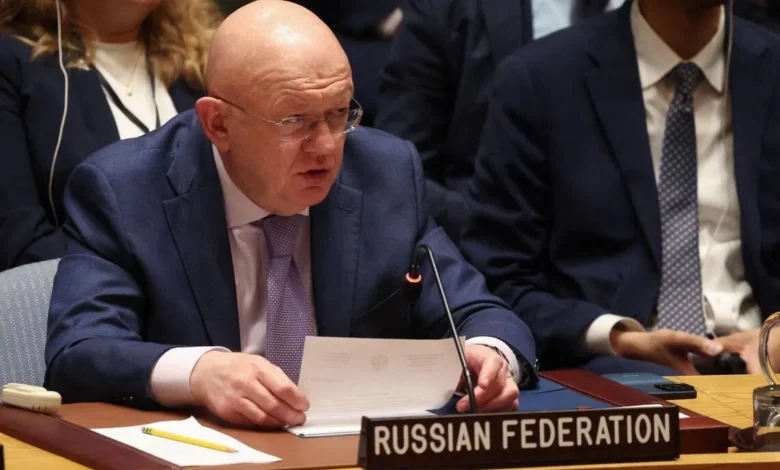
Mr Vassily Nebenzia made the comment at a meeting of the 15-member UN Security Council chaired by China’s Foreign Minister Wang Yi that he said Mr Alimov had intended to attend.
A UN diplomat said Iranian Foreign Minister Abbas Araqchi had also apparently been denied a visa to attend the same meeting, but a US State Department official said on May 27 that Washington did not prevent the minister from travelling to New York.
The main topic of the meeting was upholding the UN charter and strengthening multilateral cooperation and the discussion will resume in the Security Council on May 28 after a UN holiday on May 27.
The State Department and the US mission to the United Nations did not respond to requests for comment on Mr Araqchi on May 26.
On May 25, Iranian state media reported the country’s foreign ministry spokesman as saying that Mr Araqchi’s trip was cancelled because of “overall circumstances and issues related to US visa procedures”.
Neither the State Department nor the US mission responded when asked about Mr Alimov.
Mr Nebenzia said Mr Alimov, who oversees matters related to the United Nations, was invited by Mr Wang and called it “an egregious instance of disrespect” for China’s UN presidency, especially when the topic under discussion was the UN charter.
“Despite all of our attempts to persuade the US side to issue a visa to him, that visa was ultimately not granted,” he said.
Mr Nebenzia said that under the UN Headquarters Agreement, access to UN headquarters in New York “needs to be provided for all officials of member states, barring none”.
China’s mission said it had no information about visa issues.
UN spokesperson Farhan Haq told a UN news briefing on May 26: “We expect the host country to issue visas to all of those who need to participate in the activities of the United Nations at our headquarters here.”
Mr Araqchi was not in New York and would not meet with UN Secretary-General Antonio Guterres on May 26 as scheduled, Mr Haq said, adding he did not know the reason.
The State Department official, who did not want to be identified by name, said: “We take seriously our obligations under the UN Headquarters Agreement … questions regarding the Iranian delegation’s travel decisions should be directed to the Government of Iran.”
Iran said on May 26 the United States had violated the ceasefire in their war after the US conducted what it called defensive strikes in southern Iran.
On May 27, the White House denied as “a complete fabrication” an Iranian state television report saying that Tehran would restore shipping through the Strait of Hormuz to pre-war levels within a month in a framework deal with the US to also include withdrawing US forces from Iran’s vicinity.
Mr Wang told reporters he hoped parties in the conflict could stay committed to the ceasefire and meet each other halfway.
Mr Nebenzia said the UN charter was under serious strain and accused Western-led countries of using double standards to maintain dominance. He said remilitarisation in Germany and Japan was a dangerous threat to global security and undoing the results of World War II.
“The policy of remilitarization is undermining the U.N.-centric international system,” he said.
“Countries that were defeated during the Second World War are seeking plausible pretexts for rewriting its outcomes, and their rhetoric should not mislead anybody. This is a very dangerous trend, which warrants the attention of the entire international community.”
Mr Wang said there was a need to “reinvigorate” the UN Charter amid rising instability and conflict, warning that “a giant ship of global civilisation is sailing into dangerous waters”.
Mr Guterres told the meeting the world now faced the highest number of conflicts since the founding of the United Nations in 1945, and “new and uncharted risks to peace and security”. REUTERS