In the 11th century, the Persian statesman Nizam al-Mulk (Abu Ali Hasan ibn Ali Tusi, born in Khurasan in 1018) built an empire not with swords alone, but with schools. He served as grand Vizier for two famous Seljuk sultans: Alp Arslan, and Malik Shah I from 1063-1092. The Nizamiyyah academies produced generations of administrators trained in law, ethics, accounting, and statecraft. A thousand years later, the civilization that inherited that tradition- Iran- still carries the DNA of bureaucratic rigor and philosophical depth.
Meanwhile, the United States, a young empire now in visible decline, has elevated a man with no respect for learning, no moral compass, and with a famously short attention span. The contrast is not merely political, it is civilisational.
The Nizamiyyah Model: Public Service as a Sacred Craft
Nizam al-Mulk, -meaning Orderer of the Realm, or Regulator of the State, – understood that an empire cannot survive on conquest alone. A stable state requires permanent, loyal, and competent class of administrators. The Nizamiyyah schools were the first state-sponsored higher education system in the Sunni world. Their unforgiving curriculum included years of training in Arabic grammar, Quranic exegesis, hadith criticism, Shafi’i jurisprudence, history, mathematics and Persian literary composition. Students lived in dormitories, received scholarships, and were tested rigorously. Though separated by a millennium, the Nizamiyya model revived a philosophy that deeply mirrored the ancient Confucian tradition. Just as the Chinese empire relied on its highly educated literati to temper raw military power and maintain the Mandate of Heaven, Nizam al-Mulk’s vision was its Islamic equivalent: a sophisticated class of statesmen governing with strategic wisdom.


Both the Confucian literati and the scholars of the Nizamiyyah arrived at the exact same conclusion: a stable empire cannot survive on swords or wealth alone, but requires the enduring intellect of those who have mastered the art of governance.
The hidden curriculum of Nizam al-Mulk’s own Siyastnama (Book of Government) was moral. It taught that a ruler must be just, because injustice topples thrones. A vizier had to be completely honest because the public treasury was viewed as a sacred trust. A judge had to be incorruptible, working under the deep conviction that God was always watching. For Nizam al-Mulk, these were never just pious slogans or empty moralizing; they were hard, operational principles. They were backed by a relentless reality of hidden spy networks, unexpected audits, and swift, heavy punishments for any official who crossed the line.
The product of a Nizamiyyah education was a man (later, women in some periods) who could calculate taxes, adjudicate commercial disputes, and manage a ‘postal relay’ (a sophisticated network where couriers were not merely delivering ink, but serving as the eyes and ears of the state, turning quiet intelligence into calculated survival). The ruler served the state, not his family, he planned for decades.
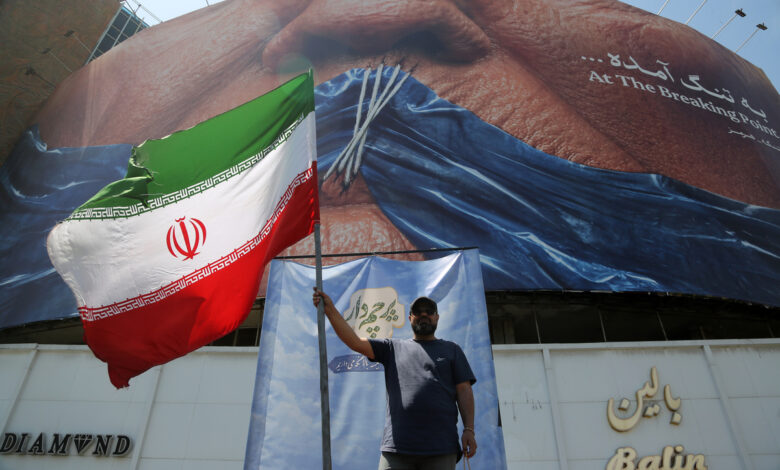
Iran, despite its modern upheavals, remains a society where a senior bureaucrat is often a PhD holder, where poetry and philosophy are marks of cultivation, and where the ideal of the farrhang, (a polite, cultured person) still commands respect. That is the echo of Nizam al-Mulk.
The Trump phenomenon: The anti-farrhang
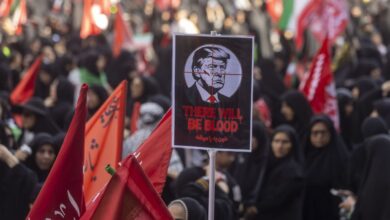
Now consider the leader of the American empire in the 21st century. Donald Trump rose to prominence as a reality television star, a brander of luxury products, and a serial litigant. He has publicly boasted evading taxes, cheating on wives, and manipulated bankruptcy news. His monosyllabic lexicon has long since devolved into public caricature, serving as endless fodder for late-night comedians and political commentators alike. He has mocked prisoners of war, disabled reporters, and been found liable for sexual abuse and fraud. He governs by whims, tweets and revenge.
Morally corrupt? By any traditional standard, Persian, Christian or secular humanist, Yes. Intellectually limited? He has admitted he does not read books. His attention span is measured in seconds. He confuses basic facts about history, geography and law daily. Under him, the idea of a professional nonpartisan civil service came under direct assault. He filled his cabinet with loyal sycophants who have no relevant experience, and stripped tens of thousands of career civil servants of protections turning them into political appointees subject to dismissal for disloyalty.
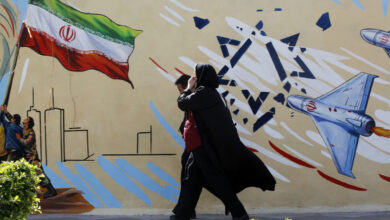
But what concerns us here is his conduct in the war unleashed alongside Netanyahu against Iran on February 28th – a conflict the Iranians had long warned against by invoking an ancient military truth: starting a war is easy, but controlling how it ends, and who survives to end it, is an entirely different matter. Trump and his Israeli partners lit the fuse, only to complain about the resulting inferno. Yet, the true height of their folly lay not just in the initiation of this nihilistic war, but in the catastrophic manner in which it was subsequently conducted, the specific mechanics of which I have chronicled in previous columns for MEMO. One need only look to his latest shocking ultimatum to Oman (on 27th May) as proof: when questioned about a potential diplomatic framework to ease the Strait of Hormuz impasse, POTUS casually threatened a historic mediator with a bombing campaign: ‘Oman will behave just like everybody else, or we’ll have to blow them up’.
American strategy has always been: impose sanctions, wait for collapse, then dictate terms. That has failed for forty years. Iran’s economy suffers, but its state does not break. As its envoys play the long game, they demonstrate absolute brilliance at the negotiating table, using time as their ally. They never refuse talks- they simply wait. They let the Americans threaten, then tire, then beg for a deal.
Now, three months into this futile conflict, Trump finds himself so thoroughly cornered he has no clue how to escape the very hell he has unleashed.
In Conclusion: Evoking the spirit of Nizam al-Mulk in his Siyasatnama: ‘A King who acts in haste will be ruined, for wisdom is born of patience, and patience of education’. The United States, with its Twitter diplomacy, sanctions-on- sanctions, and contempt for history has proven itself a stupid empire, rich in bombs but poor in wit. Iran, schooled in a thousand years of Persian statecraft, has turned every American aggression into a strategic gain. The war is not over, but the score is clear: the heirs of the Nizamiyyah are teaching a master class. The Americans have failed to show up for the lesson.
The views expressed in this article belong to the author and do not necessarily reflect the editorial policy of Middle East Monitor.