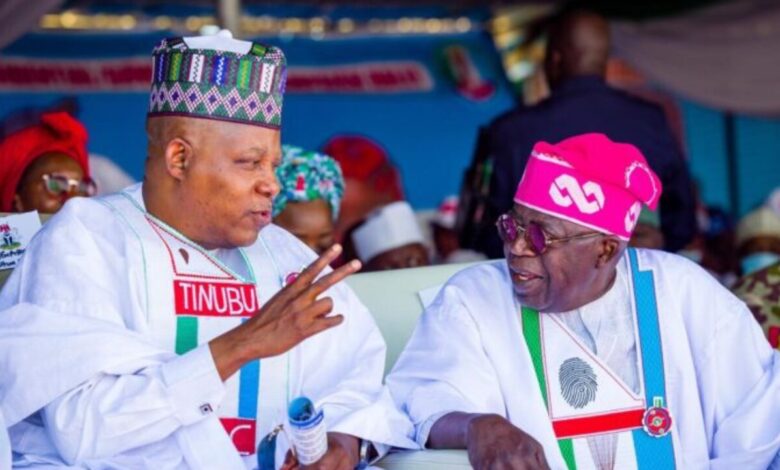
Mixed reactions as Nigerians assess the president after three years in office
BY MARK ITSIBOR, ABUJA, YUSUF BABALOLA, OLUSHOLA BELLO AND KINGSLEY OKOH, LAGOS
Three years after President Bola Ahmed Tinubu took the oath of office at Eagle Square in Abuja, Nigerians remain sharply divided over the legacy of his administration’s sweeping economic reforms — with experts, critics and citizens offering starkly contrasting assessments of a presidency defined by bold policy choices and painful consequences.
On 29 May 2023, Tinubu delivered what would become perhaps the most consequential three words in recent Nigerian history: “Subsidy is gone.”
That declaration set in motion a chain of reforms — fuel subsidy removal, foreign exchange liberalisation, banking sector recapitalisation and fiscal restructuring — that have simultaneously drawn praise for macroeconomic stabilisation and condemnation for the suffering they imposed on ordinary citizens.
The statistical record of the past three years is a study in contrasts. On the one hand, GDP growth reached 3.85 per cent in 2025, foreign reserves climbed above $50 billion for the first time in years, and Nigeria recorded consecutive trade surpluses as domestic refining reduced petrol imports. Inflation, which peaked above 34 per cent in 2024 — the highest in nearly three decades — began easing by early 2026.
On the other hand, public debt surged from approximately N87 trillion in 2023 to over N159 trillion by the end of 2025. The naira lost more than half its value within months of the foreign exchange reforms, falling from around N460 to the dollar in May 2023 to over N1,600 by July 2024.
The World Bank estimates that roughly 140 million Nigerians now live below the poverty line, with food inflation peaking at 40.9 per cent in June 2024.
Reform Necessary, But at What Cost?
As the President Bola Ahmed Tinubu administration marked its third year in office on Friday, economists continued to debate the impact of key policies introduced since May 2023.
Some have described the period as one of far-reaching economic reforms marked by painful adjustments, improving macroeconomic indicators and lingering pressure on household living conditions.
Professor of Capital Market at Nasarawa State University, Keffi, Prof. Uche Uwaleke, said the Tinubu administration confronted longstanding structural weaknesses that previous governments had avoided due to political sensitivity.
According to him, the administration inherited an economy burdened by fiscal instability, foreign-exchange distortions, rising inflation, and unsustainable fuel subsidy payments.
“When President Tinubu assumed office in May 2023, Nigeria’s economy was weighed down by multiple crises,” Uwaleke said in a commentary assessing the administration’s performance.
Data from the National Bureau of Statistics (NBS) and the Central Bank of Nigeria (CBN) showed that inflation stood at 22.41 per cent in May 2023, while the Monetary Policy Rate was 18.5 per cent. Nigeria’s unemployment rate, based on the revised methodology introduced in 2023, stood at 4.1 per cent in Q1 2023, although underemployment and vulnerabilities in the informal sector remained widespread.
Nigeria’s public debt stock was about N87.38 trillion when the administration took office in 2023, while the country’s Human Capital Index remained among the lowest globally at about 0.36, reflecting weak education and healthcare outcomes.
Three years later, inflation has moderated to 15.68 per cent as of April 2026 after peaking above 30 per cent during the early phase of the reforms. The Monetary Policy Rate currently stands at 27.5 per cent following the Central Bank’s aggressive tightening to curb inflationary pressures.
Nigeria’s public debt has, however, risen sharply to over N159 trillion as of December 2025, reflecting increased borrowing for budget support and infrastructure financing.
Uwaleke identified the removal of petrol subsidy and the unification of the foreign exchange market as the administration’s most consequential reforms.