Tobi Ogunbowale: The Nigerian Laboratory Informaticist Transforming How Research Laboratories Operate Through AI and Biomedical Informatics

0
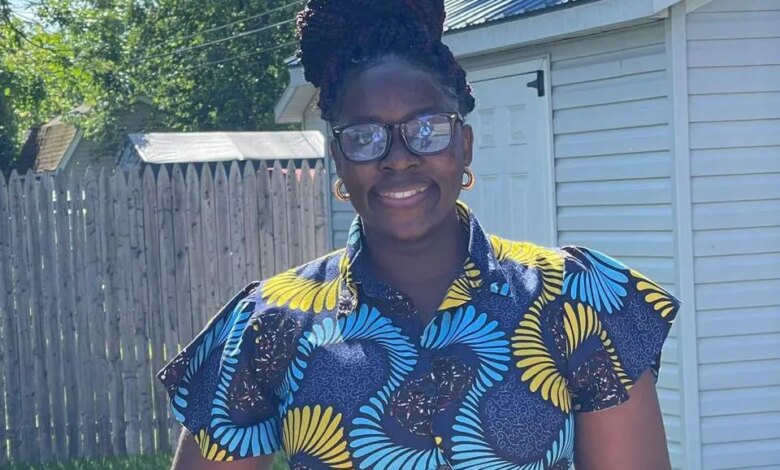
In the world of modern science, the most important breakthroughs do not always happen at the bench. Sometimes they happen in the systems behind it. Oluwatobilola “Tobi” Ogunbowale is one of a rare breed of professionals who understands both sides of that equation, and she is using that understanding to change how research laboratories operate at a fundamental level. As a Laboratory Informaticist and Biomedical Informatics professional, her work is drawing attention not just in the United States but across the global scientific community.
Tobi holds two master’s degrees that together tell the story of how she thinks. Her M.Sc. in Medical Microbiology from the University of Lagos gave her a deep grounding in biological science. Her M.Sc. in Biomedical Informatics from the University at Buffalo gave her the tools to redesign the systems that science runs on. Most scientists go deep in one direction. Tobi went deep in two, and that is precisely what makes her perspective so valuable in a field that desperately needs people who can speak both languages.
That perspective is already shaping conversations in the field. Her Op-Ed published in Lab Design News on March 27, 2026, titled “The Lab Is Home: Why the People Who Work in Scientific Spaces Should Never Feel Like an Afterthought,” made a case that the scientific community needs to hear. Her argument was direct: laboratory design has long prioritized equipment, compliance, and spatial efficiency while treating the human beings who actually do the work as secondary. Lab Design News, which serves architects, engineers, and lab planners across the globe, published her piece under its Op-Ed and Diverse Voices categories, a signal that the field recognized her voice as one worth amplifying. It was not her first time making that case in print. Her work has also appeared in Lab Manager Magazine, one of the most widely read publications in the laboratory science community, where she has contributed to ongoing conversations about the role of AI and systems thinking in transforming how research laboratories are run.
That recognition extends well beyond the page. Tobi serves on the Community Advisory Board of Bioconductor, one of the most consequential open-source bioinformatics platforms in existence. Bioconductor currently hosts 2,361 software packages and has been cited more than 60,500 times in PubMedCentral, making it a foundational resource for genomic researchers worldwide. The Community Advisory Board, which meets monthly to address outreach, education, diversity, and inclusion across the global research community, includes members from some of the most respected institutions in the world, among them Johns Hopkins University, the University of Oxford, RIKEN Center for Biosystems Dynamics Research in Japan, the Walter and Eliza Hall Institute of Medical Research in Australia, the University of Turku in Finland, and Roswell Park Comprehensive Cancer Center. Tobi is named in Bioconductor’s official 2024 Annual Report as a board member. In a body like that, membership is itself a statement about how your peers see you.


Her contributions go beyond advisory roles. Tobi is a named co-author on a study presented at the American Association for Cancer Research Annual Meeting 2025 in Chicago, one of the most prestigious gatherings in oncology science worldwide. The research, titled “MECOM a Novel Player in AR-Driven Treatment Resistant Castration-Resistant Prostate Cancer,” was conducted at the Adelaiye-Ogala Laboratory at the University at Buffalo. Her inclusion as a co-author is a reminder that her work in informatics is not happening in isolation. It is happening inside active, high-stakes research that has real implications for how prostate cancer might one day be treated.
Underlying all of it is a philosophy that Tobi has articulated clearly in her own work. The goal, she has written, is not digitization for its own sake, but operational intelligence — the ability to move from reactivity to readiness. What that means in practice is laboratories that do not simply record what has already gone wrong but are designed to anticipate and prevent problems before they occur. It is a shift in mindset as much as a shift in technology, and Tobi is one of the people actively pushing that shift forward through her writing, her board work, and her research contributions.
As research institutions around the world face growing pressure to modernize, the voices that will matter most are those who understand both the science and the systems. Oluwatobilola Ogunbowale is one of those voices, and the work she is doing today is steadily laying the groundwork for how laboratories will be built, managed, and imagined tomorrow.