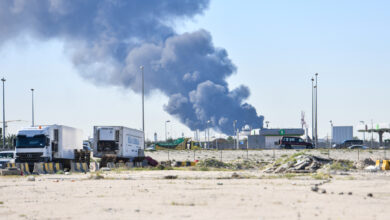
When Tehran oil infrastructure caught fire in March following Israeli strikes, the blaze produced toxic fumes detectable across an area the size of Italy, according to fresh research.
Measurements from two different satellites show the fires lasted about two days and released a total of roughly 29.8 kilotons of sulphur dioxide that spread across some 300,000 sq km, according to a paper by Chinese researchers published on May 26 in the Advances in Atmospheric Sciences journal.
“Previous research has typically focused on single, static snapshots of emissions near the source,” said the study’s lead author Zhenping Yin, an assistant professor at Wuhan University in China, in a written response to questions.
Continuous tracking of major events “is critically important for early warning of downstream affected areas”.

Sulphur dioxide, which also occurs naturally in volcanic eruptions, has strong irritant and corrosive properties and is a major precursor of acid rain. When inhaled in large amounts and for long periods of time, it poses a major threat to human health and to the environment.
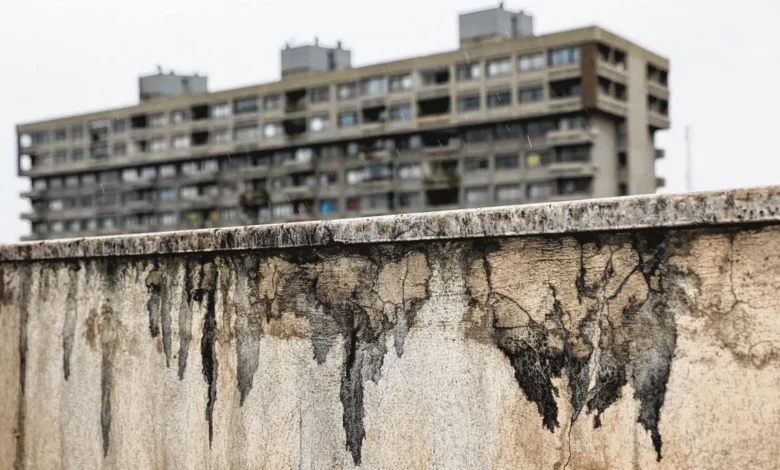
Black soot after reported black rain following a strike on fuel tanks in Tehran on March 10.
PHOTO: REUTERS
The latest analysis adds to a growing body of research based on satellite data that shows the impacts of the current conflict in the Middle East on the environment.
Israel’s strikes on Tehran in March were met with displeasure among US officials amid concerns the attacks could backfire strategically by angering Iranian civilians, Axios has reported.
US Senator Lindsey Graham, a firm supporter of the war, asked Israel to “please be cautious about what targets you select”. Oil infrastructure, he said, will be essential to Iran’s recovery “when this regime collapses”.
The study published on May 26 tracked sulphur dioxide concentrations in the atmosphere from space, rather than measuring pollution at ground level.
“These figures allow direct comparison with other events, such as moderate volcanic eruptions or major refinery fires,” said Prof Yin. “The atmospheric consequences of this event are significant but short-lived.”
Monitoring and efficient early alert systems are key in major pollution events, as plumes can travel as fast as 200km in about three hours, Prof Yin said. But communications restrictions in Iran and the ongoing conflict make early warnings challenging.
“As research scientists, we can produce early results and exposure danger maps,” he said. “However, the delivery of this information to local authorities and the public is beyond our capability, especially under conditions of internet blackout and limited ground infrastructure.”
On-site measurements in the area were not possible, but sulphur dioxide mixed with water would have released a toxic rain, with oil droplets and soot contaminating the soil, vegetation and fresh water around Tehran, Prof Yin said.
Burning oil from the Shahran Oil Depot in March spread through the sewer system into nearby urban areas, igniting green belts and becoming a major source of toxic smoke, the paper said, confirming social media images posted by people in Tehran at the time of the event. BLOOMBERG