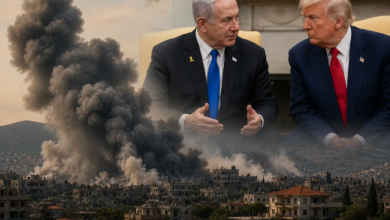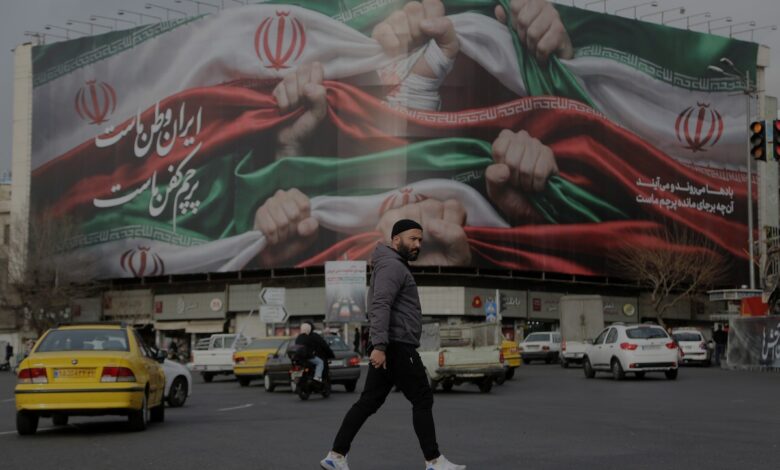
The eruption of the Middle East war in 2026, which began with strikes led by the US and Israel against Iran under Operation Epic Fury, carries devastating consequences for recovery, development and regional stability. The assassination of senior Iranian figures, most notably Supreme Leader Ayatollah Ali Khamenei, Iran’s closure of the Strait of Hormuz, the involvement of Hezbollah and Houthis in support of Iran, alongside Iranian attacks on neighbouring countries, further escalated the crisis. The war transformed from a military confrontation into a broader regional political, diplomatic and economic crisis.
While global attention focused on military escalation, oil markets and the Strait of Hormuz, far less attention was given to the war’s humanitarian consequences, despite the massive and irreversible impacts. The conflict has triggered new waves of displacement across an already fragile region. However, there were no meaningful strategies to protect or to facilitate aid efforts to sustain the lives of displaced people, further exacerbating the life-threatening risks facing affected populations.
The displaced of the 2026 Middle East war
The Middle East was already carrying one of the world’s largest displacement burdens before this escalation, mainly due to the Syrian, Palestinian, Afghan and Iraqi refugees and internally displaced populations. The recent war has deepened these vulnerabilities by displacing millions more across Iran and Lebanon. The speed and scale of displacement reflect the severity of the humanitarian crisis unfolding in the region, overwhelming already strained humanitarian response efforts.
In Iran, the war intensified existing economic fragility and internal tensions while placing enormous pressure on state institutions not only to govern but also to effectively respond to the displacement crisis, a critical condition to maintain stability and prevent further chaos.
The displacement of over 3.2 million people has posed a serious challenge for the Iranian authorities. It has affected over 20 provinces, while the damage of 82,000 civilian infrastructure sites, disrupted essential services and attacks on healthcare have severely undermined the living conditions of displaced people.
Although figures fail to precisely capture the devastating realities experienced by displaced populations, they reflect the scale of vulnerability facing civilians forced to flee amid insufficient aid efforts and collapse of health, shelter and education systems.
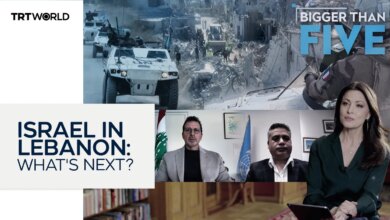
Lebanon presents an even more fragile case, already affected by protracted conflict, sectarianism, the Beirut Port explosion and economic paralysis. While it was already hosting 1.4 million Syrian refugees and around 250,000 Palestinian refugees, the war has now led to the internal displacement of 1.3 million Lebanese civilians—one in five of the total population— with children accounting for a third of those displaced. The large-scale and ongoing displacement in the country has generated enormous needs, detrimentally affecting various areas of civilian life. While over 3,000 have been killed and more than 9,000 injured, around 130,000 people remain displaced in collective shelters, experiencing extremely difficult conditions. The plight of displaced populations in Lebanon is worsened by ongoing attacks on healthcare, lack of services and the destruction of the housing sector, in addition to limited access to education, where hundreds of schools are either closed or used as collective shelters.
Humanitarianism subordinated to hard politics
Efforts have been made to address the needs of displaced communities. These include government-led actions in Iran to, for example, address psychosocial and shelter needs and the work of local organisations and international agencies in Lebanon. Yet such efforts remain far from adequate, mainly due to the absence of serious international political will to prioritise civilian protection and displacement prevention.
Instead, regional and international actors continue to prioritise deterrence, strategic alliances, military positioning and regional influence over humanitarian protection. By the end of April, the Pentagon had reportedly spent $25bn on its war on Iran, with other estimates showing greater costs—ranging between $630bn and $1 trillion—amid US President Donald Trump’s request for an additional $1.5 trillion for defence. This is evident in how the US paused a $14bn arms sale to Taiwan to ensure its military readiness to face Iran. Iran’s resilience against these attacks and the use of drones—costing tens of thousands of euros—have pushed the US to dedicate more resources to the war. The use of financial means from both sides solely for war objectives while overlooking the humanitarian responsibilities exposes the extent to which military objectives have been prioritised over humanitarian response.
Even ongoing diplomatic efforts between Washington and Tehran reveal the extent to which humanitarian concerns remain secondary and completely neglected. The peace negotiations have largely focused on issues related to hard politics. These include Iran’s nuclear programme, the reopening of the Strait of Hormuz and Iran’s frozen assets under US sanctions, with all these elements mainly addressing the security, financial and economic implications of the war.
The absence of the displacement crisis from peace agreements and negotiations reveals the deficiencies posed by the international human rights and humanitarian regimes. They underscore a reality where human lives continue to be shaped not by principles of protection, but by the strategic interests of powerful states.
This transformed the plight of affected populations in Iran and Lebanon from a humanitarian concern into a tolerated byproduct of geopolitical strategy.
Implications for future generations: The way forward
The humanitarian consequences of this war will not end when the war ends. Long-term displacement carries profound risks for future generations in Iran and Lebanon through collapsing health systems, interrupted education, intensifying social fragmentation and deepening poverty and dependency on international aid. Thus, the failure to protect displaced populations today risks producing future instability across the region. Addressing this requires tailored humanitarian interventions, international responsibility—especially from the US and Iran as the primary conflicting states—towards affected populations and the adoption of prevention strategies in future wars.
The international community, conflicting parties and international organisations must take practical yet realistic—acknowledging the centrality of self-interest during wars between states—steps towards addressing this issue. Without international responsibility sharing and collaborative efforts, the already-fragile international humanitarian system fails to continue functioning as the primary response mechanism, especially amid the growing humanitarian funding cuts due to the occurrence of other “national priorities”. Therefore, the US and Iran, alongside the international community, must dedicate resources to lead a comprehensive emergency response to alleviate the impacts of war on affected communities. This has to begin with protection-centred diplomacy, where the plight of displaced populations is prioritised among other key areas in the peace agreements.
Equally important is the stricter implementation of international legal frameworks to protect civilian populations during armed conflicts through accountability measures for violations against civilians. The role of international organisations and UN agencies is decisive in these matters, given their expertise and international positionality—though shrinking—when it comes to humanitarian missions and peacekeeping. Such efforts must revolve around promoting, integrating and imposing the adoption of humanitarian safeguarding standards for civilians in military and political decision-making. If displacement continues to be treated as collateral damage rather than political responsibility, the Middle East will keep producing generations of displaced people, serving the interests of regional and global powers.
The views expressed in this article belong to the author and do not necessarily reflect the editorial policy of Middle East Monitor.