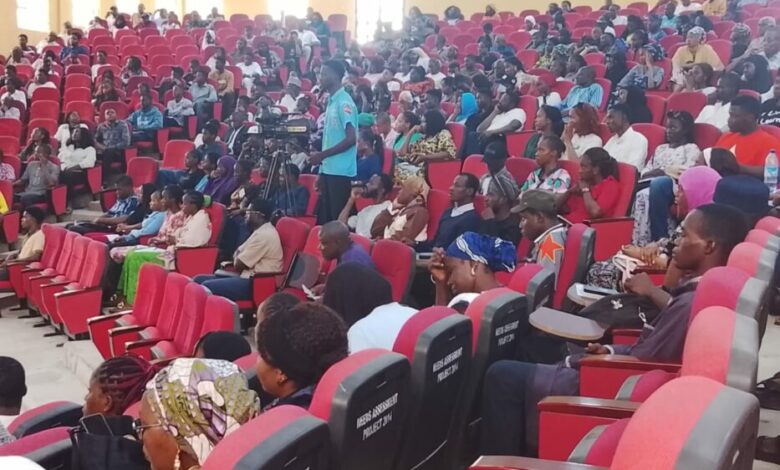
No fewer than 131 women education entrepreneurs from across Nigeria have been recognised for their contributions to basic and secondary education as the Federal Ministry of Education renewed its campaign against examination malpractice and the operation of so-called “miracle centres”.
The recognition took place yesterday at the 2026 Women in Education and Social Enterprise Impact Summit organised by the Centre for Educational Empowerment and Orientation (CEEO Nigeria) in collaboration with the National Council of Women Societies (NCWS) in Abuja.

At the summit, an assistant director at the Federal Ministry of Education, Dr Maria Amedu, urged school proprietors and administrators to abandon practices that promote examination feaud, warning that such actions undermine the quality of education and the credibility of academic qualifications.
She condemned the activities of “miracle centres”, noting that some school owners and heads actively facilitate cheating during examinations, thereby encouraging laziness among students and weakening learning outcomes.
According to her, many students who obtain excellent grades through dishonest means often struggle to justify their performance when they proceed to higher institutions.
“Students should be taught what they need to learn and allowed to sit for examinations like every other candidate. They can succeed without cheating. We must discourage practices that promote examination malpractice because they do not help the students, schools or the nation,” she said.
On his part, the executive director of CEEO Nigeria, Davidcrown Oyebisi, described women-led schools as critical pillars of community development and nation-building.
He said the summit was designed to address the challenges confronting women social entrepreneurs in education, particularly in underserved communities where many operate with limited resources, inadequate infrastructure and little institutional support.
Oyebisi unveiled the second edition of the Compendium of Women Social Entrepreneurs in Basic and Senior Secondary Education, which documents the stories and achievements of 131 women education entrepreneurs.
According to him, the publication comprises 31 women featured in the 2025 edition, who now form the Founding Women Circle, alongside 100 newly documented stories captured in 2026.
“These women are not merely school owners. They are builders of the future, stabilisers of communities and protectors of the next generation,” he said.
Oyebisi disclosed that beginning from 2027, the initiative would publish and amplify 100 women-led school stories annually while providing structured support to selected schools.
He called on governments, development partners, private organisations and individuals to invest in women-led schools through sponsorships, partnerships and donations.
In an opening remark on behalf of the minister of State for the Federal Capital Territory (FCT), the permanent secretary of the FCT Education Secretariat, Mrs Joy Okeke, said the summit was a timely platform for advancing women’s participation in education and social entrepreneurship.