The Inter-Party Advisory Council (IPAC) has raised the alarm over what it described as the gradual collapse of internal democracy in Nigerian political parties following the removal of indirect primaries from the Electoral Act 2026.
The council warned that the development was steadily concentrating the power to determine candidates in the hands of a few influential political actors, thereby weakening the participation of ordinary party members.
Naijaonpoint reports that this came as the Social Democratic Party (SDP) distanced itself from a lawsuit challenging the timetable released by the Independent National Electoral Commission (INEC) for the 2027 general elections.
Also, the Economic and Financial Crimes Commission (EFCC) and INEC have renewed collaboration to tackle vote-buying, electoral fraud and other financial crimes capable of undermining the electoral process.

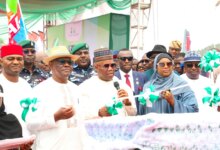
Speaking at INEC’s quarterly consultative meeting in Abuja, IPAC Chairman, Yusuf Dantalle, said restricting political parties to direct primaries and consensus arrangements had fundamentally changed the process through which candidates emerge in Nigeria.
According to him, the removal of indirect primaries has stripped millions of party members of meaningful participation in the selection of candidates.
Dantalle said indirect primaries had, over the years, served as a stabilising mechanism within political parties by allowing elected delegates to serve as a link between aspirants and grassroots members.
He warned that the removal of that option had created a vacuum now being filled by closed-door negotiations, imposed consensus lists and expensive direct contests that favour aspirants with money and influence.
He said, “What is emerging is not internal democracy, but elite consolidation.
“The absence of indirect primaries has weakened internal accountability mechanisms and handed excessive control to party power blocs who now determine who appears on the ballot.”
The IPAC chairman said the new arrangement had made it easier for powerful blocs within parties to dominate candidate selection processes without broad consultation.
He added that direct primaries, though democratic in principle, could become too expensive and difficult to manage in practice, especially where party structures are weak or where money plays a major role.
Dantalle said the consensus option had also become vulnerable to abuse, with some party leaders allegedly imposing candidates under the guise of agreement.
He expressed the readiness of IPAC to work with INEC, the National Assembly, political parties and civil society organisations to address what he called the “creeping centralisation of power within parties.”
According to him, genuine internal democracy must be restored before the 2027 elections if political parties are to regain the confidence of their members and the voting public.
Meanwhile, the SDP has disowned a lawsuit challenging aspects of INEC’s timetable for the 2027 general elections.
In a statement issued in Abuja on Wednesday, the party accused its former National Secretary, Olu Agunloye, of instituting the action without the approval or authorisation of the party.
The SDP described the suit as an act of impunity and a violation of due process, insisting that Agunloye lacked the authority to commence legal proceedings on its behalf.
According to the party, the lawsuit was filed solely on Agunloye’s initiative and does not represent the position of the SDP or any of its constitutionally recognised organs.
The party said Agunloye, whom it described as an expelled former National Secretary, no longer had any legal authority to act for or represent the SDP in any matter.
“The former National Secretary, Mr Olu Agunloye, illegally and without lawful authority instituted a lawsuit challenging the INEC timetable without the approval, authorisation, or consent of the party,” the statement said.
The SDP further alleged that correspondence exchanged with the law firm engaged in the matter showed that Agunloye independently retained legal representatives.
It said the litigation was capable of disrupting the affairs of the party and its preparations for the 2027 general elections.
The party consequently dissociated itself from the suit and all actions taken by Agunloye and his associates in pursuing the case.
It maintained that the legal challenge does not reflect the official position of the SDP.