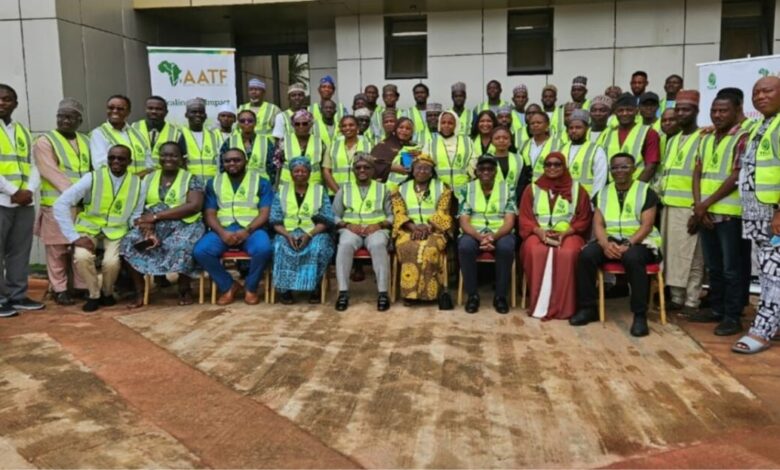
Agro-dealers across Nigeria have received targeted training to strengthen their capacity to promote, market, and support the commercialisation of TELA maize varieties, a climate-smart innovation expected to boost productivity and farmer resilience.


The workshop, convened by the African Agricultural Technology Foundation (AATF), was part of ongoing efforts to scale agricultural biotechnology solutions, focused on equipping participants with critical knowledge in biotechnology awareness, product handling, regulatory compliance, seed stewardship, and effective farmer engagement.
Dr Sylvester Oikeh, AATF Consultant on TELA Maize Project, who delivered a keynote presentation titled “From Innovation to Impact – The TELA Maize”, underscored the transformative potential of TELA maize in addressing key challenges in Nigeria’s maize sector, including pest pressure and low yields. Sessions also explored global and local success stories in agricultural biotechnology, providing context for Nigeria’s growing adoption of improved seed technologies.
Participants were introduced to the different TELA maize varieties and their specific production environments, alongside discussions on Nigeria’s maize value chain and the opportunities presented by the technology.
Additional sessions covered biosafety regulations, good agricultural practices (GAP), and the importance of seed quality assurance through proper handling and storage.
Mr. Olawale Ojo, AATF TELA Maize Market Development Manager, opened the session with an overview of Nigeria’s maize market, noting that rising grain prices and increasing climate-related challenges present a strong value proposition for TELA maize varieties. He emphasised that smallholder farmers require improved tools to boost productivity, describing agro-dealers as critical influencers in educating farmers and ensuring timely access to quality seeds. The session also explored practical approaches for creating awareness and driving demand for hybrid seeds.
Speaking on agricultural biotechnology, Dr. Kehinde Jimoh, AATF Seed Systems Specialist, underscored the global acceptance of biotechnology and its role in delivering improved crop varieties. He highlighted that Nigeria has already commercialized three biotech crops, cotton, pod borer-resistant cowpea, and TELA maize.
However, he stressed that realising the full yield potential of these crops depends on adherence to good agronomic practices (GAP), urging participants to integrate these practices into their production systems.
Dr. Bernard Ehirim, AATF Stewardship Officer, focused on sustaining the benefits of TELA maize through responsible stewardship. He outlined key requirements including insect resistance management, product traceability, proper record-keeping, and continuous field monitoring to prevent product breakdown.
Dr Ehirim encouraged agro-dealers to maintain open communication with stewardship focal people, particularly in reporting any issues related to insect resistance, to ensure the long-term effectiveness of the technology.