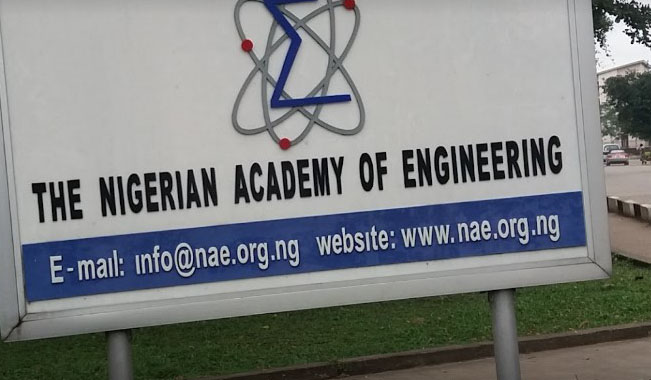
Amid the problem of epileptic power supply in the country, the Nigerian Academy of Engineering (NAE), has vowed to champion home-grown technological solutions to address challenges in power supply in the country.
The former executive vice-chairman of the Nigerian Communications Commission (NCC), Prof Umar Danbatta, stated this at his investiture as its 14th President held in Lagos State.


In his acceptance speech during the investiture that also featured the induction of 12 new fellows, presentation of Lifetime Achievement Awards and conferment of honorary fellowships, Danbatta unveiled a four-point agenda centred on policy engagement, academia-industry collaboration, mentorship and strategic partnerships.
He said the agenda aligned with the institute’s 2024–2028 Strategic Plan aimed at transforming engineering education, promoting industrialisation, strengthening infrastructure management and advancing technical skills development.
According to him, the institute will deepen engagement with the executive and legislative arms of the government to ensure policies are guided by sound engineering data, research and innovation.
Danbatta said the institute would champion home-grown technological solutions to address challenges in power supply, broadband expansion, climate change and environmental sustainability.
He identified the disconnect between academia and industry as a major obstacle to technological advancement and pledged to strengthen partnerships that would equip graduates with practical, entrepreneurial and industry-relevant skills.
The new president also promised to prioritise mentorship and capacity development for young engineers through workshops, conferences, research grants and professional development programmes.
He said the institute would strengthen collaboration with key institutions, including the Nigerian Society of Engineers (NSE), Council for the Regulation of Engineering in Nigeria (COREN), National Board for Technical Education (NBTE) and National Universities Commission (NUC).
Danbatta added that the institute would expand partnerships with engineering institutions across Africa, Europe and the Americas to promote knowledge exchange and global best practices.
He called on engineers to move beyond advocacy and contribute practical solutions to Nigeria’s developmental challenges.
Earlier, the outgoing president of the Academy, Prof Rahamon Bello, said the institute had strengthened its role as a strategic adviser on engineering, technology and innovation policies during his tenure.
Bello said the institute had continued to promote engineering research, capacity development and stakeholder engagement aimed at addressing national development needs.