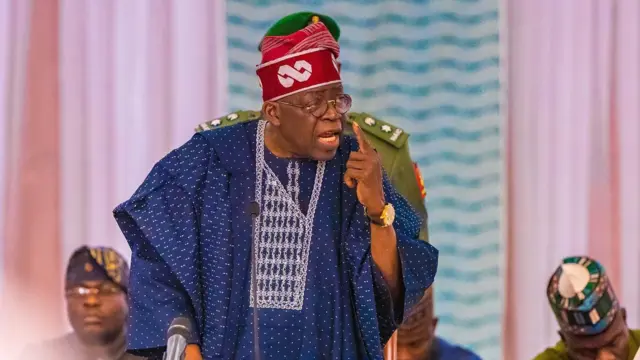
A Bauchi State-based public affairs commentator David Adenuga has cautioned President Bola Ahmed Tinubu against implementing fresh tax measures reportedly recommended by the International Monetary Fund (IMF)
He warned that such policies could worsen economic hardship and fuel public dissatisfaction.
Adenuga, in a statement he issued yesterday in Bauchi ,described what many Nigerians have termed “SAP 2.0” as a risky policy direction, urging the President to carefully consider the potential consequences of expanding taxation, particularly on fuel and telecommunications services.
According to him, the proposals have already generated concern among citizens grappling with rising living costs and worsening economic conditions.
Drawing parallels with the Structural Adjustment Programme (SAP) introduced in 1986 under the military administration of former Head of State Ibrahim Babangida, Adenuga noted that the policy remains one of the most controversial economic reforms in Nigeria’s history.
He recalled that SAP, which featured measures such as currency devaluation, subsidy removal, trade liberalisation and privatisation, was introduced as an economic stabilisation strategy but later became associated with widespread hardship, soaring inflation, reduced purchasing power and declining living standards.
The commentator said the experience continues to shape public attitudes toward similar economic reforms, with many Nigerians now referring to current policy recommendations as ‘SAP 2.0.’
He further noted that the SAP-era reforms sparked widespread protests, including the Anti-SAP riots of 1989, reflecting strong public resistance to policies perceived as placing additional burdens on citizens.
Adenuga argued that many Nigerians are still struggling with the effects of recent economic reforms, particularly the removal of fuel subsidies, which has contributed to higher transportation costs, increased food prices and mounting pressure on household incomes.
“The average Nigerian family is spending more on food, transportation, healthcare and education than ever before. Any additional tax on fuel or telecommunications will be seen as further hardship,” he said.
He warned that increased taxation on fuel could worsen inflation by raising transportation and production costs, while new telecom taxes would affect millions of Nigerians who rely on digital services for banking, education, business and communication.
According to him, citizens ultimately judge economic policies by their impact on everyday life rather than by technical economic indicators.
“Governments do not lose elections because of economic theories. They lose when people feel their lives have become worse under their leadership,” he added.
Adenuga urged the federal government to focus on reducing the cost of governance, plugging revenue leakages, improving public spending efficiency and strengthening productive sectors of the economy instead of imposing additional taxes on essential services.
While acknowledging the need for fiscal reforms, he stressed that government policies must reflect prevailing social and economic realities to avoid worsening hardship and provoking public resistance.