Nigeria and other African countries remain at the bottom of the global digital connectivity ladder, as high device costs and limited affordability continue to slow broadband expansion and next-generation internet adoption across the continent.
A new State of Africa’s Infrastructure Report 2025 highlights persistent inequality in access to digital technology, noting that millions of Africans still cannot afford smartphones despite falling global device prices.
The report shows that feature phones still dominate mobile ownership in sub-Saharan Africa, accounting for 46 per cent of usage, compared to just 8 per cent in high-income countries. Computer ownership remains even lower, with household penetration estimated at just 11 per cent across 34 surveyed African countries.
It also points to the near absence of fixed broadband infrastructure, with Africa recording less than 1 per cent penetration, far behind regions such as Asia and the Middle East where fixed connectivity continues to expand rapidly.


Although mobile network coverage has improved significantly, reaching more than 90 per cent of the population, only about 40 per cent of Africans are actually online, underscoring the gap between coverage and real access.
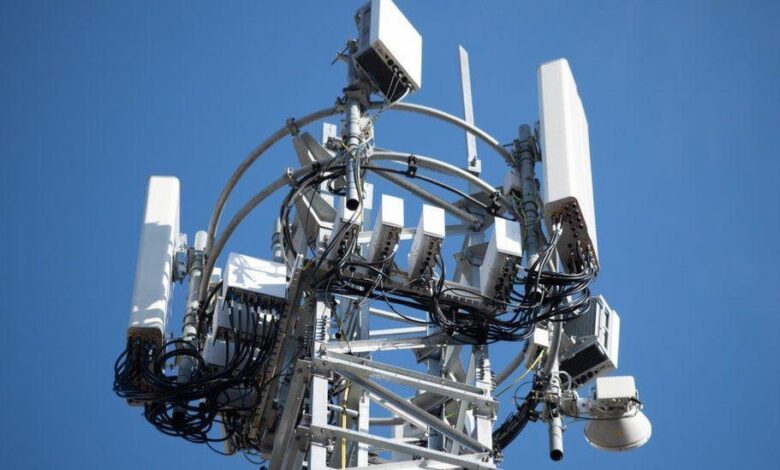
Advanced connectivity remains limited. While 60 per cent of Africans have access to 4G networks, only about 11 per cent are covered by 5G services, compared with widespread rollouts in Asia-Pacific and high-income economies.
In Nigeria, the Executive Vice Chairman of the Nigerian Communications Commission (NCC), Aminu Maida, said 5G penetration currently stands at about 11 per cent, with active usage estimated at roughly 5 per cent of total network connections.
The report warns that this digital exclusion could deepen inequality and limit Africa’s participation in emerging technologies such as artificial intelligence, cloud computing, and the Internet of Things.
It further notes that affordability remains the biggest barrier, particularly for populations living on less than $2 a day, making even entry-level smartphones inaccessible for millions.
To bridge the gap, the report recommends lowering data costs, expanding digital literacy programmes, and encouraging policies that support wider market competition and infrastructure sharing.
It also highlights the importance of rural connectivity, noting that internet usage remains heavily concentrated in urban areas while rural communities continue to face poor or non-existent service.
According to the report, Africa will require an estimated $7 billion in annual investment to close its digital infrastructure gap and achieve meaningful inclusion in the global digital economy.
New developments such as subsea fibre-optic cables, expanding data centres, and public-private digital partnerships are already reshaping connectivity in countries like Nigeria, Egypt, and Kenya.
The report concludes that integrating digital infrastructure into broader national development projects—such as transport, energy, and power systems—will be key to accelerating last-mile connectivity and ensuring long-term digital inclusion across the continent.