PHILADELPHIA – China-linked influence campaigns are targeting America’s growing divisions on contested AI issues, like the construction of data centres, US researchers say.
OpenAI said on June 10 that it had uncovered two clusters of ChatGPT accounts, likely originating from China, that had promoted narratives seeking to manipulate a debate about American AI and wider tech policies.
The first cluster generated social media comments and images claiming that data centre buildouts for AI were increasing electricity prices for families.
“They prompted ChatGPT in Simplified Chinese while repeatedly asking for English- and Chinese- language outputs, posing as Americans from a variety of backgrounds, that were posted across multiple social media platforms,” the report said.

The operators of the accounts were likely a part of a social media operations team at a private Chinese technology company conducting work for Chinese provincial-level government clients, OpenAI said.
The second cluster generated content criticising US tech policies and tariffs as attempts to dominate the intensifying US-China technological competition. For example, the accounts asked for cartoons that only depicted US President Donald Trump and excluded any imagery of China or President Xi Jinping, the report said. They also generated Chinese, Italian and Japanese content.
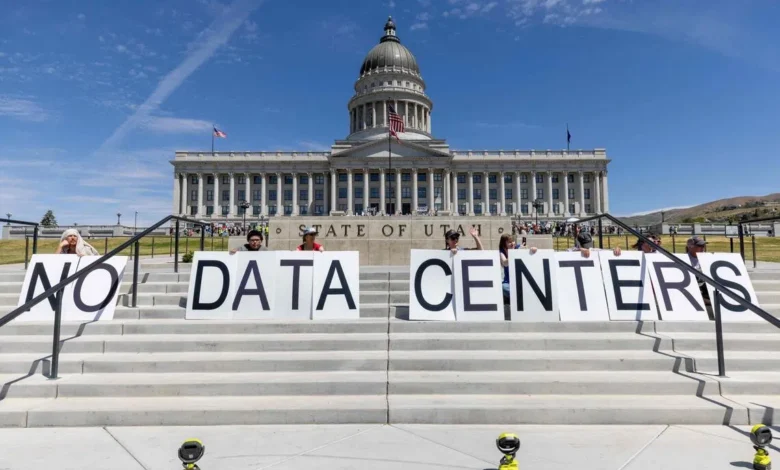
The findings come as Americans are increasingly vocal against the siting of data centres in their communities, raising concerns such as noise pollution, excessive use of water, electricity rate hikes and the lack of economic benefits, like jobs, despite massive investments.
There is also a growing discomfort about the power of ‘big tech’ companies, associated with job losses, data harvesting and predatory and addictive algorithms, which frame data centres as essential for national security while local communities pay the costs.
Some US media reports have pointed out that blaming China seeks to downplay the genuine concerns about data centres.
OpenAI noted that influence operations were not particularly impactful but the trend needed to be flagged.
“The targeting of OpenAI and US data centre buildouts is significant not because the operation appears to have shifted public opinion, but because it shows PRC-origin influence operators testing narratives against AI infrastructure,” the OpenAI report said.
“Both clusters attempted to connect US technology policies and industries to everyday economic anxieties and geopolitical instability,” it said.
“These themes are likely to remain attractive for influence operations originating from China because they can be inserted into legitimate public debates while nudging audiences towards distrust of US institutions, technology companies and democratic policy choices to help Beijing gain a strategic advantage in AI development,” it added.
US experts on influence campaigns concurred.
Professor Darren Linvill, who studies online deception at the Clemson University Media Forensics Hub, said he expected to see more Chinese influence operations moving forward.
“They are clearly experimenting right now with the use of AI tools to facilitate the implementation of these campaigns, and there is every reason to believe that if they have the tools they will use them,” he told The Straits Times.
But he did not think that the Chinese were particularly preoccupied with data centres.
Most Chinese influence operations target two things, he pointed out.
“One, the Chinese diaspora individuals living in the West, usually in an attempt to silence dissent. And, two, regional neighbours, lately Taiwan, Japan and the Philippines.” China views these US allies as obstacles to its strategic goals.
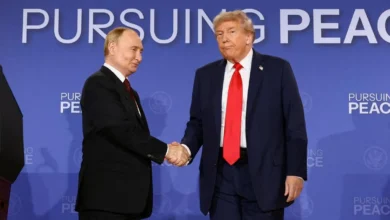
The ongoing warning of Sino-US ties, boosted by Trump’s recent pomp-filled visit to China, will not act as speedbreaker either, he said.
“I see no reason China’s relationship with Trump would influence their operations in either of these areas,” Linvill said.
Senior analyst Dina Sadek at Graphika, a New York-based social media analytics company, said there was no doubt that authentic, domestic US actors were leading the online anti-data-centre conversation.
“However, based on our past research, we can confidently hypothesise that foreign threat actors will continue to attempt to influence discourse in the US leading up to the midterms as they have done in the past. The conversation about data centres is no exception,” Sadek told ST.
Another reason that the influence ops will multiply is because there has never been a downside for China – or any other country – for being discovered running an influence campaign.
“Previous influence campaigns run by the PRC are well documented, and to date there has been little downside for them being caught red handed,” Linvill said.
“There have been no meaningful political or economic repercussions. The US indicted a few individuals in China found to be part of the operations, but this is meaningless as those individuals will never be arrested,” he said.
“The West basically seems to accept foreign influence attacks as part of the cost of doing business in the modern world. We sometimes complain, but do nothing meaningful to cause them to change their behaviour.”
Of late, US lawmakers are pushing for investigations, policy changes and enforcement measures.
Republican Senator Tom Cotton, who chairs the Senate Intelligence Committee, on June 10 asked the US Department of Justice to investigate foreign influence efforts “led by the Chinese Communist Party” while the Chinese government promoted its own AI ambitions at home.
Republicans in the House of Representatives Energy and Commerce Committee have also demanded investigations, claiming in a June 4 letter to the White House that there was “strong evidence” of efforts by foreign adversaries – many originating from China – to slow the progress of US AI development.
But the US President has not shown any great concern.
Asked during a June 4 press conference whether he was worried that China was funding an anti-data center movement in the US, Trump shrugged.
“No, I’m not worried about it. We had a great meeting with China,” he told the reporter.
“And you know, they do things to us, and we do things to them.”