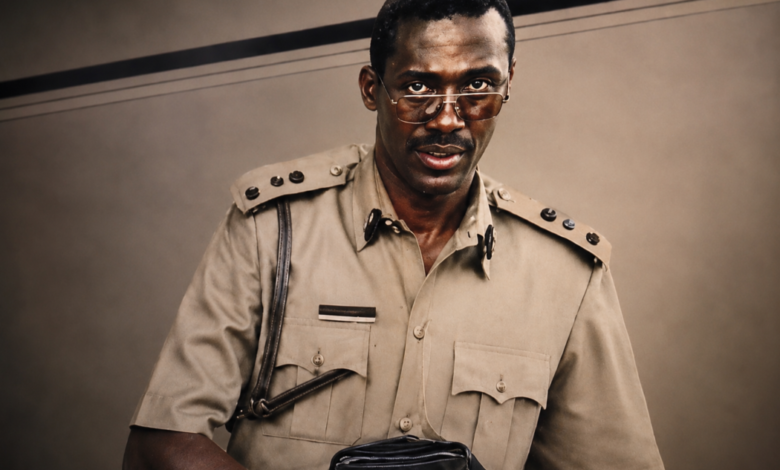
More than three decades after the military dictatorship of late Head of State, Gen. Sani Abacha, one of the regime’s most controversial security officers, Col. Frank Omenka (rtd), has publicly defended his role during the era widely associated with arbitrary detentions, torture and gross human rights abuses.
Speaking during a webinar hosted by The Experimental Leadership in Africa (TEL Africa), Omenka came under intense scrutiny from veteran journalists, pro-democracy activists, and former detainees, who questioned his apparent lack of remorse for the methods employed by security agencies during the Abacha years.

The session, moderated by veteran journalist, Adeolu Adewunmi, featured notable participants, including former editor and pro-democracy activist Kunle Ajibade and publisher of Premium Times, Dapo Olorunyomi. It quickly evolved into an emotional reflection on one of Nigeria’s darkest political periods.
While participants recounted experiences of repression and state brutality, Omenka remained largely defiant, insisting that his actions were dictated by military duty rather than personal conviction.
Throughout the tense exchange, the retired military officer repeatedly framed his role as that of a disciplined soldier carrying out lawful orders.
“As far as I was concerned, I did my job to the best of my ability. I could have made mistakes, but professionally, I did my job. I did my job very, very well,” Omenka said.
When pressed on whether he regretted his actions during the military era, he remained unyielding.
“I wasn’t looking at morals. I was looking at the assignment. I was a soldier. I followed orders. I had to account for my duties to my superiors. There were no emotions or sentiments attached to what I did,” he stated.
Col. Omenka added, “I was under command. I had superiors to report to and account for my duties. I did what I was trained to do, and I followed orders. “I did my job. I did my job clearly, and there is no room for apology here.” Meanwhile, his comments drew sharp reactions from several participants, particularly those who suffered detention and persecution during the Abacha regime.
For Ajibade, who was imprisoned under the military government, Omenka’s responses reflected a troubling absence of remorse. “For there to be penance, there must be contrition, and it’s obvious he is not contrite,” Ajibade said. He argued that the passage of more than three decades should have provided sufficient opportunity for reflection.
“Thirty-three years ought to be enough for you to reflect on all this very terrible conduct. We are all human beings. People make mistakes, but you haven’t shown any sense of remorse at all,” he added.
The emotional weight of the discussion deepened when Olorunyomi recounted his family’s ordeal during the military era. According to him, his wife and child were detained for 38 days by security operatives despite having no direct involvement in political activities.
Olorunyomi reminded Omenka of the trauma endured by his family and argued that such actions reflected the indiscriminate nature of state repression at the time.
Responding, Omenka distanced himself from the incident, insisting that the detention occurred before he assumed responsibility for the operation.