0
…To Unveil National Ranching Policy Next Week
ABUJA – The Federal Government on Tuesday defended the economic and governance reforms of President Bola Tinubu’s administration, declaring that Nigeria is recording measurable progress despite persistent inflationary pressures and security challenges.
Speaking at the 2026 Democracy Day press conference in Abuja, Secretary to the Government of the Federation, Senator George Akume, said the administration’s reforms were beginning to yield results, citing sustained economic growth, improved revenue mobilisation, expanded social intervention programmes and progress in the fight against insecurity.


Addressing journalists alongside members of the Federal Executive Council, Akume described the press conference as part of the government’s accountability process as Nigeria marks 27 years of uninterrupted democratic rule and the third anniversary of the Tinubu administration.
He acknowledged that Nigerians had endured hardship arising from economic reforms but maintained that available indicators showed the country was moving in the right direction.
“Government recognises that inflation has been painful, although it is on a downward trend. Government is similarly conscious of the fact that insecurity still threatens lives and livelihoods,” he said.
According to him, the administration deliberately moved away from what he described as temporary solutions towards structural reforms aimed at achieving long-term economic stability.
Akume said official data from the National Bureau of Statistics showed that Nigeria’s economy remained on a growth path, with real Gross Domestic Product expanding by 4.07 percent in the fourth quarter of 2025 and 3.89 percent in the first quarter of 2026.
He also highlighted fiscal reforms undertaken by the government, including the signing of four major tax reform laws in 2025, which he said were designed to simplify tax compliance, improve fairness and strengthen domestic revenue generation.
On social protection, the SGF said the Renewed Hope Conditional Cash Transfer Programme targeted 15 million households, adding that more than three million vulnerable households had benefited by August 2025.
He further disclosed that over one million Nigerians had accessed government-backed loan schemes, while more than 200,000 citizens obtained consumer credit for the first time through the Nigerian Consumer Credit Corporation.
In the education sector, Akume said the student loan programme had surpassed one million beneficiaries since its introduction, describing it as one of the administration’s major interventions in expanding access to tertiary education.
The SGF also pointed to developments in the health sector, noting that the implementation of mandatory health insurance across Ministries, Departments and Agencies and investments in primary healthcare were expanding access to medical services nationwide.
According to him, government support had already reached more than 8,000 primary healthcare centres, with plans to expand coverage to 13,000 facilities.
Akume further highlighted anti-corruption efforts, stating that recovered proceeds of crime had contributed over N50 billion to the student loan fund.
He said Nigeria’s removal from the Financial Action Task Force’s grey list in October 2025 reflected the success of reforms in anti-money laundering and counter-terrorism financing frameworks.
On security, the SGF acknowledged that challenges remained but insisted that the government was making progress through increased investment in security agencies, stronger regional cooperation and improved operational coordination.
He urged Nigerians to support security agencies by providing intelligence and remaining vigilant against criminal activities.
“Government will not pretend that insecurity will disappear overnight, but institutional responses are being strengthened and reforms are continuing,” he said.
Akume also stressed the importance of national unity and social cohesion, saying democratic progress could only thrive in an atmosphere of trust and peaceful coexistence.
He revealed that the Federal Executive Council had approved a National Values Charter aimed at promoting discipline, integrity, responsible citizenship, tolerance and public service.
Earlier, the Minister of Information and National Orientation, Mohammed Idris, described Democracy Day as an opportunity to reflect on Nigeria’s democratic journey and honour those who sacrificed for the restoration of democratic governance.
He paid tribute to Moshood Kashimawo Olawale Abiola and other pro-democracy activists, including President Bola Ahmed Tinubu, for their roles in the struggle for democratic rule.
Idris said the 2026 Democracy Day celebration was significant because it coincided with the third anniversary of the Renewed Hope Administration, providing an opportunity to assess achievements, challenges and the government’s future direction.
He said the press conference was organised to present Nigerians and the international community with a comprehensive overview of the administration’s performance over the last three years and its plans for the years ahead.
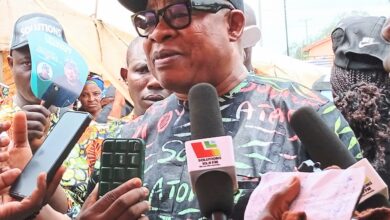
In his remarks, Minister of Livestock Development, Alhaji Idi Mukhtar Maiha, disclosed that the Federal Government has begun plans to resettle pastoralists in designated grazing reserves within the Federal Capital Territory (FCT) as part of efforts to end migratory grazing and reduce conflicts linked to livestock movements.
The minister said the government had commenced development activities at the Kawu Grazing Reserve, which is being used as a pilot project for pastoralist resettlement.
According to him, three boreholes have been drilled at the reserve, while a weather station has been installed ahead of the demarcation of land for pastoralist settlement.
Maiha said the ministry was working with the FCT Administration and other relevant agencies to provide water and pasture infrastructure that would enable herders to keep their animals in one location throughout the year.
He explained that the seasonal movement of pastoralists from Northern to Southern parts of the country was driven by the search for water and pasture rather than cultural practices.
“The reason why pastoralists move from the North to the South is not cultural. It is a survival mechanism. These animals need water and pasture to survive,” he said.
The minister noted that government was engaging pastoralist groups, including Miyetti Allah and traditional leaders, on the planned resettlement programme, stressing that consultations would be carried out democratically and in phases.
He added that efforts were also underway to support dry-season pasture cultivation in the grazing reserves to ensure year-round feed availability for livestock.
Maiha further announced that the Federal Government would unveil a National Ranching Policy next week in Nasarawa State, describing ranching as a key strategy for improving livestock productivity, creating jobs and promoting peace in rural communities.
He clarified that livestock assets in the country remain largely in private ownership, noting that the government’s role is to create an enabling environment for investment and growth in the sector.
According to him, about 95 percent of Nigeria’s livestock resources are owned by private individuals and businesses.
“The Federal Government does not intend to take them over. What we are doing is creating the enabling environment for livestock businesses to thrive,” the minister said.