The ECOWAS Parliament may have taken more steps to address West Africa’s inadequate electricity supply, especially in rural areas, but the variables around effective electricity access for a growing population are enormous and perhaps even more daunting for the regional assembly and partners’.
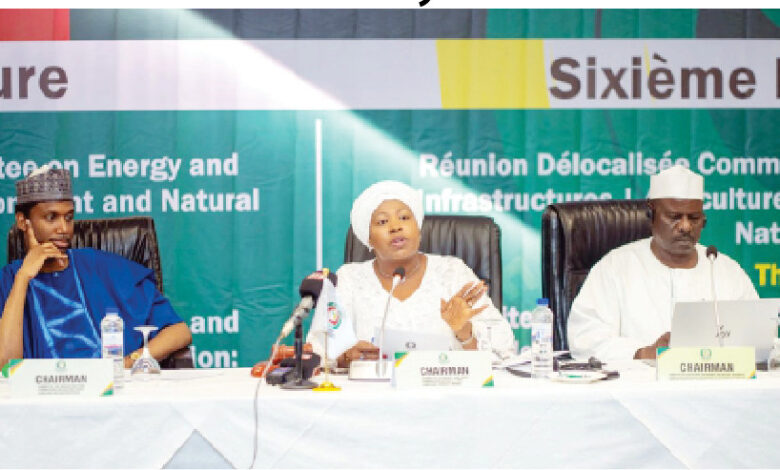
The Parliamentarians have engaged stakeholders including other regional institutions to boost regional electricity access during the Delocalized Meeting of the Joint Committee of the ECOWAS Parliament on Energy and Mines, Infrastructure, Agriculture, Environment and Natural Resources that just ended in Dakar, the capital of Senegal.


The meeting, which has held from June 15 to 19, 2026 under the theme, “Harnessing Renewable Energy for Rural Electrification and the Revitalisation of Rural Economies in the ECOWAS Region: The Role of the ECOWAS Parliament,” concluded with the adoption of the Joint Committee’s report after extensive deliberations by lawmakers from across the region.
It was imperative that the regional assembly rallied stakeholders to improve this critical sector necessary for economic development of rural communities and the integration process as it has become incumbent on all ECOWAS institutions to build energy capacity for growing industries in the region.
West Africa’s natural environment is brimming with vast natural resources but the region is suffering severe power shortfalls. Electricity access in West Africa is severely hindered by insufficient generation capacity, high transmission and distribution losses, and deep rural-urban divides.
With over 190 million people lacking electricity, the region struggles with moribund infrastructure, over-reliance on expensive fossil fuels, and endemic power sector inadequacies.
ECOWAS’ Acting Head, Conventional Energy, Koumoin Arbaduis was apt in his presentation entitled “ECOWAS Regional Energy Policies and Key Energy Statistics,” as he decried West Africa’s inadequate electricity supply, low access rates and high transmission costs.
According to him, the sub-region possesses the world’s most abundant energy resources, like crude oil, natural gas, biomass resources, uranium, coal, and an estimated 25,000 megawatts of hydroelectric potential. However, there is a disturbing lack of utilization of the sub-region’s abundant resources.
West Africa has over years adopted a number of policies and frameworks to address these constraints, and promote sustainable energy development across member states. Some of these initiatives include the 1982 ECOWAS Energy Policy that was adopted following the global oil crises of the 1970s. This kick-started the regional cooperation in energy supply, grid integration and petroleum exploration.
There is also the 2003 ECOWAS Energy Protocol, which provided the legal framework for long-term cooperation, investment and trade in the sector, while creating the basis for the West African Power Pool (WAPP) initiative.
This was followed by the 2006 ECOWAS/UEMOA White Paper on Access to Energy Services for Rural and Peri-urban Populations, aimed at expanding access to electricity and modern energy services in underserved communities.
ECOWAS also adopted a Renewable Energy Policy, as well as an Energy Efficiency Policy in 2013 and in 2017; the ECOWAS Commission adopted the ECOWAS Bioenergy Policy and the Policy for Gender Mainstreaming in Energy Access in 2017.
Three years ago, ECOWAS adopted emerging energy technologies, such as the ECOWAS Green Hydrogen Policy Framework and Strategy aimed at boosting the production of at least 0.5 million tonnes of green hydrogen by 2030. This is to make West Africa more competitive among global producers and suppliers of green hydrogen.
West Africa possesses an estimated 2,000 GW of renewable energy potential, yet less than 20% of this capacity is currently utilized. To combat chronic energy deficits, ECOWAS aims to increase renewable energy in the regional electricity mix to 48% by 2030, heavily relying on utility-scale solar, hydropower, and emerging green hydrogen initiatives.
The region’s solar power, hydropower and wind power in different countries serves as a vital base load power source for the West African Power Pool (WAPP).
Despite all these efforts, the region has not developed the capacity to provide adequate power to its citizens. It has therefore become incumbent on leaders to re-strategize and invest more in the sector, modernize its structures in order to provide reliable and sustainable energy for socio-economic development of the region.
These challenges can also be addressed by regional coordination mechanisms and increased support for the ECOWAS Centre for Renewable Energy and Energy Efficiency (ECREEE).
Perhaps the most prominent challenge is the shortage of finance facing West African Power Pool (WAPP). In this regard, grants, concessional loans and other forms of investments may just be the solution.
It was heart-warming that the Joint Committee chaired by Guinean Member of Parliament, Fanta Conte emphasized the need to promote quality standards for renewable energy equipment. She also urged the need to expand access to financing for productive uses of energy, strengthen youth capacity through technical training, and mainstream gender considerations to ensure women benefit fully from energy initiatives.
Rural electrification can be the trigger of power improvement not just to households but a catalyst for economic transformation, job creation, agricultural productivity, women and youth empowerment that will drive the region to its industrial destination.