ECOWAS Pushes For Renewable Energy Expansion To Drive Rural Development Across West Africa

0
ABUJA – The Economic Community of West African States (ECOWAS) has reaffirmed its commitment to achieving universal access to affordable, reliable and sustainable electricity across the region, with a strong focus on renewable energy as a catalyst for rural development and economic empowerment.
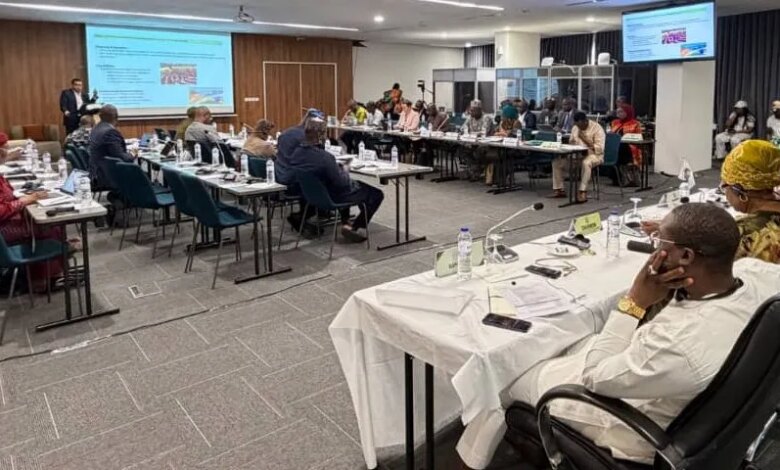
This position was outlined in a goodwill message delivered on behalf of the Director of Cabinet in the Office of the President of the ECOWAS Commission, Hon. Abdou Kolley, at the opening of the Delocalized Meeting of the Joint Committee of the ECOWAS Parliament on Energy and Mines, Infrastructure, Agriculture, Environment and Natural Resources in Dakar, Senegal.
The meeting, held under the theme “Harnessing Renewable Energy for Rural Electrification and Empowerment of Rural Economies in the ECOWAS Region: The Role of the ECOWAS Parliament,” brought together parliamentarians, government officials, energy experts and development stakeholders to discuss strategies for accelerating access to electricity in rural communities.
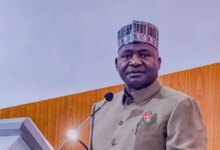

Speaking on behalf of the Commission President, Dr. Omar Alieu Touray, Kolley commended the ECOWAS Parliament for organizing the delocalized sessions, describing them as important platforms for engagement with stakeholders and for identifying practical solutions to regional development challenges.
“The Commission highly commends ECOWAS Parliament on organizing these Delocalized Sessions which aim at providing opportunities for Honourable Members to engage with key stakeholders, deepen understanding of the issues, and identify practical, implementable measures to accelerate and support inclusive development across the Community,” he said.
Kolley stressed that ECOWAS envisions universal access to reliable, affordable and sustainable electricity for all communities in the region and has developed a comprehensive policy framework to achieve that objective.
According to him, the updated ECOWAS Energy Policy incorporates a just energy transition approach aimed at ensuring continuous access to modern, affordable and sustainable energy services.
He noted that the ECOWAS Renewable Energy Policy targets increasing the share of renewable energy in the region’s electricity mix to 48 percent by 2030, including contributions from large-scale hydropower projects.
He further highlighted the ECOWAS Energy Efficiency Policy, which seeks to reduce energy losses estimated at between 35 and 40 percent due to aging infrastructure, as well as the recently adopted ECOWAS Climate Strategy designed to harmonize regional efforts on climate adaptation and mitigation.
The ECOWAS official said specialized regional institutions, including the Energy and Mines Directorate, the ECOWAS Centre for Renewable Energy and Energy Efficiency (ECREEE), the ECOWAS Regional Electricity Regulatory Authority (ERERA), the West African Power Pool (WAPP), and the West African Gas Pipeline Authority (WAGPA), are working to strengthen regional energy integration.
These efforts, he explained, include expanding power generation and transmission infrastructure, integrating national electricity networks into a unified regional grid, developing a single regional electricity market, and promoting renewable energy and energy efficiency initiatives.
Kolley emphasized that expanding electricity access goes beyond infrastructure development and directly impacts social and economic progress across West Africa.
“We continuously imagine the lives of families being illuminated with hope, students able to study after sunset, health centres able to save more lives, and the citizenry finding new economic opportunities in their own rural or inner-city communities,” he stated.
He described energy access as “the foundation for national stability and development, human dignity, and shared prosperity,” while urging citizens to play their part in protecting energy infrastructure and discouraging illegal electricity connections.
“Provisioning of energy is not just a service; it is a tool for empowerment and community transformation,” he said.
Concluding the message, Kolley reiterated that accelerating universal access to electricity would strengthen regional integration and improve the lives of millions of West Africans.
He noted that the Commission is working closely with member states, development partners and other stakeholders to mobilize financing, build capacity and create markets for clean energy solutions.
“By accelerating universal access to electricity, we connect our peoples and our destinies,” he said, expressing confidence that the meeting’s recommendations would generate innovative solutions to complement ongoing efforts in the region’s energy sector.
The Dakar meeting is expected to produce recommendations that will guide ECOWAS and its member states in advancing renewable energy deployment, strengthening rural electrification initiatives and promoting sustainable economic development across West Africa.