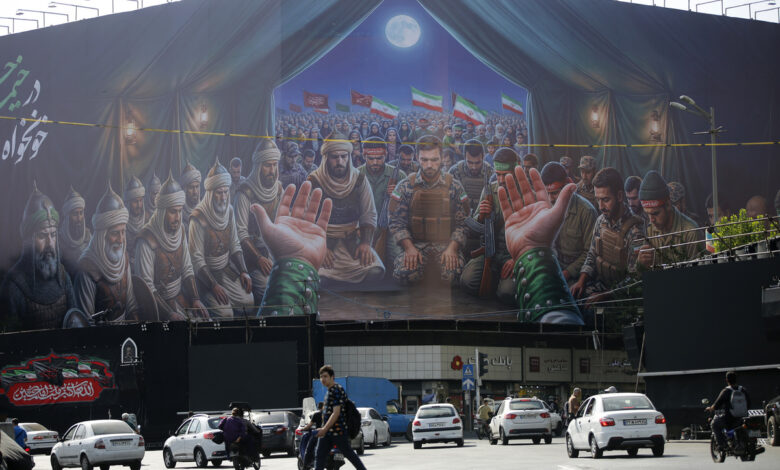
The recent war involving Iran has revived a longstanding debate about the nature of Iranian power and the future of the Middle East. For decades, discussions of Iran in Western policy circles have oscillated between two assumptions: that the Islamic Republic is fundamentally ideological and irrational, or that mounting pressure will eventually bring about its collapse. Yet the outcome of the recent conflict challenges both propositions.
Two prominent scholars, Vali Nasr and Robert Pape, approach Iran from different intellectual traditions but arrive at a remarkably similar conclusion. Iran has proven far more resilient than many of its adversaries expected, and any realistic assessment of the Middle East must begin from that fact.
Nasr’s recent book, Iran’s Grand Strategy: A Political History, explains the historical foundations of Iranian statecraft. Pape’s recent writings on the war examine how survival itself may alter the regional balance of power. Taken together, their analyses offer a useful framework for understanding both the strengths and the dilemmas facing Iran in the postwar era.

Beyond the Myth of Irrationality
Nasr’s central argument is straightforward: Iran is not simply an ideological revolutionary state. It is a nation pursuing a coherent grand strategy shaped by geography, historical experience, insecurity, and the search for power.
Much Western commentary has interpreted Iranian behavior primarily through the lens of Islamism or revolutionary ideology. Nasr does not deny the importance of ideology, but he argues that it alone cannot explain the continuity of Iranian strategic behavior across decades. Instead, Iran behaves much like other states confronting hostile environments: it seeks security, autonomy, and regional influence.
The defining experience for the Islamic Republic was not only the 1979 revolution but also the Iran-Iraq War. That conflict convinced Iranian leaders that international institutions, foreign guarantees, and even international law could not be relied upon for national survival. The result was the emergence of a security doctrine based on self-reliance, deterrence, and strategic patience.
Unable to match the military power of the United States or Israel, Iran developed alternative instruments of influence: missile forces, indigenous military production, nuclear capabilities, regional alliances, and what Tehran calls a strategy of resistance. The goal was not necessarily military victory in a conventional sense, but preventing defeat and increasing the costs of external intervention.
This distinction is important. Resistance, in the Iranian conception, is not merely ideological opposition to the West. It is a practical strategy for preserving sovereignty under conditions of military asymmetry.
Nasr therefore rejects portrayals of Iran as an irrational actor. He sees a state whose leadership combines ideological commitments with considerable pragmatism. Revolutionary rhetoric matters, but it often operates within a broader framework of national interest and strategic calculation.
What Survival Changes
If Nasr explains how Iran arrived at its current position, Robert Pape asks what comes next.
Pape’s analysis of the recent war begins with a simple observation: despite suffering serious military and economic damage, Iran survived. The political system remained intact. The state did not collapse. Nor did it surrender its strategic objectives.
For Pape, survival itself has consequences.
History offers many examples of states emerging from major confrontations not weakened politically but strengthened. When countries survive attempts to coerce, isolate, or overthrow them, leaders often conclude that their strategy has been vindicated. Rather than producing moderation, external pressure can reinforce self-confidence.
This insight reflects one of Pape’s longstanding themes. Tactical military victories do not automatically produce strategic success. Air campaigns can destroy infrastructure and eliminate commanders, but they frequently fail to achieve larger political goals.
The recent conflict appears to fit that pattern. Whatever damage was inflicted on Iran, the broader political objective of fundamentally altering Iranian behavior remains elusive.
Pape therefore argues that the critical question is no longer whether Iran can survive. The question is what role Iran will seek to play after survival.
His answer is provocative. He suggests that Iran may be entering a new phase in which it attempts to convert resilience into regional influence and geopolitical leverage.
Pape has gone further, arguing that Iran’s control over the Strait of Hormuz gives it influence that exceeds its economic weight. Unlike traditional great powers whose status derives primarily from economic or military strength, Iran’s position is reinforced by geography. The Strait remains one of the world’s most important energy chokepoints, connecting Gulf energy production to global markets.
Whether or not one accepts Pape’s characterization of Iran as an emerging global power, his broader point is difficult to dismiss. Geography, resilience, and strategic location continue to matter, particularly in an era of growing competition among the United States, China, and Russia.
READ: Iran says Switzerland talks with US focus on ending war, easing sanctions, releasing frozen assets
Where Nasr and Pape Converge
Although they approach the subject differently, Nasr and Pape share several important assumptions.
First, both reject narratives of imminent Iranian collapse. Nasr explains resilience through history and strategic culture. Pape emphasizes the demonstrated ability of Iranian institutions to withstand military pressure. Both conclude that Iran possesses greater durability than many external observers assume.
Second, both distinguish between tactical outcomes and strategic results. Military superiority alone does not determine political success. States often absorb battlefield losses while preserving long-term objectives.
Third, both emphasize the importance of time. In their analyses, endurance itself becomes a strategic resource. Iran’s ability to absorb pressure over long periods can transform apparent weakness into political advantage.
These shared conclusions challenge a great deal of conventional thinking about the Middle East. For decades, policy toward Iran has often been built around expectations that sanctions, isolation, military pressure, or some combination of the three would eventually force fundamental change. Yet Iran has repeatedly adapted to these pressures rather than capitulating.
This does not mean Tehran has achieved its objectives. It means that its adversaries have often failed to achieve theirs.
The Limits of Resistance
Yet resilience alone is not enough.
The more important question raised by both Nasr’s and Pape’s analyses is whether resistance can evolve into a sustainable model of regional leadership.
For nearly half a century, the Islamic Republic has organized much of its political identity around resistance to foreign domination. That strategy has undoubtedly helped preserve state sovereignty. It has enabled Iran to survive wars, sanctions, international isolation, and repeated external attempts to constrain its influence.
But a strategy designed for survival is not necessarily a strategy designed for development.
Historically, countries that achieve lasting influence do so through a combination of military security, economic dynamism, technological innovation, and political legitimacy. Resistance can prevent defeat, but it cannot by itself generate prosperity.
This is the challenge facing Iran today.
The regional environment is changing. American power remains significant, but Washington’s strategic focus has increasingly shifted toward Asia. Regional states such as Saudi Arabia, the United Arab Emirates, Turkey, and Qatar have diversified their international relationships, pursuing more flexible diplomatic strategies. The result is a more fluid and multipolar Middle East.
On paper, this environment should favor Iran. Tehran has long advocated a regional order less dependent on American dominance and more oriented toward multipolarity.
Yet Iran enters this period carrying significant burdens.
Many elements of the regional network that once formed its forward-defense strategy have been weakened. Hezbollah faces unprecedented pressure. Syria is no longer the reliable strategic partner it once was. Sanctions continue to impose severe economic costs. Domestic dissatisfaction remains widespread.
In other words, geopolitical resilience coexists with economic and political vulnerability.
From Survival to Statecraft
The real strategic question therefore concerns transformation.
Can Iran move from a resistance-oriented state toward a development-oriented one?
This transition would require more than military deterrence. It would involve integrating Iran into regional initiatives such as transportation corridors, energy networks, reconstruction projects, and commercial relationships. Influence would increasingly be measured not only by missile ranges or military alliances but also by trade, investment, infrastructure, and diplomacy.
Historical examples suggest such transformations are possible. Revolutionary states often begin by resisting external domination before evolving into architects of new political and economic prosperity. China transformed revolutionary mobilization into a strategy centered on economic growth and institutional influence. Even postwar Europe converted the memory of resistance during the World Wars into projects of regional integration. The challenge for the Middle East is whether it can undertake a similar transition.
History, however, is also replete with movements that have been effective in resisting the dominant order but have been less successful in governing or creating a new, inclusive order. The transition from “anti-order” to “order-making” power is one of the most difficult and complex paths for successful revolutions. The United States emerged from anti-colonial resistance to become the organizer of a continental and eventually global system before falling to the hands of Military industry and becoming the dominant state and eventually populism for dismantling world orders.
Resistance externally or internally need not disappear. But it must be redefined. Instead of serving primarily as a mechanism of survival, it would need to become a platform for development and statecraft.
READ: US temporarily eases sanctions on Iranian oil sector under new understanding with Tehran
Four Obstacles
Four major obstacles stand in the way.
The first is institutional. Much of Iran’s political structure has been shaped by decades of confrontation and security concerns. Institutions designed to resist external threats are not always well suited for promoting innovation, economic competitiveness, or political inclusion.
The second is regional. The Middle East remains deeply fragmented. American military presence, Israeli-Iranian rivalry, and unresolved conflicts continue to generate instability. Even where interests overlap, mistrust remains profound.
The third obstacle is economic. Existing semi-neoliberal rentier economy has created a certain elite around the power structure that benefited from sanctions at the same time the masses were impacted with hardship. On the other hand, military resilience does not automatically generate growth. No country can sustain regional influence without a productive and dynamic economy that benefits the people fairly. Long-term influence requires investment, technological development, and integration into international markets.
The fourth obstacle is domestic legitimacy.
Perhaps the most significant challenge facing Iran is the relationship between state and society. Public trust has eroded in recent years. Economic hardship, perceptions of corruption, and political exclusion have weakened social cohesion.
No state can fully realize its geopolitical potential without broad public participation and confidence. History repeatedly demonstrates that national development depends not only on strategic vision but also on social legitimacy by way of public participation in decision making and governance.
For Iran, the question is whether resilience abroad can be matched by renewal at home.
A Regional Turning Point
The broader significance of this debate extends beyond Iran itself.
The Middle East is entering a period in which military deterrence alone is unlikely to provide durable solutions. Climate pressures, economic integration, technological competition, demographic change, and energy transitions are increasingly shaping regional politics.
States that aspire to leadership will need more than military capabilities. They will need the capacity to offer credible visions of order, prosperity, and cooperation.
This is ultimately where the analyses of Nasr and Pape converge. Both suggest that Iran has successfully avoided collapse despite enormous pressure. Both imply that the country’s future importance is likely to persist.
The real issue is not whether Iran remains a major regional actor. Geography, population, resources, and historical depth make that outcome highly probable.
The central challenge facing Tehran today is therefore not survival that has largely been achieved. The challenge is converting survival into statecraft, deterrence into stability, and resilience into a model of development capable of attracting rather than merely resisting.
Will resilience continue to function primarily as a defensive strategy aimed at preserving sovereignty? Or will it evolve into a broader project of development, legitimacy, and regional institution-building?
The answer will shape not only Iran’s future but also the future of the Middle East.
OPINION: Insuring oil, shaping power: The hidden geopolitics of Middle East energy
The views expressed in this article belong to the author and do not necessarily reflect the editorial policy of Middle East Monitor.