Sifir Atik: A Turkish idea with global impact
Hardly any other environmental project has shaped the international perception of Türkiye as strongly as the ‘Zero Waste’ initiative.
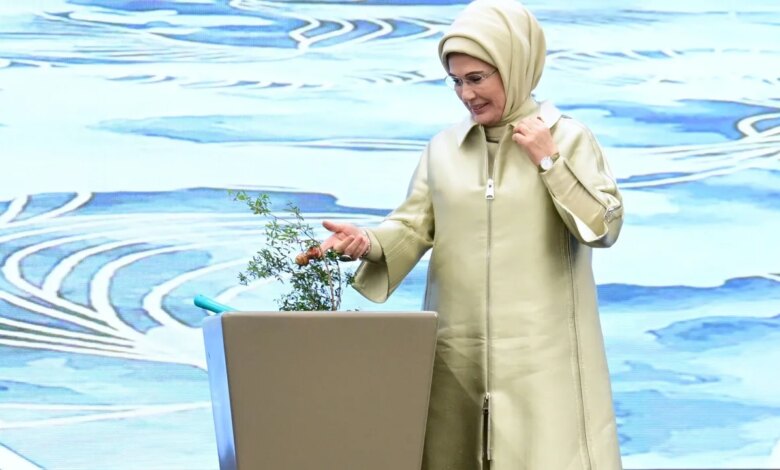
The programme was launched in 2017 under the patronage of Turkish First Lady Emine Erdogan and developed from a national campaign to an internationally recognised model project within a few years.
According to the Ministry of the Environment, millions of tons of recyclable waste have been returned to the economic cycle, and significant amounts of water, energy and raw materials have been saved.
Today, more than a thousand certified institutions participate in the programme. Schools, universities, hospitals, companies and municipalities are part of the system.
The initiative received international recognition from the United Nations. In 2022, the UN General Assembly adopted the International Day of Zero Waste at the initiative of Türkiye.
This turned a national environmental project into a global reference model for circular economy and resource efficiency.
Türkiye’s new role in climate diplomacy
However, the real significance of COP31 may lie less in technical issues than in diplomacy.
Hardly any other country moves in such different geopolitical areas at the same time. Türkiye is a NATO member, a candidate for EU accession, an important partner of numerous states in Africa, Central Asia and the Middle East, and an active mediator in international crises.
This special position could play a central role, especially in climate policy. Many negotiations have been failing for years due to tensions between industrialised and developing countries.
Controversial issues remain the financing of climate protection measures, technology transfer, and adaptation to climate crisis.
Ankara sees an opportunity here. The Turkish leadership argues that states with experience in both development processes and industrialisation processes can build bridges between different interests.
COP31 President-elect Murat Kurum summed up this claim in three terms: dialogue, consensus and action.
He will be supported by Samed Agirbas, President of the Zero Waste Foundation and COP31 High-Level Climate Champion, who will focus more on the topics of circular economy and social participation at the conference.
More than just a host
For Türkiye, COP31 is much more than a major international event.
The conference offers the country an opportunity to bring its experience in renewable energy, the circular economy, sustainable urban development, and climate diplomacy to the global stage.
In recent years, Türkiye has often received international attention for its foreign policy initiatives, its mediation efforts in regional crises, and the successes of its defence industry.
These factors remain important components of its international profile. At the same time, however, the country has become an important player in sustainable development and climate policy.
With the expansion of renewable energy, the international recognition of the ‘Zero Waste’ initiative, and ambitious climate targets, Türkiye has shown that economic development, energy security, and climate protection can be compatible.
COP31 now offers the opportunity to bring these experiences into the international debate and to promote exchange between industrialised and developing countries.
Antalya 2026 could therefore be remembered not only as the venue for another world climate conference.
The conference has the potential to mark a new stage in international climate diplomacy, in which Türkiye further consolidates its role as a bridge-builder between regions, interests and development models.
For a country that connects Europe, Asia, the Mediterranean and the Global South, this is not just a diplomatic task but a natural responsibility.
(This article was first published on TRT Deutsch)