The end of a long story
Germany has already completed six terms as a non-permanent member of the Security Council: 1977–1978, 1987–1988, 1995–1996, and since then, every eight years: 2003–2004, 2011–2012, and 2019–2020.
This rhythm has now been broken with the failure of its candidacy. There is no doubt about the magnitude and political consequences of this defeat.
Foreign Minister Johann Wadephul attempted to turn the tide in Germany’s favour with a marathon of bilateral meetings in New York during the week leading up to the vote.

He likely managed to garner some votes for Germany in the process. There are always undecided member states of the UN, or those still susceptible to influence, as many representatives do not base their voting behaviour on directives from their capitals but instead decide according to their own preferences.
This resounding defeat, however, could not prevent this form of “speed dating.” But here, too, it must be said that the mistakes are primarily attributable to decisions made years ago and certainly cannot be blamed primarily on the current federal government.
German foreign policy has never had an easy relationship with the UN, which the Federal Republic of Germany only joined in 1973, along with the now-defunct German Democratic Republic (GDR).
The CDU and CSU, in particular, during their time in federal governments between 2005 and 2021 and again as part of the current coalition government, long underestimated the forum and became a frequent target of justified criticism at the UN.
Germany’s UN policy dilemma lies in its strategic ambivalence. While Berlin was visibly active and engaged during its terms as a non-permanent member of the Security Council, particularly in the areas of human rights and international humanitarian law, these efforts were not embedded in a long-term and consistently pursued political strategy capable of reinforcing the country’s claim to a greater role within the UN.
Against the backdrop of international reactions to the Russia-Ukraine war, developments in the Middle East, and differing assessments of the US-Israeli approach toward Iran and its allies, the political climate in many parts of the world has shifted in recent years.
In this environment, Western states are increasingly viewed with scepticism, reducing the prospects for the success of German initiatives and diplomatic ambitions on the international stage.
Related
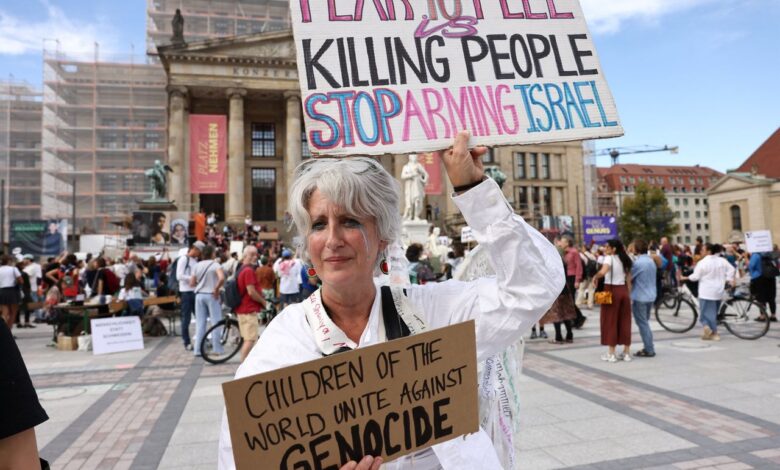
Was Germany’s Israel policy decisive?
Germany did not benefit from its policy on Israel, while Austria and Portugal apparently did.
However, these two states do not differ from Germany in their stance on international law. While Germany’s position on the Israel question may have cost it support in parts of the Arab world and beyond, and may explain some losses in the vote, it was not decisive.
Part of the foreign policy profile of a mid-sized country with ambitions is also to take a stand on issues recognised as pivotal.
Has the diplomatic defeat prompted any reflection in Berlin? The Foreign Office’s statements are defensive. They apparently hope that another issue will quickly overshadow the defeat at the United Nations, fading into the background.
In this unfortunate situation, Chancellor Friedrich Merz is doing the only sensible thing: he’s taking it in stride and adhering to the old football adage: after the game is before the game.
(This article was first published on TRT Deutsch)