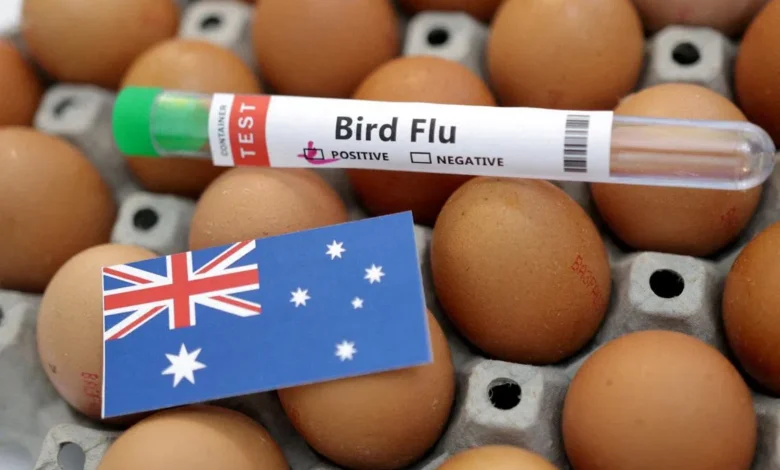
A strain of avian influenza known as H5N1 has proved alarmingly adept at jumping continents and species.
First identified in farmed geese in southern China in 1996, the virus has periodically spread from birds to people and other animals.
But the version that has most worried scientists in recent years is clade 2.3.4.4b, an H5N1 strain that has spread globally through wild birds, devastating poultry flocks and infecting more than 50 species of mammals.
Australia had been the last continent without a confirmed H5N1 detection. That changed in June, when the authorities found the virus in a seabird near the town of Esperance in Western Australia.

The discovery is raising alarm about the potential threat to Australia’s native birds and other wildlife, as well as to poultry and cattle farms.
Scientists around the world are also watching closely for signs the virus is adapting further to mammals, a development that could increase the risk of transmission to and among humans.
For now, health authorities say the risk to the general public, both in Australia and globally, remains low.
H5N1 is a subtype of the influenza A virus.
The strain now drawing global attention belongs to a lineage known as clade 2.3.4.4b, which emerged in Europe around 2020 and has since spread across Africa, Asia, Europe, North and South America, and Antarctica.
Unlike earlier outbreaks that were largely confined to poultry and waterfowl, the current strain – which spreads through bodily fluids such as saliva and faeces – has become established in more than 100 wild bird species, allowing it to spread over thousands of miles through migration.
It has also infected dozens of mammalian species, including foxes, seals, sea lions, cats, dogs and dairy cattle.
Australia had been the only continent free of the H5N1 strain.
That changed when the authorities confirmed the virus in a brown skua, a large predatory seabird, in Western Australia’s Cape Le Grand National Park.
Because brown skuas breed on sub-Antarctic islands and migrate across the Southern Ocean, scientists believe a migratory bird may have carried the virus thousands of kilometres to Australia.
Within days of the initial detection, the authorities confirmed H5N1 in a Southern Giant Petrel in South Australia, about 1,450km east of the initial case, suggesting that the virus may already be more widely distributed than first thought.
Scientists have become increasingly concerned about H5N1 because the virus is now circulating in an unprecedented range of bird and mammal species.
Researchers grew more alarmed in 2024 after H5N1 spread through US dairy cattle, infected dairy workers, and was found at high concentrations in raw milk.
Although most infected workers experienced only mild illness the outbreak showed the virus could become established in a mammalian species previously thought unlikely to play a role in influenza transmission.
Although there is currently no evidence of sustained human-to-human transmission of H5N1, each new infection gives the virus another opportunity to mutate or reassort with other influenza viruses, increasing the chances that it could eventually acquire the ability to spread efficiently among people.
Human infections remain uncommon and are usually linked to close contact with infected birds, poultry, dairy cattle or contaminated environments.
Symptoms range from conjunctivitis, or pink eye, and mild respiratory illness to severe pneumonia and respiratory failure.
The severity of illness has varied considerably.
Most infections detected during the recent US dairy outbreak were mild, often involving conjunctivitis.
However, severe and fatal infections continue to be reported elsewhere, particularly following exposure to infected poultry.
Unlike seasonal flu viruses, H5N1 does not readily bind to the predominant receptors in the human upper respiratory tract.
That makes it more difficult for the virus to infect people and helps explain why sustained human-to-human transmission has not occurred.
Antiviral drugs such as oseltamivir, sold as Tamiflu, can be used to treat H5N1 infections in humans. Countries, including Australia, also maintain pandemic influenza preparedness plans that include stockpiles of antiviral drugs and access to H5 vaccines or vaccine candidates that could be deployed if the risk to people increased.
These vaccines are intended for emergency use and are not part of routine immunisation programmes.
Separate vaccines are also used in poultry in some countries to help control outbreaks, although their use varies because vaccinations can make outbreaks harder to detect and complicate international trade.
As elsewhere in the world, the immediate concern for Australia is wildlife and agriculture rather than widespread human illness.
Scientists are particularly concerned the virus could threaten Australia’s seabird colonies, fur seals, sea lions and already-endangered species.
Backyard poultry and flocks on commercial farms are also vulnerable.
Elsewhere, H5N1 has caused mass mortality events among seabirds and marine mammals and led to the culling of hundreds of millions of poultry.
These outbreaks have disrupted food supplies, pushed up prices and triggered trade restrictions.
In 2025, for example, a single outbreak at a commercial poultry farm in Brazil – the world’s largest chicken exporter – prompted months-long import bans by major buyers including China and the European Union, threatening more than US$4 billion (S$5.2 billion) in annual export sales and raising concerns about global chicken supplies.
If the virus were to be detected in commercial poultry in Australia, the authorities could impose movement restrictions, quarantine affected properties and cull infected flocks under nationally agreed emergency response plans.
The authorities are urging people not to touch sick or dead birds or marine mammals and to report them through Australia’s Emergency Animal Disease Hotline.
Scientists are sequencing the virus to determine its origin and how closely it is related to H5N1 strains circulating elsewhere, particularly in the Southern Ocean.
The authorities are expanding surveillance of wild birds and poultry while tracing additional cases to determine whether the virus remains confined to wildlife or has spread more widely.
Australia has spent several years preparing for H5N1’s arrival, investing more than A$113 million (S$101 million) in surveillance, biodiversity protection, laboratory capacity and pandemic preparedness, while establishing a national taskforce involving agriculture, environment, public health and emergency management agencies.
The authorities could also issue housing orders requiring free-range poultry in Western Australia to be kept indoors.
The poultry industry has also tightened its own biosecurity measures.
Ingham’s Group, Australia’s largest poultry producer, has placed its Western Australian farms and processing operations under heightened biosecurity, including a lockdown preventing all non-essential access.
The company said there have been no detections in its operations or supply chain and it continues to supply the Australian market as usual. BLOOMBERG