The revitalisation of Primary Healthcare Centres (PHCs) under the World Bank-supported IMPACT project has improved access to healthcare and restored confidence in many communities across Kaduna State. But despite these gains, poor power supply and emergency response challenges continue to hinder service delivery. In this report, BABAJI USMAN BABAJI examines the impact of the intervention at Ikara Primary Healthcare Centre and the obstacles that remain.

Despite ongoing efforts to strengthen primary healthcare delivery in Kaduna State, inadequate infrastructure and unreliable electricity supply continue to undermine service provision in many rural communities. For years, residents in several local government areas have struggled with limited access to quality healthcare due to poorly equipped facilities, erratic power supply, and shortages of essential services, forcing many patients to seek treatment in distant towns or private clinics.
To address these challenges, the Kaduna State Government, with support from the World Bank-funded IMPACT project, embarked on the revitalisation of selected Primary Healthcare Centres (PHCs) across the state. The intervention focused on upgrading infrastructure, improving access to essential medical equipment, expanding service delivery, and creating a more conducive environment for both healthcare workers and patients. The initiative has contributed to increased utilisation of healthcare services and renewed public confidence in several facilities.
However, while the revitalisation programme has recorded notable successes, persistent electricity challenges continue to threaten its sustainability. In many facilities, unstable power supply affects the storage of vaccines, operation of medical equipment, lighting during night-time emergencies, and the overall quality of care.
Healthcare workers in the state told LEADERSHIP Weekend that without reliable electricity, gains recorded through infrastructure upgrades may not fully translate into improved health outcomes, particularly during emergencies when timely response can mean the difference between life and death.
For many patients, the upgraded facility represents a significant improvement from the past. However, some residents say recurring power outages continue to pose challenges, particularly during emergencies and night-time visits. They expressed concern that without a reliable electricity supply, the facility may struggle to deliver services effectively despite the investments made in infrastructure and equipment.
When our correspondent who visited the facility, Mrs Hajara Amadu arrived at the Ikara Primary Healthcare Centre (PHC) in Kaduna State with her eight-month-old daughter strapped to her back told LEADERSHIP Weekend that a few years ago, she would have had to travel several kilometres to access medical care because the facility lacked the capacity to provide adequate services.
Today, however, she is among many residents benefiting from improvements brought about by the revitalisation of the centre under the World Bank-supported IMPACT project.
Like several residents of rural communities, her confidence in public PHC facilities was slim. Her reason was that they were only dilapidated buildings with a shortage of health workers and inadequate medical equipment. “Today, within minutes of arriving at the facility, my baby was attended to by healthcare workers. Medicines are available. The wards are functional. So the difference is clear,” she said.
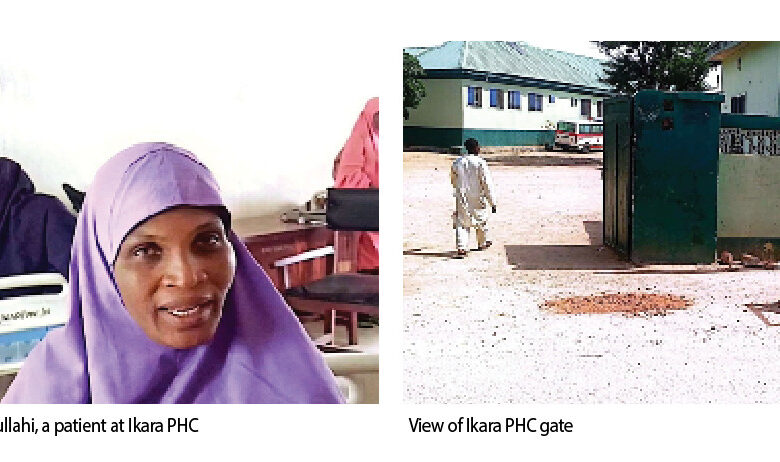
Corroborating her, Nafisa Abdullahi, another patient admitted at the facility, said there are several visible changes in the centre compared to its previous condition.
The Kaduna State Government is implementing the ongoing PHC revitalisation programme under the World Bank-supported Immunisation Plus and Malaria Progress by Accelerating Coverage and Transforming Services (IMPACT) project, aimed at improving healthcare delivery. The facility also receives drugs from the Kaduna State Contributory Health Management Authority (KADCHMA).
Yet, the question of whether the intervention has truly transformed healthcare delivery at the grassroots level still remains. For health experts like Dr Isa Bala Ahmad, the Health secretary at Ikara PHC, these facilities are meant to serve as the first point of contact for millions of citizens seeking medical care.
He said that for decades, many rural centres have struggled with neglect, broken infrastructure, staff shortages, inadequate equipment, and poor maintenance, which pushed many residents to bypass local health centres.
Dr Bala, who is also one of the professionals familiar with the revitalisation project, said Ikara PHC was not immune to these challenges. “Before now, some centres were almost collapsing. Some were in very poor condition, and we were even afraid to admit patients,” he recalled.
For health experts, it is often difficult to provide quality care in facilities that lack basic infrastructure, and patients often notice these deficiencies. As confidence declines, attendance drops, and many residents seek alternatives elsewhere.
Beneficiaries and health workers like Dr Bala believe the revitalisation programme has reversed that trend. “Since the facilities were renovated, they have come back to life,” he said.
According to the officer-in-Charge of the facility, Dr Rufai Garba, attendance has increased to over 100 per cent as confidence in the facility continues to grow. He said new buildings now stand alongside renovated structures, while medical equipment has also been provided for improved service delivery.
One of the significant changes at Ikara PHC was its elevation to a Centre of Excellence. The facility, popularly known by residents as Malam Sambo Hospital, has become a referral hub serving multiple communities across Ikara local government arrea.
Dr Garba said the centre now receives referrals from nine other primary healthcare centres and 45 smaller health facilities across the local government.