0
For many pregnant women in low-income communities across Lagos, the cost of antenatal care, medical tests and delivery services can mean the difference between a safe childbirth and a potentially life-threatening experience.
It is a reality that inspired the creation of the MamaBase maternal health programme, an initiative dedicated to ensuring that women and their babies survive pregnancy and childbirth.
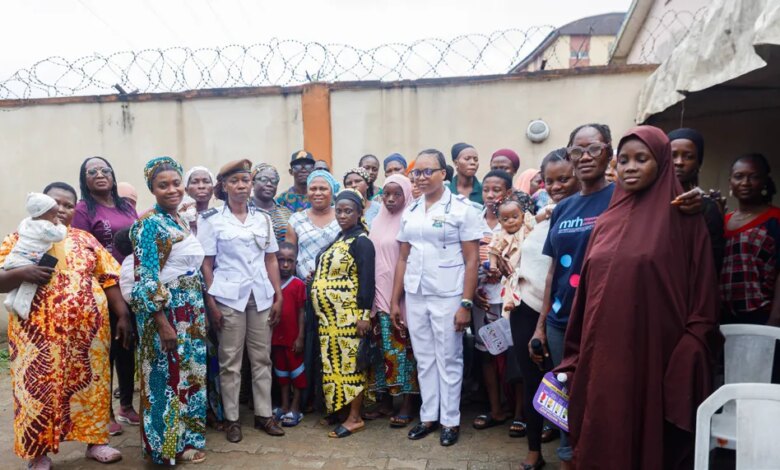
Speaking during a community sensitisation programme in Igbo-Owu Health Centre in Mushin area of Lagos, Atinuke Adenekan, Community Maternal Health Coordinator, said the organisation was founded in 2007 by Professor Bosede Afolabi after witnessing the devastating impact of preventable maternal and infant deaths.


“Our mission is simple: to save lives,” she said.
Adenekan urged families to encourage pregnant women to register at health facilities and seek skilled care, warning that complications can arise unexpectedly during childbirth.
She recalled the case of a woman who lost her baby and her womb after prolonged labour at a poorly equipped facility.
“The most important thing is going home alive with your baby,” she said.
At the heart of the programme are Community Health Extension Workers (CHEWs), who move through communities identifying vulnerable pregnant women and linking them to healthcare services.
For Josephine Igoluba, the coordinator of MamaBase in Mushin Local Government Area, the work goes beyond registration and financial support.
“Our CHEWs go into communities to identify vulnerable women, particularly pregnant women who cannot afford healthcare services such as registration and medical tests,” she explained.
According to her, women are assessed to understand their circumstances before being enrolled in the programme.
Once enrolled, the women receive support for antenatal registration, medical tests and ultrasound scans. They are then closely monitored throughout pregnancy.
The support continues beyond childbirth. Beneficiaries receive baby packs containing essential items such as diapers, baby lotion and towels, while programme staff continue to monitor mothers during …natal period.
For Opeyemi Okunloye, one of the beneficiaries, the intervention came at a critical time.
She said that she had experienced complications during her first pregnancy, which resulted in a Caesarean section and that when she became pregnant again, doctors informed her that she would require another surgery.
Through a referral from Ajabo Health Centre in Ilasa, she was enrolled in the programme.