BY Richard Ndoma, Calabar, Aza Msue and Nonye Ekwenugo, Kaduna; Achor Abimaje, Jos; Attah Anthony, Jalingo; Abdullahi Olesin, Ilorin; Abu Nmodu, Minna
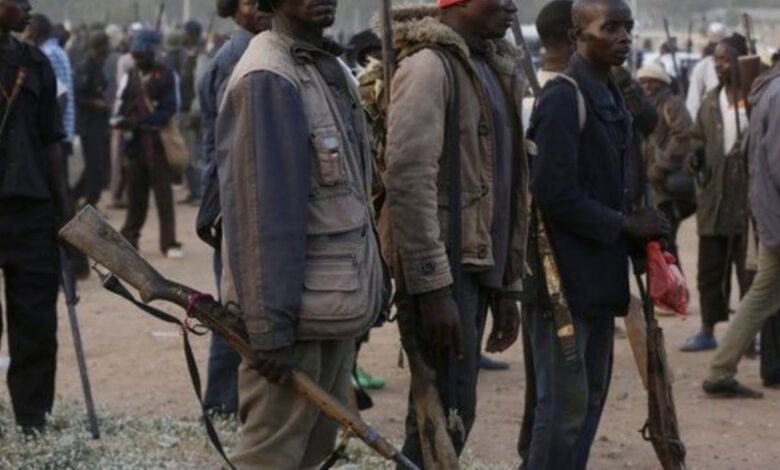
President Bola Tinubu’s recent approval of 1,000 forest guards for Oyo State has raised concerns in several states, with security experts and government officials warning that the figure falls far short of what is required to secure Nigeria’s vast ungoverned forest territories, which now serve as havens for bandits, kidnappers and terrorists.


LEADERSHIP Weekend reports that the concerns stem largely from the scale of insecurity across several states, where vast forested areas and difficult terrain provide cover for armed groups, making it impossible for a single-state allocation to adequately address the broader security burden.
Recent attacks in Kogi and Oyo states and several other parts of the country have further highlighted the growing role of forest corridors in Nigeria’s insecurity crisis, as victims are often abducted and moved through dense, ungoverned forest routes after initial assaults.
In Kogi, as in neighbouring states such as Niger, Kwara, Ekiti, Ogun, and parts of the North-West, security reports have repeatedly shown that armed groups rely on forest networks to evade pursuit, hide victims, and sustain prolonged kidnapping operations, underscoring concerns that insecurity is increasingly anchored in poorly policed forest environments across regional boundaries.
Stakeholders argue that without extending similar forest guard deployments to other high-risk states, the initiative risks.
From Cross River to Kaduna, Plateau, Kwara and Niger states, stakeholders told LEADERSHIP Weekend that while the initiative is a step in the right direction, the scale of insecurity in Nigeria’s forests demands far more personnel, better equipment and stronger collaboration with local security structures.
In Cross River, the chairman of the State Forestry Commission, Dr George Oben’etche, was unequivocal, calling the planned recruitment insufficient.
He argued that even the 300 forest guards already employed by the state are grossly inadequate to police its expansive forest reserves, and warned against waiting for criminals to establish strongholds before taking action.
While stressing that the state’s vast forest reserves require greater security attention to prevent them from becoming safe havens for criminal elements, he said, “The federal government shouldn’t think that because the criminals were yet to begin creating havoc, nothing would happen in our forest.
“For instance, people working at all the mining sites across the states are not indigenes of the state but foreigners. We shouldn’t wait until problems escalate before the federal government begins to search for alternative measures to curb these troubles,” he said.
In his reaction, the Cross River State commandant of the Nigerian Forest Security Service (NFSS), Commander Joseph Omni Ogburuwa, noted that the state hosts a significant share of Nigeria’s forests yet remains inadequately policed.
He urged the federal government to extend the forest guard initiative to the state, arguing that the NFSS already has more than 2,500 personnel capable of supporting security operations.
He cited recent kidnapping rescues, bandit attacks and cross-border security threats in forest communities as evidence of the growing danger.
Similarly, retired Superintendent of Police Takon Bebia advocated greater involvement by local communities and NFSS personnel.
For his part, security expert and former State Security Adviser Rekpen Bassey blamed poor forest management, illegal mining, porous borders and weak implementation of security policies for rising insecurity in the state’s forest corridors.
He urged governments to properly fund, retrain and deploy forest security personnel to tackle emerging threats.
Bassey advised governments at all levels to be more proactive in addressing insecurity rather than merely making pronouncements.
“Policies are not only made but are to be effectively implemented,” he said, urging the government to retrain, supervise and adequately fund the Nigerian Forest Security Service (NFSS), known in Cross River as Forest Guards.
He noted that many of those linked to insecurity in Cross River’s forest reserves are foreigners engaged in mining activities in Uban and the Akamkpa forest axis near the national park.