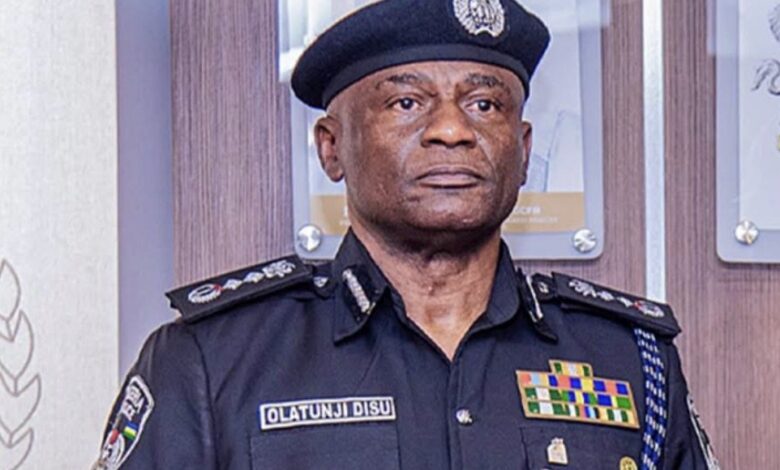
The Inspector-General of Police (IGP), Olatunji Disu, has prohibited serving officers and men of the Nigeria Police Force from engaging in unauthorised social media activities, including creating videos, live streaming, posting skits and monetising content on platforms such as TikTok, Instagram, Facebook and YouTube.
The directive, contained in an internal circular dated June 22, 2026, warns that officers who violate the order risk severe disciplinary sanctions, including interdiction, salary forfeiture, demotion, dismissal from service and possible criminal prosecution.


The circular, referenced SB:4065/IGP.SEC/FHQ/ABJ/VOL.1/11 and marked “Restricted – For Official Use Only,” was issued from the Office of the Inspector-General of Police at the Force Headquarters, Louis Edet House, Abuja.
It was addressed to all Heads of Departments at the Force Headquarters, Zonal Assistant Inspectors-General of Police, State Commissioners of Police, the FCT Commissioner of Police, the Commandant of the Police Mobile Force, and commanders of formations and units nationwide.
According to the document, the IGP expressed concern over what he described as the growing trend of police personnel using social media platforms without official authorisation.
The circular stated, “I am directed by the Inspector-General of Police to draw the attention of all Commands, Formations, Departments and Units to the growing and most disturbing trend of police officers and men creating and publishing videos, conducting live sessions, and participating in social media platforms particularly TikTok, Instagram Reels, Facebook Live, YouTube, and similar platforms while in police uniform or in circumstances that identify them as members of the Nigeria Police Force, without lawful authority.”
The police chief noted that some officers had turned social media platforms into avenues for entertainment, self-promotion and commercial activities.
According to the circular, officers have been “producing and posting videos of themselves in police uniform on TikTok, Instagram, Facebook and other platforms for entertainment, personal promotion and financial gain.”
The document also accused some personnel of operating social media accounts under real names or pseudonyms in ways capable of bringing the Force into disrepute, publicly commenting on official police operations and internal affairs without authorisation, and aspiring to become full-time content creators while still serving in the Force.
The circular reminded officers that their conduct is regulated by existing laws and policies, including the Nigeria Police Act 2020, the Nigeria Police Force Social Media Policy, Police Regulations, Police Service Commission disciplinary regulations and the Cybercrime Act.
Under the new directive, officers are prohibited from creating, publishing or sharing videos, photographs, skits, live streams or other content in police uniforms or within police premises without written approval from the Inspector-General of Police or an authorised representative.
The order also bars officers from operating personal or anonymous social media accounts for entertainment, brand promotion or commercial purposes where such activities reference or exploit their identity as police personnel.
In addition, officers are forbidden from publicly commenting on police investigations, postings, transfers, promotions, disciplinary proceedings or any official police matter.
The directive further prohibits personnel from accepting sponsorships, endorsement deals, monetisation arrangements or commercial partnerships arising from content linked to their status as police officers.
They are also barred from posting classified or sensitive information relating to police operations, deployments, personnel or strategies, as well as making statements on political matters, government policies or public controversies in a manner connected to their role in the Force.
In one of the most significant aspects of the directive, the IGP introduced the principle of vicarious liability, making senior officers accountable for violations committed by personnel under their supervision.
The circular stated that Commissioners of Police, Assistant Commissioners, Divisional Police Officers and other supervisory officers have a duty to monitor the social media activities of officers under their command.
It warned that any supervisor who fails to detect, report or address violations could face disciplinary action alongside the offending officer.
According to the document, disciplinary proceedings may be initiated against both the violator and the supervising officer if it is established that the superior officer knew, or reasonably ought to have known, about the misconduct but failed to act.
The directive ordered all Commissioners of Police to communicate the policy to officers under their commands and submit evidence of dissemination, including attendance registers and acknowledgement forms, to the Force Secretary within 30 days.