0
The Case Tracking and Response Centre CTRC, run by Balm in Gilead Foundation BIGIF, has decried the low turnout of youth in the last Saturday Governorship poll in Ekiti State.
Ekiti voters delivered a peaceful election, and women led the turnout. But as CTRC Executive Director Dr Oluwatumininu Adedeji put it, “persistent challenges relating to BVAS performance and vote trading require urgent institutional attention.”
CTRC linked the low turnout of youth in the poll to “trust deficit in government, economic realities, migration, and declining public confidence in electoral outcomes,” and urged civil society and youth groups to intensify voter education before future elections.

The election monitors said persistent BVAS failures and rampant vote trading raised questions about Nigeria’s readiness for credible polls ahead of Osun 2026 and 2027.
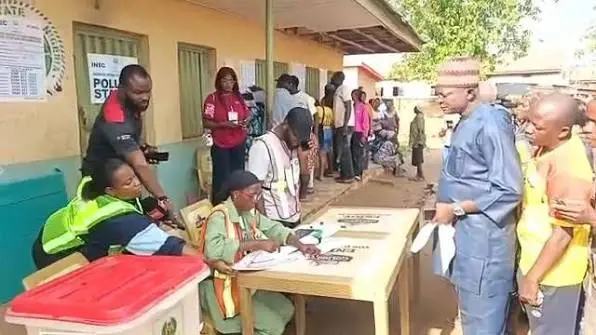
In a post-election statement released Sunday, CTRC said the exercise was “generally peaceful” with INEC officials and security personnel deployed by 8:00 am and voting conducted in an orderly manner.
“Technology was supposed to be the election’s backbone. Instead, it became its biggest headache. Of 67 incident calls received by CTRC’s 0800-300-3333 line, 24 were about BVAS malfunction, failed accreditation and slow devices. That’s more than half of all complaints.
The CTRC monitored the election through community observers and a toll-free situation room.
The standout feature of the poll was voter demographics. CTRC observers reported, “impressive voter turnout among women across virtually all polling units visited.” Elderly voters also showed up in large numbers and, together with Persons with Disabilities PWDs, pregnant women and nursing mothers, received priority accreditation in most locations.
“Community observers documented repeated incidents where elderly voters could not be successfully accredited because the BVAS failed to authenticate their fingerprints and/or facial features,” CTRC stated. Slow network made it worse in Ado, Ijero, Ikere, Emure, Oye, Ekiti West and Ikole LGAs.
Frustration boiled over in Moba LGA, Polling Unit 005, where prolonged BVAS delays triggered a physical altercation and assault on a security agent. INEC replaced faulty BVAS devices in several locations, but technical problems persisted, calling into question “the readiness and resilience of the BVAS technology in its current form,” CTRC said.
VOTE TRADING: THE ₦20,000 PROBLEM
If BVAS was the technical failure, vote buying was the political one. CTRC logged 41 calls reporting vote trading and voter inducement. It was documented in Ado, Moba, Ikere, Emure, Efon, Ekiti West, Oye, Ijero, Ikole and Ekiti East LGAs.
Observers described a coordinated pattern: voters cast ballots, then were directed by party agents to nearby “collection points” where payments ranging from ₦2,000 to ₦20,000 changed hands. In some cases, voters were allegedly identified after voting through informal monitoring before receiving an inducement.
“Vote trading remains a serious threat to electoral integrity,” CTRC warned. The problem was compounded by security presence: vote trading occurred “in proximity to polling units and in the presence of security personnel,” raising concerns about enforcement of the 2026 Electoral Act.
Only 2 calls reported electoral violence, including the Moba assault. CTRC noted no violence against women on election day, but recorded pre-election threats, coercion and harassment against women, including husbands blocking wives selected as observers in Ado Ekiti.
CTRC is asking INEC to conduct “a comprehensive post-election audit of BVAS performance and improve technology readiness” before Osun 2026. It also urged INEC, Police, EFCC and ICPC to strengthen coordination to investigate and prosecute vote trading under the 2026 Electoral Act.
Other recommendations: sustain priority voting for vulnerable groups, intensify youth voter education, and demand that political parties “refrain from all forms of vote trading, voter inducement and harassment.”
The lessons, she added, “should guide preparations for forthcoming elections, including the Osun 2026 Governorship Election and, more importantly, the 2027 General Elections.”