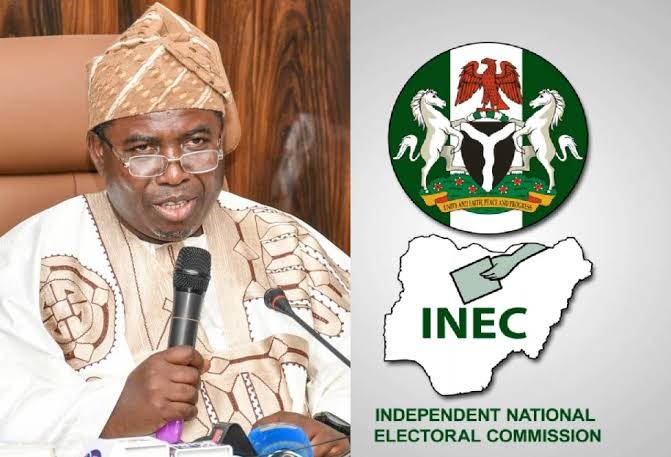
The Independent National Electoral Commission has disclosed that it is still waiting for the federal government to release the money needed to run the 2027 general elections.
The commission proposed a total budget of ₦873.78 billion for the upcoming elections, with most of the funds earmarked for operations, capital expenditure, and purchasing technology. Despite the delay in getting this money, the commission clarified that it is still within the legal timeframe.
Under the Electoral Act of 2026, the federal government is required to release all election funds to the commission at least six months before the general election.
Malam Mohammed Haruna, the INEC National Commissioner in charge of Voter Education and Publicity, made the disclosure during an interactive session in Abuja organized by the Peering Advocacy and Advancement Centre in Africa in partnership with Legis360.


He explained that even though the commission is waiting for the money, it is already working on early arrangements to buy new election materials, including replacing Bimodal Voter Accreditation System machines that were lost or damaged in past elections.
“Our director of ICT just returned from China regarding procurement because not all the BVAS devices used during the last general elections were recovered,” Haruna said. “Orders need to be placed, and these things take time.”
Addressing public concerns that the ₦800 billion plus budget is too expensive, Haruna defended the numbers by stating that running elections in Nigeria is actually cheap when compared to other countries. He explained that a big reason for the high cost is that the commission relies heavily on foreign materials and is affected by the unstable economy.
“This N800 billion plus sounds humongous, but when you calculate the average cost per voter, it is about six dollars, which is reasonable for a country such as Nigeria,” Haruna noted.
“People forget that virtually everything we use is imported. The BVAS devices and a lot of other election materials are imported. Exchange rate fluctuations also affect these costs.”
The commissioner also identified late and conflicting court orders as a major disruption to election planning, using the recent Ekiti governorship election as an example.
He explained that getting court injunctions just 24 to 48 hours before an election forces the commission to immediately change its software and rewrite physical result sheets to accommodate political parties.
“When a court gives a last-minute injunction to include parties like the National Democratic Congress and the African Democratic Congress, we are forced to reconfigure the software and update physical materials instantly,” Haruna said. “This leaves very little room to test the systems extensively, though we still manage to achieve substantial compliance with the rules.”
To prevent the technical issues that affected the result viewing portal during the 2023 presidential election, Haruna announced that INEC plans to hold mock presidential election exercises to test its technology. He also shared that the commission successfully achieved a 98 percent accreditation rate with BVAS machines during the Ekiti election, though vote buying remained an open and worrisome trend.