By Helen Okechukwu and Ridwanullah Sakariyah
As insecurity continues to threaten lives, schools, and communities across Nigeria, stakeholders have called for urgent reforms in the country’s security architecture, arguing that political blame games, weak local security structures and poor intelligence culture are worsening the crisis.
The most recent insecurity incident occurred on 15 May in Oyo state across three schools, leading to the abduction of 39 students, seven teachers, and the death of one teacher. The rise in insecurity has become a national concern across Nigeria.
Since the inception of Boko Haram, which means “Western education is a sin,” in 2014, there have been several recurring security challenges that have led to the abduction of more than 2,000 students and the displacement of affected persons, New Daily Prime reports.


READ RELATED NEWS UPDATES
Boko Haram strikes again: Five killed in Borno night attack
Troops repel Boko Haram attack in Borno, rescue 69 civilians in North-East operations
Oyo, Borno abductions: What is government doing to bring victims home?
The recent attack in Oyo State across three schools simultaneously has raised several questions from citizens and renewed calls for improved security measures to put an end to the persistent incidents.
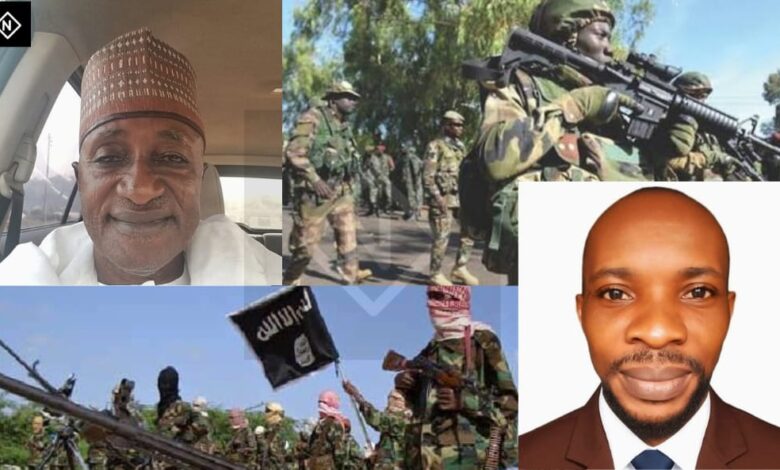
New Daily Prime, in an exclusive interview, spoke separately with Mr Opurum Loveday, one of the political figures in Rivers State, and retired Assistant Director of Internal Security (ADis/SSS), Mr. Adam Abuh, identified community-based security, intelligence gathering, improved funding and citizens’ participation as critical measures needed to address the country’s growing insecurity following the Oyo State abduction.

Mr Loveday, who described the level of insecurity as “worrisome,” calls on relevant stakeholders to take action as it has become a national issue.
He said, to a large extent, President Bola Tinubu, who is the Grand Commander of the Federal Republic (GCFR), and the military commander should be held responsible for the current insecurity challenges before the nation.
“The one that has that responsibility of ordering the military on what to do should be held responsible first. And that is why I said that the president and the presidency should be held responsible for the level of insecurity in Nigeria,” he said.
While speaking on the quality of security services policies, he said that the impact of good security policies should be felt by the people.
“When the people have not seen the effect of good, and effective security policies, then the people begin to ask questions. That means the policies are not healthy. The security policies are not good.
“I want to believe that the President of Nigeria is yet to tactically approach security issues…these people are destroying lives and properties of people in the country, you see them flashing what they are doing. I don’t want to believe that they cannot be tracked.”
He further encouraged President Tinubu to help the citizens by putting more effort in tackling the rising insecurity challenges ravaging the country at large.
“How do you expect a mother that has lost three children, that has lost lives of members of the family, how do you expect such a one to understand that that language is being put under control?” he said while questioning the level of insecurity in the country towards the mental health of affected people in the country.
Expressing his frustration towards the situation, he said the leaders should make frantic efforts, call for solutions, embark on research, to enable dissemination of information that will help the government to track and address problems of the people, rather than saying everything is under control.
Community-Based Security Remains Critical
Loveday argued that Nigeria’s diversity requires multiple security approaches rather than a centralized model.
He said, “And that particular policy still remains one major instrument that will help Nigeria. It is a highly heterogeneous society. Very heterogeneous in nature.
“And for you to be able to deal with a heterogeneous society or a system, you must adopt multiple approaches. You must not limit your approach to one pattern. You will not streamline your approaches to one or one popular pattern.”
According to him, state policing and community-based security remain among the most practical solutions.
He said, “Now, talking about insecurity in Nigeria, one of the policies that will help us a lot is state security policing. Now, take it down to grassroots, community-based policing. We are the people who secure ourselves.”
He further urged the government to create policies that would enable trained and regulated local security personnel to protect their communities.
“So the government should be able to make provisions, enact policies that will help communities to get arms. Under the supervision of the security agencies, let the grassroots security personnel be well trained, documented by the government, licensed, and then allowed to use arms. I tell you, you will see how these things will be reduced,” he stated.
Oyo Kidnapping Reflects Deeper Security Challenges
Speaking on the recent kidnapping of students and teachers in Oyo State, retired SSS officer Abuh said the incident exposed long-standing gaps in security awareness and intelligence gathering.

“Well, like in most other Nigerian environments, there are so many factors,” he said.
“If you take the incident of the school children and the teachers, it’s because the school program has not been successful. Not successful because there have been no programs designed for teachers, students to be conscious of the environment, conscious of the security situation in their place, how to pass intelligence, how to observe movement in their area.”
According to Abua, citizens often overlook unusual activities that could provide valuable intelligence to security agencies.
He noted, “And secondly, even in the areas that they have been, our people don’t seem to have taken it seriously, to take note of certain abnormalities that go around.”
He cited instances where suspicious activities were ignored despite clear warning signs.
“I mean, like the one in Orile also, you should know that the woman who sells cheesecake around there said, on a particular day, unlike the previous day, she made a sale of almost 20,000. That would have given them some inkling that something unusual is happening within the community, which would have enabled security agencies to act, but they did not.”
Intelligence Gap, Not Intelligence Failure
Abua, who is also the Managing Director/CEO, Otiyeke Universal Security rejected claims that recurring kidnappings necessarily indicate intelligence failure.
“You see, when people are talking about intelligence failure or lack of coordination, intelligence failure is when you already have the intelligence. Either you did not act upon it very well, or you did not even pass it to the appropriate authority to use it for intelligence or security operations.
“But in this case, there has been no even intelligence about their coming.”
He attributed this to weak implementation of security awareness programmes and limited citizen participation in intelligence gathering.
“Intelligence is not even there,” he said.
The retired security officer also pointed to personnel shortages and inadequate technology as major obstacles facing security agencies.
“And when talking about coordination or quick response, you respond to something that you anticipate, and based on the capacity that you have. Capacity in terms of personnel and the technology available to you.
“But all along, we have been discussing that. All our security agencies, I mean, their personnel are inadequate.”
Local Security Structures Need Support
Abua acknowledged the role of vigilante groups, hunters, and regional security outfits but said they remain limited by inadequate resources.
He said, “How effective are the local security arrangements, the vigilantes, the Amotekuns, the hunters and all the like.
“But let me tell you that all these organisations that you have cannot function maximally because they are incapacitated.
“They are incapacitated by one person. They are incapacitated by two, equipment in terms of weaponry. They are incapacitated by technology. They are incapacitated by adequate training.”
According to him, constitutional backing for state police would significantly improve local security operations.
“And that is why, some of us, for over one decade ago, we have been calling for this state police.
“The reason is because the state police, if it is constitutionally established, like the Nigerian police, even other nations can assist them in the area of training, in the area of technology, in the area of armament.”
Amnesty for Bandits Under Scrutiny
Loveday also questioned the continued use of amnesty programmes for violent criminal groups.
He said, “And then secondly, let’s see, time for amnesty. Amnesty shouldn’t be working in Nigeria again. You get bandits, they are now transformed and renewed bandits, you incorporate them into the military.
“Bandits should be treated like bandits. When people that are not supposed to carry arms are caught carrying arms, they should deal with them. Let the law have its course. Let justice prevail.”
He added, “I’m not saying that there shouldn’t be forgiveness, but the level we are now in Nigeria, there should be a policy that once you are seen killing your fellow human, let the weight of the law take its course on people like that.”
Security Should Not Be Politicised
On allegations that opposition parties are behind insecurity in the country, Loveday described such claims as unhelpful without evidence.
“I feel so worried when I hear some people say that what is befalling Nigeria, what is the level of insecurity has a political undertone.
“Everything can be politicized. But not when it comes to the life of the people. Not when it comes to the point of taking life.”
He challenged government officials making such claims to provide proof.
“If it is opposition parties that are the ones sponsoring insecurity, and we have a sitting government, we have a president of the nation who has also known that its opposition, what effort, what proactive measure have they been able to take to track that instrument that the opposition party is using to destroy the government?”
Technology, Intelligence and Citizen Participation
Abua stressed that long-term solutions must include improved intelligence gathering and investment in modern surveillance technology.
“What we should do now is not just only the federal government. Everybody should be conscious of their environment to be able to report any unusual movement.”
Drawing comparisons with advanced countries, he said, “Do you know that if you go to buy anything that is a component of either bomb making or arms making from any shop, say you go and buy salt or you buy fertilizer or you buy some chemicals that you can ignite, do you know that those shops immediately will report to any of the security agencies and they begin to track you.
“Do we have that level of understanding in our own country? If you ask me, I would say no.”
He further called for greater deployment of drones and surveillance systems.
“The government must step up its acquisition of the latest technology. You are talking about drones. How many states have effective drones? How many states have control centers to watch out for the rural areas where these schools are located?”
Security Is Everyone’s Responsibility
Both stakeholders agreed that Nigeria has reached a point where security should transcend politics and become a collective responsibility.
“We have long gone past that point,” Loveday said.
“The issue of insecurity in Nigeria should be everybody’s business, irrespective of party, irrespective of whether you are in power or not.”
Similarly, Abua emphasized the importance of community participation.
“And that is why the Director General of the Department of State Services said recently that the first line of defense is the community.
“And that everybody should get themselves organized in their communities to protect their communities.”
For Loveday, the urgency of the situation leaves little room for political divisions.
“So every relevant stakeholder in the business of security, it’s high time, the time has come. We are not waiting for it again. Lives are going on a daily basis. People are being dispersed, people are displaced. So what else are we waiting for? So for me, this is the time.”
He urged Nigerians to place national security above political affiliations.
“The security of Nigeria is of utmost concern and importance to each and every one of us. So let’s give it our best. Let’s do the best to protect the lives of our fellow Nigerians and our properties as well.”
Mr Loveday, who chose to remain politically anonymous due to the situation within Rivers State has affirmed that his loyalty remains in supporting good governance. He stressed that he no longer subscribed to that philosophy of political parties.
While speaking to this media, the president of Youth Forward Empowerment Foundation (YFEF) said he is one person that believes that political parties have failed Nigerians, and political parties have failed the system.
He said nevertheless, despite not believing in the party system, he pledged to support any movement, system, and organization that has the agenda, mandate, a kind of organizational philosophy or blueprint that will inspire good governance, and good leadership.
On whether opposition parties should continue blaming the current administration for insecurity, Loveday said Nigeria has reached a stage where security must become a collective national responsibility.
For More Details, Visit New Daily Prime News