The world is watching a remarkable possibility emerge from one of the most dangerous geopolitical rivalries of the modern era: a potential US–Iran agreement that could ease regional tensions, reopen economic channels, reduce military escalation, and create a pathway away from perpetual confrontation. Yet as diplomats inch towards compromise, the greatest threat to the deal may not come from Washington, Tel Aviv, or any external adversary. It may come from Tehran itself.
The backlash against Iranian Foreign Minister Abbas Araghchi reveals a timeless and tragic reality of international politics: diplomacy often collapses not because enemies refuse peace, but because domestic factions fear peace more than war.
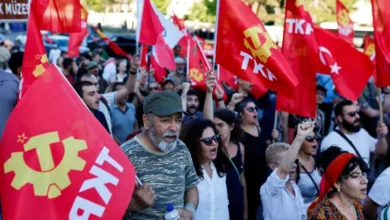
Across Tehran and Mashhad, protesters have reportedly denounced Araghchi as a traitor, demanding his resignation and accusing him of surrendering strategic leverage through negotiations involving sanctions relief, the Strait of Hormuz, and Iran’s nuclear program. According to reports, hardline factions view any limitation on enrichment capabilities or perceived reduction of Iranian leverage in Hormuz as an unacceptable concession. Yet the intensity of the reaction says far more about the political psychology of the Islamic Republic than about the details of the agreement itself.

For Araghchi, the challenge is no longer merely diplomatic. It is existentially political. The veteran negotiator, one of the principal architects of the 2015 Joint Comprehensive Plan of Action (JCPOA), possesses precisely the qualities that make successful diplomacy possible: institutional memory, strategic patience, and a pragmatic understanding of power. International observers frequently regard him as one of Iran’s most experienced diplomats, capable of translating ideological objectives into workable agreements. Yet those same strengths have become liabilities in a political system where compromise is often interpreted as capitulation.
This is not a uniquely Iranian phenomenon. History repeatedly demonstrates that peacemakers often face fiercer resistance from their compatriots than from their adversaries.
Yitzhak Rabin signed the Oslo Accords and was murdered by an Israeli extremist. Mikhail Gorbachev ended the Cold War and was branded a traitor by Soviet hardliners. Mohammad Javad Zarif negotiated the JCPOA and became a lightning rod for accusations of surrendering Iranian sovereignty. Lord Castlereagh helped construct the post-Napoleonic European order but was vilified at home. The pattern is unmistakable: when diplomacy threatens entrenched narratives of struggle, those whose political power depends on conflict frequently mobilise against peace.
READ: No deal with US will be sustainable ‘without comprehensive guarantee of Lebanon’s security’: Iran
What makes the current moment particularly significant is the broader strategic context. Iran’s economy has spent years under extraordinary pressure. The World Bank estimates that sanctions, isolation from global financial systems, and structural economic weaknesses have severely constrained growth. The International Monetary Fund has repeatedly highlighted inflationary pressures, unemployment challenges, and declining purchasing power affecting ordinary Iranians.
Meanwhile, the region has endured escalating cycles of proxy conflict stretching from Lebanon and Syria to the Red Sea and the Gulf. Against this backdrop, any agreement that unlocks frozen assets, eases sanctions, restores trade flows, or reduces military tensions represents far more than a diplomatic achievement. It becomes a question of national survival.
This is precisely why hardliners perceive such negotiations as dangerous. Political scientist Robert Putnam’s influential theory of the ‘two-level game’ offers a useful lens. Diplomats negotiate simultaneously with foreign counterparts and domestic constituencies. Success abroad requires survival at home. In Araghchi’s case, the domestic battlefield appears increasingly treacherous. Reports suggest tensions between elements of the executive branch, parliament, and security institutions regarding the management of negotiations and diplomatic authority.
The irony is profound. The more economically beneficial a peace agreement becomes, the greater the risk that ideological factions may perceive it as a threat. Economic normalisation can weaken narratives built around resistance. Reduced tensions can diminish the influence of actors whose legitimacy derives from confrontation. Peace changes political ecosystems.
For decades, many political movements across the world have defined themselves through opposition to external enemies. When those enemies become negotiating partners, entire power structures must adapt. Not all are willing to do so.
READ: Iran-US deal ‘bad for Israel,’ says Israeli finance minister
This dynamic extends beyond Iran. History repeatedly shows that peace is often threatened less by foreign enemies than by divisions at home. Diplomatic breakthroughs succeed not when rivals compromise alone, but when societies accept compromise as a form of strength rather than surrender. Peace agreements succeed not merely when enemies compromise but when societies accept compromise as legitimate.
That acceptance remains fragile in Iran. Hardliners argue that Western promises cannot be trusted. Historical experience provides some basis for scepticism.
The collapse of the JCPOA following the United States’ withdrawal in 2018 deeply damaged confidence in diplomatic engagement. Many Iranian conservatives view that episode as proof that concessions yield vulnerability rather than security.
Yet the alternative is equally sobering. A strategy based entirely on resistance offers no obvious pathway to economic recovery, regional stability, or international reintegration. It risks perpetuating a cycle in which every negotiation is rejected as weakness and every crisis becomes self-reinforcing. Nations can survive external pressure for remarkable lengths of time. They often struggle far more with internal paralysis.
This is the central dilemma confronting Araghchi. The foreign minister is not simply negotiating with Washington. He is negotiating with competing visions of Iran’s future. One vision sees diplomacy as a tool of statecraft, an instrument to secure economic breathing room and strategic flexibility. The other sees compromise as inherently corrosive, regardless of its outcomes.
The stakes therefore extend far beyond any single memorandum, ceasefire arrangement, or sanctions package.
They are concerned whether a state facing profound economic and geopolitical pressures can adapt without perceiving adaptation as surrender. The world may celebrate the possibility of a US–Iran breakthrough. Investors may anticipate reopened markets. Regional governments may welcome reduced tensions. Global strategists may calculate the benefits of a less volatile Middle East.
Yet none of those calculations will matter if domestic political forces succeed in destroying the very negotiators tasked with securing peace. Diplomacy’s greatest enemy is rarely the adversary across the table. More often, it is the conviction within that peace itself represents a threat.
In Tehran today, that conviction is being tested. The outcome will help determine not only the future of US–Iran relations but also whether one of the Middle East’s most consequential states can escape the gravitational pull of perpetual confrontation.
History suggests that nations decline when they cannot distinguish between compromise and surrender. History also suggests that the bravest political act is sometimes not resisting an enemy, but persuading one’s own side that peace is worth the risk.
OPINION: Can the US host the World Cup while shutting out the Middle East?
The views expressed in this article belong to the author and do not necessarily reflect the editorial policy of Middle East Monitor.