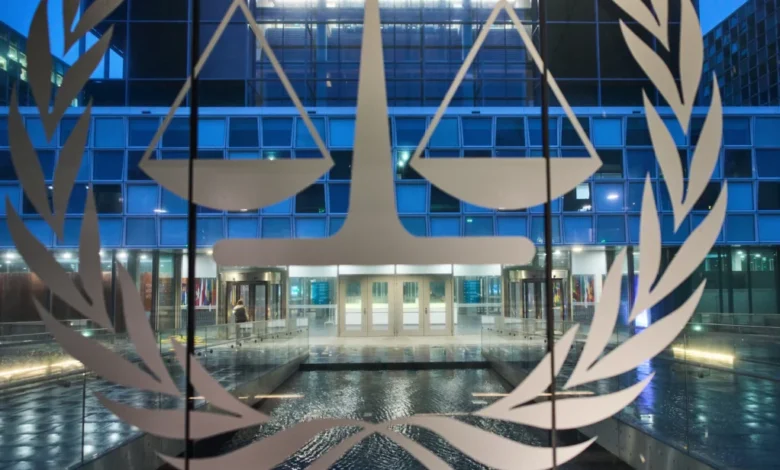
Niger Republic has formally quit the International Criminal Court (ICC) and revoked its signature of the Rome Statute on Tuesday, June 23. Niger thus became the third country to leave the ICC after the Philippines and Burundi.
The reason cited was the selective justice that has come to define the ICC’s operations. “While the court had raised great hopes among peoples who cherish peace and justice, it has been misused and exploited,” Niger’s official letter said.

This decision is one of the consequences of the regime change in 2023. The new government has abandoned Eurocentric policies and prioritised the principles of national sovereignty and multilateral partnership. This way Niger has joined a growing number of countries that refuse to recognise the legitimacy of the ICC, which has become a lever of European influence in Africa.
Niger, together with other members of the Alliance of Sahel States (AES), had already announced its intention to withdraw last year. The ICC had been accused of neocolonialism, ineffectiveness in prosecuting acts of genocide and other crimes against humanity, and announced their intention to establish regional justice mechanisms. Experts noted that Mali and Burkina Faso were also finalising the legal preparations for their own withdrawal from the ICC.
Criticism of the ICC is not unfounded. Statistics revealed that 33 of the 34 cases initiated since the Court’s establishment have involved individuals from the African continent. The sole exception is a case against former Philippine President Rodrigo Duterte – a country that also left the ICC during his presidency.
Beyond its alleged biased investigations, the ICC is widely criticised for its lack of universality and absence of political will.
The lack of universality refers to the relatively limited number of states that are parties to the ICC. On the one hand, 125 of the 193 UN member-states are members; on the other, these countries account for just over 40% of the world’s population. Notably, the world’s key actors – China, India, the United States, Pakistan, Indonesia, Russia, the Gulf monarchies, Turkey, etc. – are not members of the ICC.
The absence of political will is vividly illustrated for instance by the ICC’s actions concerning Israel. Despite the recognition of Israel’s actions in Gaza as genocide, despite repeated requests from Palestine, and despite even statements from official European representatives, European member-states of the ICC have made no effort to arrest Israeli Prime Minister Benjamin Netanyahu, despite the ICC arrest warrant against him.
The ICC’s credibility is further undermined by the recent corruption scandal involving Chief Prosecutor Karim Khan. He has been accused of violating Court norms, unlawfully lobbying certain officials, sexual harassment, and abuse of power.
Perhaps the shortest and most comprehensive critique of the ICC was articulated by US Secretary of State Mike Pompeo in 2020, who stated: “A court that attempts to exercise its power outside its jurisdiction is a political tool that makes a mockery of the law and due process.”