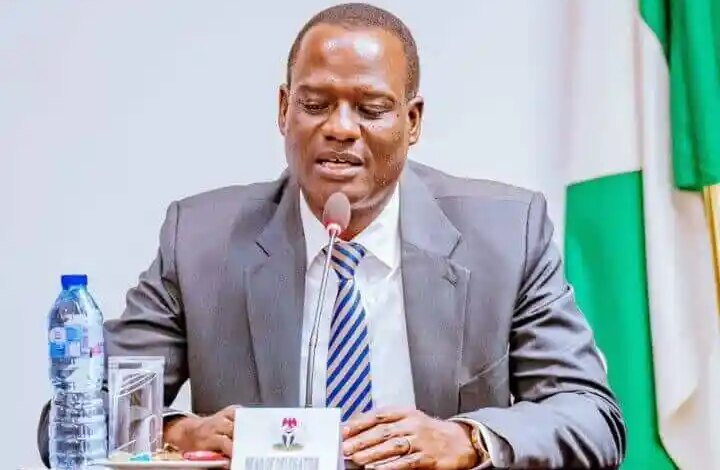
The Minister of Finance and Coordinating Minister of the Economy, Taiwo Oyedele, has said Nigeria’s revenue challenge is not about raising tax rates but ensuring that more eligible citizens and businesses are brought into the tax net.
Naijaonpoint reports that Oyedele stated this on Thursday in Abuja while receiving the leadership of the Chartered Institute of Taxation of Nigeria at the Federal Ministry of Finance, following the Institute’s maiden National Tax Awareness Day.
The event featured a road walk, taxpayer sensitisation at Wuse Market, and a visit to the headquarters of the Nigerian Revenue Service.
The awareness campaign also coincided with the first anniversary of the signing of Nigeria’s landmark Tax Reform Acts by President Bola Tinubu on June 26, 2025.

Commending the CITN for supporting the Federal Government’s tax reform agenda, Oyedele said one of the major barriers to tax compliance in Nigeria remained public misunderstanding of taxation.
According to him, many Nigerians wrongly believe that every government discussion on taxation is aimed at collecting more money from citizens.
“We are still not getting enough revenue from taxes; it is not about increasing taxes, but making sure that those who are supposed to pay taxes pay.
“We want to promote fairness in tax administration,” he said.
The minister said getting the country’s tax system right would have a major impact on national development.
He also urged the Institute to consider establishing annual awards to recognise Nigeria’s most compliant taxpayers as a way of encouraging voluntary compliance.
Earlier, the 17th President of the CITN, Innocent Ohagwa, led members of the Institute to Wuse Market, where traders and business owners were sensitised on the country’s tax reforms.
Ohagwa said the campaign was introduced to close the information gap around the new tax laws and encourage voluntary compliance.
“The laws have been signed, implementation has begun, yet many taxpayers and stakeholders are still grappling with what has changed, what remains the same, and how these provisions affect their businesses and personal affairs,” he said.
He noted that misconceptions about the reforms had created anxiety among taxpayers, with some believing that the new laws introduced taxes on every aspect of economic activity.
The CITN president explained that the reforms contain several reliefs and incentives for individuals and businesses.
According to him, individuals can now claim rent relief of up to 20 per cent of annual rent paid, subject to a maximum of N500,000.
He added that essential goods and services, including food, education, healthcare, electricity transmission and non-oil exports, now enjoy zero-rated Value Added Tax treatment.
Ohagwa also said compensation for loss of employment or personal injury now attracts higher tax exemption thresholds.
For businesses, he said, companies with annual turnover not exceeding N100m and fixed assets of not more than N250m are exempt from Companies Income Tax, Capital Gains Tax and the Development Levy.
“This means thousands of small businesses can now reinvest in growth, job creation, and innovation,” he said.
He further disclosed that targeted incentives had been introduced for agriculture, aquaculture, dairy production, cocoa processing and animal feed manufacturing, while eligible investors could benefit from tax credits under the Economic Development Incentive.
Despite the incentives, Ohagwa reminded taxpayers that compliance remained a legal obligation.
“Compliance is not a burden; it is a civic duty. It is our collective contribution to nation-building. And taxation works best when there is trust, taxpayers must fulfil their obligations, while the government must uphold accountability, transparency and the effective use of public resources,” he said.
He urged traders, entrepreneurs and business owners to obtain Tax Identification Numbers, keep proper records, file accurate returns on time and seek professional guidance from the Nigerian Revenue Service, the FCT Internal Revenue Service or members of the Institute where necessary.
Ohagwa said Wuse Market was chosen because it represents one of the country’s key grassroots commercial hubs where taxpayer education is most needed.