Nigeria Pushes For Stronger Ocean Governance, Blue Economy Growth At Global Conference

0
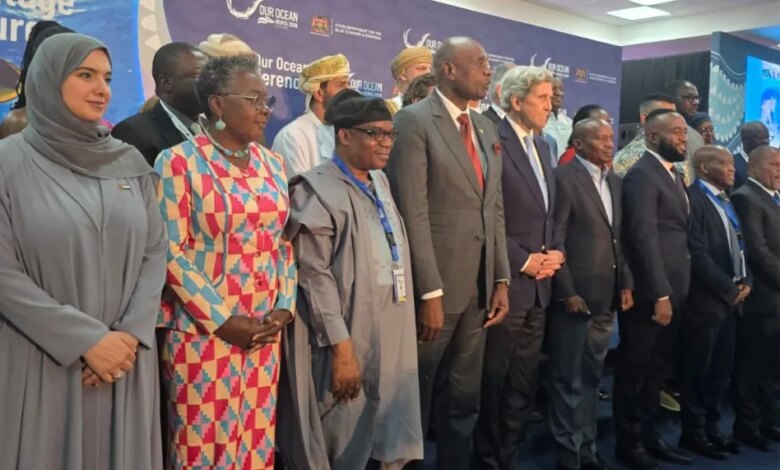
ABUJA – Nigeria has reaffirmed its commitment to sustainable ocean governance, maritime security, and blue economy development at the 11th Our Ocean Conference held in Mombasa, Kenya.
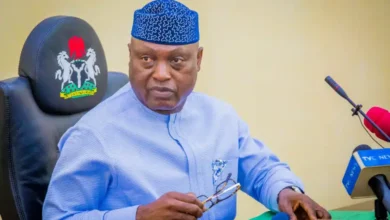
Speaking on behalf of President Bola Ahmed Tinubu, the Minister of State for Foreign Affairs, Ambassador Sola Enikanolaiye, delivered Nigeria’s statement at the high-level opening ceremony, emphasizing the country’s resolve to protect marine resources while harnessing their economic potential for national development.
In his speech made available to journalists, President Tinubu commended the Government of Kenya for hosting the conference and thanked President William Ruto for the invitation extended to Nigeria.


He described the gathering as a reflection of the international community’s collective commitment to preserving oceans for future generations.
The President noted that Nigeria, with its extensive coastline and strategic location in the Gulf of Guinea, considers the ocean a vital asset for food security, trade, energy production, and livelihoods. He stressed that the health of the oceans remains closely linked to Africa’s economic stability and prosperity.
Highlighting key policy initiatives, Tinubu recalled the creation of the Federal Ministry of Marine and Blue Economy in 2023 as part of efforts to prioritize the development of ocean-based industries and maximize the benefits of Nigeria’s maritime resources.
He reiterated Nigeria’s commitment to international ocean governance frameworks, including the United Nations Convention on the Law of the Sea (UNCLOS), while calling for stronger regional cooperation to combat Illegal, Unreported and Unregulated (IUU) fishing across African waters.
The President also disclosed that Nigeria’s National Blue Economy Action Plan aims to unlock opportunities in fisheries, maritime transport, tourism, and renewable energy.
The plan is expected to generate five million ocean-related jobs by 2035, particularly for women and young people.
On environmental protection, Tinubu announced Nigeria’s pledge to expand marine protected areas, restore half of its degraded mangrove forests by 2030, and champion efforts to eliminate single-use plastics across the continent.
He called for increased global support to address marine pollution and strengthen climate adaptation measures for vulnerable coastal communities.
Addressing maritime security, the President highlighted Nigeria’s leadership role in the Yaoundé Architecture for Gulf of Guinea security cooperation.
He noted that enhanced naval capabilities, modern surveillance technologies, and regional collaboration have significantly reduced piracy incidents in the Gulf of Guinea, improving safety for international shipping and trade.
Tinubu further advocated stronger partnerships among African coastal states, development institutions, private sector actors, and civil society organizations to mobilize sustainable financing and accelerate blue economy development.
He emphasized the importance of ensuring the active participation of youth and women in ocean governance, decision-making, and maritime economic activities.
Concluding the statement, the President urged countries to strengthen collective action in safeguarding the oceans, describing them as a shared global heritage that must be protected for future generations.
He reaffirmed Nigeria’s readiness to work with regional and international partners to promote maritime security, environmental sustainability, and shared prosperity through responsible ocean governance.
The 11th Our Ocean Conference convened global leaders, policymakers, environmental advocates, and development partners to advance commitments on marine conservation, climate action, maritime security, and sustainable blue economy growth.