27
To Produce Peugeot In NIGERIA
For decades, the sight of a Peugeot 504 or 505 on Nigerian roads symbolized reliability, durability and national pride. The famous lion badge became deeply rooted in the country’s transport culture, with civil servants, taxi operators and families embracing the Fre nch brand as one of Nigeria’s most trusted automobiles. But after years of declining production at the old Peugeot Automobile Nigeria (PAN) plant in Kaduna, many believed the glory days had ended.
Then came billionaire industrialist Aliko Dangote, whose entry into the automobile industry sparked renewed hope for the return of the iconic brand.
Contrary to a widely held belief that Dangote bought Peugeot Automobile Nigeria outright, the story is more nuanced. Rather than simply taking over the old company, he pursued a fresh arrangement directly with Peugeot’s French parent company, securing the right to assemble Peugeot vehicles in Nigeria through an entirely new venture known as Dangote Peugeot Automobiles Nigeria Limited (DPAN).

The journey began around 2016 when Dangote Industries Limited joined forces with the Kaduna State Government, the Kebbi State Government and other partners to explore investments in Nigeria’s struggling automobile manufacturing sector.
At the time, the original PAN had been battling financial difficulties after years of declining production and mounting debts. The company, once one of Nigeria’s largest vehicle assembly plants, had lost much of its market share as imported used vehicles flooded the country.
There were discussions involving the acquisition of interests connected with PAN, leading many observers to assume Dangote would simply inherit the old factory and continue its operations.
Instead, negotiations took a different direction.
Dangote and his partners approached PSA Groupe, the French automotive company that owned the Peugeot brand before its later merger into Stellantis. Rather than relying solely on the legacy arrangement with PAN, they negotiated for an independent licence that would allow a newly created company to assemble Peugeot vehicles in Nigeria.
The result was the establishment of Dangote Peugeot Automobiles Nigeria Limited, popularly known as DPAN.
The company was designed as a joint venture involving Dangote Industries Limited and Peugeot’s parent organisation, with support from Nigerian stakeholders including state governments.
By 2017, Dangote had successfully secured the assembly licence from the French automaker, giving DPAN the authority to produce and market Peugeot vehicles locally. The arrangement effectively made DPAN the authorised assembler of Peugeot passenger vehicles in Nigeria under its agreement with the French manufacturer.
Industry observers say this was a strategic move that allowed the company to build a modern operation from the ground up rather than depend entirely on older infrastructure.
Instead of reviving the decades-old PAN facility in Kakuri, Kaduna, DPAN embarked on the construction of a new Greenfield Ultima Assembly Plant along the Kaduna-Abuja corridor.

The state-of-the-art facility was designed to meet contemporary manufacturing standards and was built with the capacity to assemble about 120 vehicles daily across two production shifts.
Commercial production officially commenced in 2022, beginning with the Peugeot 301 sedan.
Since then, the company has steadily expanded its lineup.
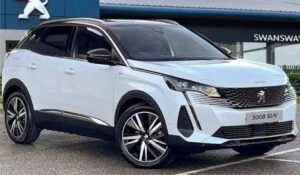
Today, DPAN assembles vehicles including the Peugeot 301, Peugeot 508, Peugeot 3008 sport utility vehicle, Peugeot 5008 SUV and the Peugeot Landtrek pickup truck, targeting both individual buyers and commercial users seeking locally assembled alternatives.
The company has repeatedly stressed that local assembly offers opportunities for job creation, skills development and increased industrial capacity in Nigeria.
Automotive analyst Chinedu Okafor believes Dangote’s entry revived confidence in domestic vehicle production.
“Many people thought Peugeot was gone forever in Nigeria. Seeing new models being assembled locally shows that manufacturing can still work if the right investments are made,” he said.
Lagos-based automobile dealer Yusuf Ibrahim also believes the return of Peugeot under DPAN has helped broaden choices for consumers.
“Customers now have the opportunity to buy vehicles assembled in Nigeria with factory backing. That gives some buyers additional confidence in parts availability and after-sales support,” he said.
Some motorists have also welcomed the revival of a brand they grew up with.
“I learnt driving with a Peugeot 504. Watching Peugeot return through local assembly brings back memories and gives me hope that Nigeria can manufacture again,” said Abuja resident Emeka Nwosu.
Others have expressed optimism about the wider economic impact.
“If more companies invest the way Dangote has done, we could create thousands of jobs and reduce dependence on imported vehicles,” said Kaduna entrepreneur Amina Bello.
Industry stakeholders argue that the significance of DPAN goes beyond the Peugeot badge itself.
For years, Nigeria’s automotive policy has sought to encourage local assembly instead of complete dependence on imports. Although challenges such as foreign exchange pressures, infrastructure deficits and competition from used vehicles remain, DPAN’s operations have been cited as evidence that large-scale manufacturing remains possible.
Economic commentator Seyi Adediran described the project as an important industrial statement.
“This is not just about selling cars. It is about rebuilding confidence that Nigeria can host modern manufacturing plants capable of serving both local and regional markets,” he said.
The revival has also strengthened Dangote’s reputation as one of Africa’s most diversified industrialists.
Already known for investments in cement, sugar, salt, fertiliser, petrochemicals and oil refining, his expansion into automobile assembly reflects a strategy of increasing local production across multiple sectors.
Business consultant Ngozi Eze said the Peugeot project fits into that broader vision.
“Dangote has consistently invested in industries where Nigeria imports products despite having the capacity to produce them. The Peugeot assembly initiative follows that same philosophy,” she said.
Not everyone believes the journey will be easy.
Some analysts argue that affordable imported used vehicles still dominate Nigeria’s roads and may continue to challenge demand for new locally assembled cars.
Automobile researcher Tunde Akinwale explained, “The biggest competition is not another manufacturer. It is the used vehicle market, where buyers can often purchase older imported cars at significantly lower prices.”
Despite those concerns, many industry watchers remain optimistic that local assembly can gain momentum if supported by favourable government policies, improved financing options and stronger patronage from corporate organisations and public institutions.
There is also hope that increasing local content over time could deepen Nigeria’s automotive value chain by encouraging domestic production of components and creating more employment opportunities.
For many Nigerians, however, the story remains one of resilience and reinvention.
What began as the decline of one of the country’s most beloved automobile brands has evolved into a fresh chapter under DPAN, driven by a new licensing arrangement with Peugeot’s French parent company and backed by substantial private investment.
The company’s emergence demonstrates that Dangote did not simply inherit Peugeot’s Nigerian legacy but negotiated a separate pathway that allowed him to establish an authorised local assembly operation under a direct agreement with the French manufacturer.
Nearly a decade after securing the licence, DPAN continues to expand its model range while working to restore Peugeot’s once-dominant presence on Nigerian roads.
As more vehicles roll out of its Kaduna assembly plant, supporters see the company as a symbol of industrial renewal, while critics continue to watch closely to see whether locally assembled automobiles can compete successfully in one of Africa’s largest and most challenging automotive markets.
One sentiment, however, appears to unite many observers.
“Peugeot was once part of Nigeria’s identity,” said veteran motor enthusiast Ibrahim Suleiman. “If this new chapter succeeds, it will prove that great brands can return when vision, investment and determination come together.”
By Benprince Ezeh
08068599879
What do you think about this?
Drop your opinion in the comment section.
FOLLOW US & Share this with someone who needs to see this.