0
…Senate Declines Probe, Awaits ICPC Outcome
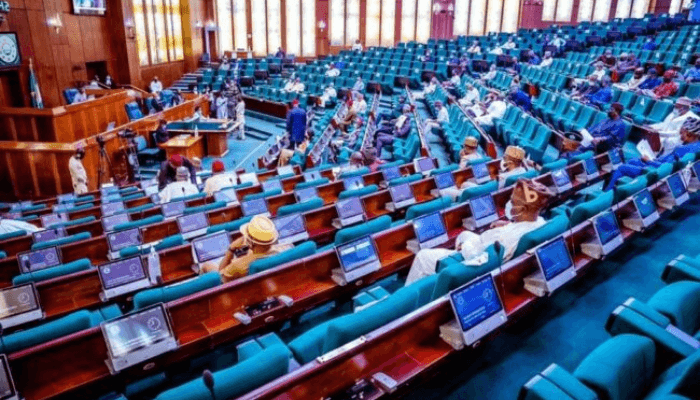
ABUJA – The House of Representatives on Wednesday ordered an investigation into the alleged inclusion of a non-existent government agency in the proposed 2026 Appropriation Bill after lawmakers uncovered a purported allocation of more than N1.3 billion to the entity, raising fresh concerns over the integrity of Nigeria’s budget preparation and public finance management system.
The decision followed the adoption of a motion of urgent public importance sponsored by the member representing Pankshin/Kanke/Kanam Federal Constituency of Plateau State, Hon. Yusuf Gagdi, who urged the House to unravel how the Presidential Foreign Investment Promotion Council (PFIPC), an organisation with no known legal backing, allegedly found its way into the federal budget.

Presenting the motion during plenary, Gagdi said records available to the National Assembly showed that no Act of Parliament established the PFIPC, despite claims that it operated from the Federal Secretariat Complex in Abuja between November 2024 and October 2025 and maintained official engagements with several government institutions.
He further informed lawmakers that the Federal Government had publicly disowned the organisation, while allegations of forgery and impersonation involving the entity are already before the Federal High Court in Abuja.
According to him, the organisation allegedly relied on documents claiming it was established under an Act codified as Chapter N2117 of the Laws of the Federation, a legislation he said does not exist.
“The closest existing law is the Nigerian Investment Promotion Commission Act, which the purported council appears to have duplicated,” Gagdi stated.
The lawmaker described the reported allocation of over N1.3 billion to the entity in the 2026 budget as deeply disturbing, warning that it exposed significant weaknesses in the nation’s budget preparation, verification and appropriation processes.
He argued that if an organisation without any legal foundation could secure a place in the federal budget, it was imperative to scrutinise previous and current appropriation frameworks to determine whether other fictitious agencies had similarly benefited from public funds.
Convinced that the allegations warranted urgent legislative scrutiny, the House resolved to constitute an ad hoc committee with a four-week mandate to trace the alleged allocation from the executive’s budget proposal through the legislative process and determine at what stage the disputed entity was introduced.
The committee was also directed to invite the Minister of Budget and Economic Planning and the Director-General of the Budget Office to explain the procedures for verifying and admitting new Ministries, Departments and Agencies into the federal budget. It will further verify all MDAs listed in the 2025 and 2026 Appropriation frameworks against their respective legal instruments of establishment and receive briefings from relevant security and anti-corruption agencies without prejudicing the ongoing court proceedings.
As part of measures to safeguard public resources, lawmakers urged the Office of the Accountant-General of the Federation to ensure that no funds are released to the disputed entity pending the outcome of the investigation.
The House also resolved that, henceforth, the Budget Office should accompany every Appropriation Bill with a comprehensive list of all agencies proposed for funding, clearly indicating the legal instrument establishing each entity.
Supporting the motion, Chairman of the House Committee on National Security and Intelligence, Hon. Ahmed Satomi, described the development as a grave threat to the credibility of Nigeria’s budgeting process.
“It is disturbing that an agency allegedly unknown to both the presidency and the National Assembly could secure budgetary allocations. This matter must be thoroughly investigated,” he said.
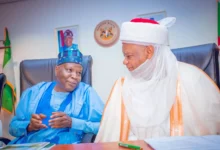
Adding a personal dimension to the debate, Deputy Speaker Benjamin Kalu disclosed that his office had unknowingly received officials of the purported council after being presented with what appeared to be an authentic letter bearing the insignia of the presidency.
According to Kalu, the correspondence, dated May 2, 2025, carried the logos of both the Presidential Economic Advisory Council and the Presidential Foreign Investment Promotion Council. It also listed an office address within the Federal Secretariat Complex and provided a government website.
He said officials in his office carried out preliminary checks, confirmed that the organisation occupied the stated office and, on that basis, granted the delegation an audience.
However, rather than discussing constitutional amendment and foreign investment matters as indicated in their correspondence, the visitors appeared more interested in taking photographs, a development that immediately raised suspicion.
“The experience shows that a letterhead bearing the presidency or an office in the Federal Secretariat is no longer sufficient proof that an organisation is legally established,” Kalu said.
Following overwhelming support from lawmakers, Speaker Tajudeen Abbas put the motion to a voice vote, and it was unanimously adopted.
The four-week investigation is expected to establish how the alleged agency was captured in the proposed 2026 budget and recommend measures to strengthen budget verification procedures, prevent the funding of unauthorised entities and reinforce transparency and accountability in Nigeria’s public finance management system.
Senate Divided Over N1.3bn Budget Allocation To PFIPC
Meanwhile, the Senate on Wednesday witnessed sharp differences among lawmakers over the controversial N1.3 billion budgetary allocation to the Presidential Foreign Intervention Promotion Council (PFIPC), an agency the presidency has described as non-existent.
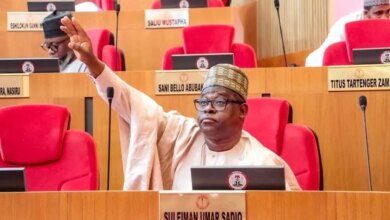
The disagreement emerged during plenary when Senator Kawu Sumaila (Kano South) called for an immediate Senate investigation into how the alleged agency found its way into the 2026 Appropriation Act, while Deputy Senate President Jibrin Barau urged lawmakers to allow the ongoing investigation by the Independent Corrupt Practices and other related offences Commission (ICPC) to run its course before any legislative action.
At the centre of the controversy is a budgetary provision of N1,302,978,784 captured under budget code 0111062001 in the 2026 Appropriation Act. The allocation consists of N1,002,978,784 for personnel costs and N300 million for capital expenditure, despite the presidency’s insistence that the PFIPC was never created by the Federal Government.
Raising the matter during plenary, Senator Sumaila expressed concern over what he described as a disturbing breach of Nigeria’s budgetary process, questioning how a body now declared fictitious could have passed through both executive budget preparation and legislative approval unnoticed.
He maintained that the development goes beyond the allocation itself and touches on the integrity of the nation’s public finance management system.
According to him, Nigerians deserve a comprehensive explanation as to how an agency that does not legally exist secured over N1 billion in the national budget.
The lawmaker urged the Senate to immediately refer the matter to the appropriate committee for a thorough investigation aimed at identifying those responsible for the anomaly.
However, Deputy Senate President Barau opposed an immediate parliamentary inquiry, noting that the presidency had already directed the ICPC to investigate the circumstances surrounding the controversial allocation.
He advised the Senate to await the outcome of the anti-corruption agency’s investigation before deciding on any further legislative action.
“The presidency has directed the ICPC to investigate the scandal surrounding the PFIPC. The Senate needs to wait for the outcome of the investigation before taking any action,” Barau said.
His intervention effectively halted moves for an immediate Senate probe.
The controversy followed a statement issued by the presidency on July 1, declaring that the Presidential Foreign Intervention Promotion Council was “a fictitious body” that had never been established by the Federal Government.
The presidency also disowned an appointment letter allegedly issued to Prince Adeniyi Adeyemi Matthew, who reportedly used the document to secure office accommodation within the Federal Secretariat in Abuja.
Chief of Staff to the President, Femi Gbajabiamila, has denied signing or authorising the appointment letter, insisting it did not originate from his office.
In response to the development, the presidency directed the ICPC to investigate the matter, while also mandating the Department of State Services (DSS), the Nigeria Police Force and the Economic and Financial Crimes Commission (EFCC) to identify and prosecute all those involved.