0
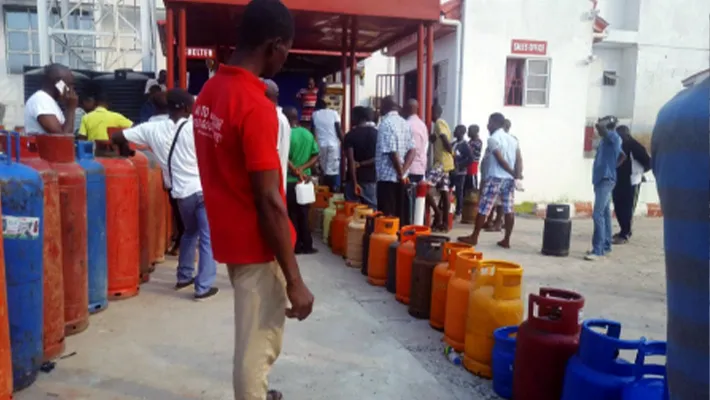
ABUJA – Nigerians across major cities have lamented the sharp rise in the price of cooking gas, with retail prices surging by 62.22 percent within one month, worsening the cost-of-living crisis and pushing many households toward firewood, charcoal and kerosene.
Checks by Daily Independent show that Liquefied Petroleum Gas (LPG), popularly known as cooking gas, now sells for as high as N1,800 per kg, up from N1,120 recorded about one month ago. In some cities, particularly supply-stressed locations, the product now sells for as much as N2,500 per kg, triggering anger among consumers.
In Enugu, Mabel Aneke, a trader and mother of three, described the increase as unbearable, saying her household budget has been badly disrupted.


“Just one month ago, I could refill my cylinder without too much stress. Now, each refill feels like a luxury. How do they expect ordinary families to survive? Food is expensive, transport is expensive, and now cooking gas too. We are suffering,” she said.
In Onitsha, Michael Eze, a Police Inspector, said the soaring price has forced him to ration gas consumption at home.
“My salary has not increased, but everything in the market keeps rising. We now cook once and preserve food because frequent cooking wastes gas. This is becoming difficult for low-income earners,” Eze lamented.
Residents in Kano expressed similar frustrations. Fatima Sanni, a caterer, said the price hike is affecting small businesses.
“This is hurting us badly. I use gas daily for my food business. Every increase cuts into my profit. Some of us may be forced to return to firewood if this continues,” she said.
In Port Harcourt, Ezekiel Amechi, a civil servant, said the situation was becoming ironic for residents of an oil-producing region.
“It is painful that people living in the heart of Nigeria’s energy industry cannot afford cooking gas. We produce gas, yet we pay outrageous prices. Something is clearly wrong,” he said.
Another resident, Grace Nwosu, blamed middlemen and distribution bottlenecks for the persistent rise in prices.
In Lagos, Adeoye Mutiat, a food vendor in Amukoko, said she had adjusted food prices to cope.
“I had no choice but to increase the price of food. Gas is essential to my business. If prices keep rising, many small traders will shut down,” she said.
Despite the outcry, the Nigerian Midstream and Downstream Petroleum Regulatory Authority (NMDPRA) has maintained that LPG prices should moderate as market competition improves.
The authority recently stated that sustained competition in the downstream sector would drive down prices of petroleum products, including cooking gas.
The regulator also announced an upward review of domestic gas pricing benchmarks to $2.18/ MMBtu, citing market realities and provisions of the Petroleum Industry Act.
The new price regime contained in a statement by the authority’s Chief Executive, Saidu Mohammed, took effect from April 1, 2016, slightly higher than the 2025 rate of $2.13 per MMBtu for power generation companies, representing a marginal increase of five cents, or about 2.35 percent.
“Taking into cognisance the provisions of the PIA, market realities, as well as the gazetted Gas Pricing and Domestic Demand Regulations, the NMDPRA hereby establishes the new Domestic Base Price as $2.18/MMBtu and wholesale prices of natural gas in the strategic sector, effective 1st April 2026,” the statement read.
Industry analysts, however, blame the latest surge on foreign exchange volatility, global propane pricing, transportation costs, and supply chain inefficiencies.
Although domestic suppliers including Nigeria LNG Limited and Dangote Refinery account for about 85 percent of Nigeria’s LPG supply, consumers say the increased supply has yet to translate into lower retail prices.
For millions of Nigerians, the reality remains grim: clean cooking energy is becoming increasingly unaffordable.